What Is Hospital CRM Software?
Hospital CRM Connects Patient Enquiries Across Multiple Channels
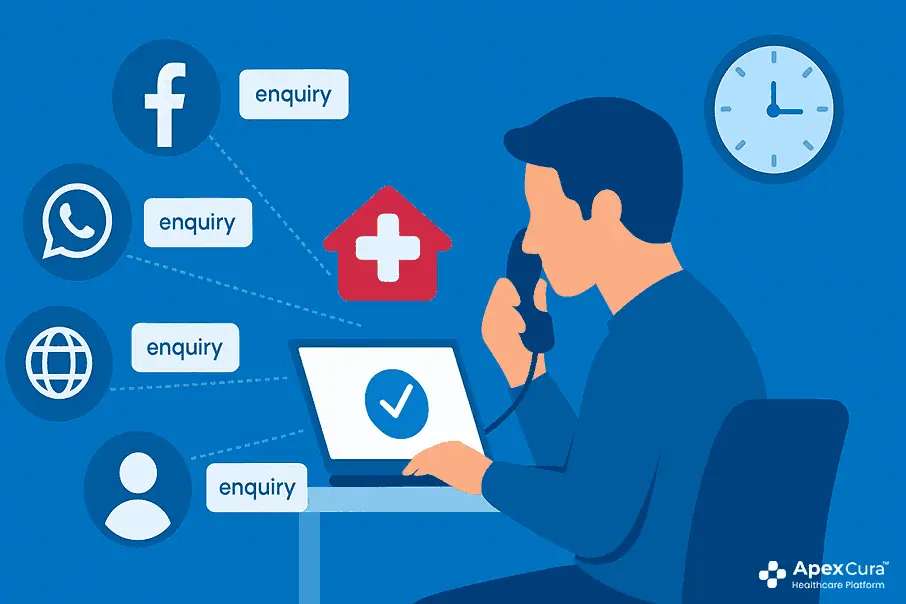
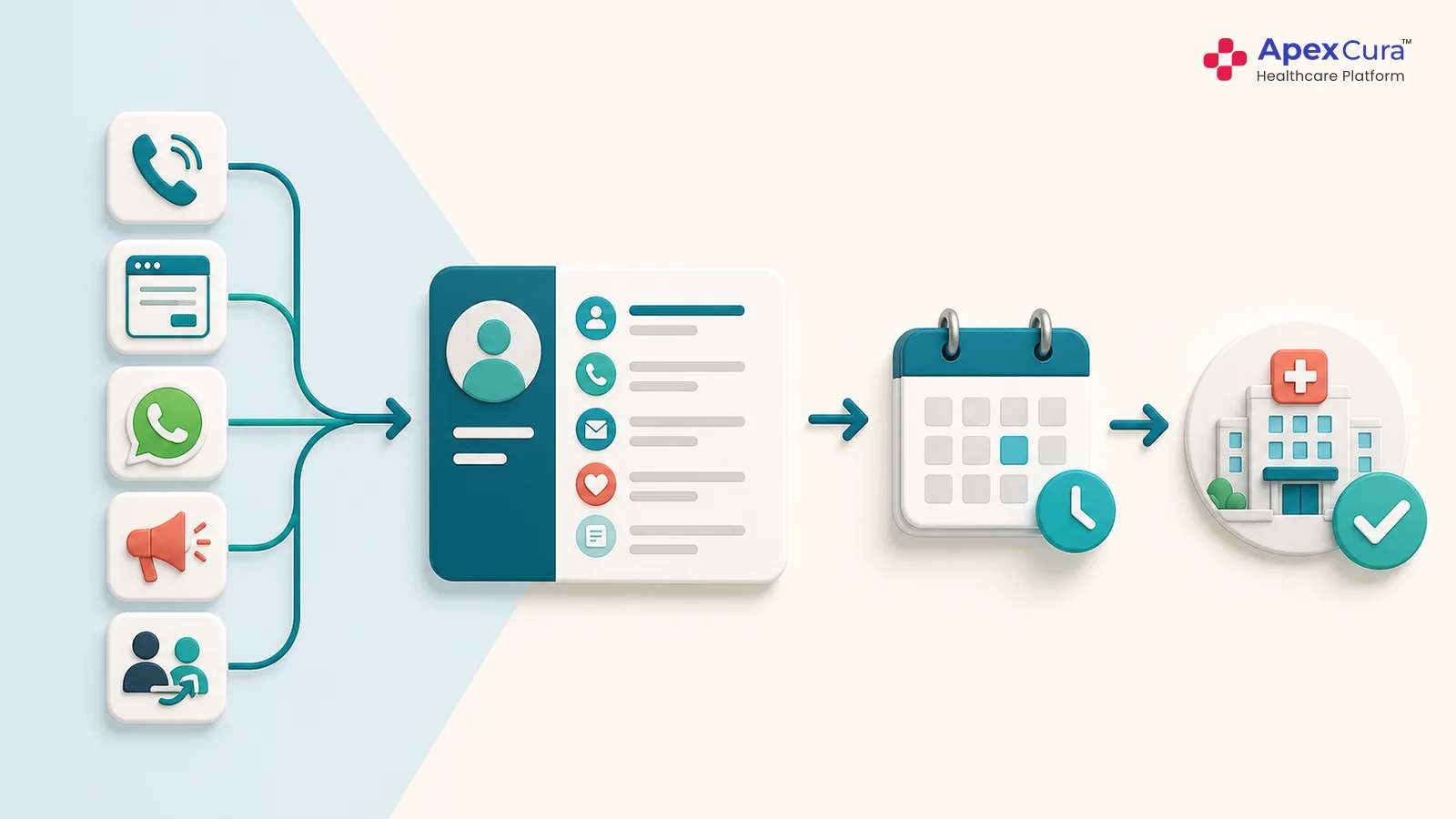
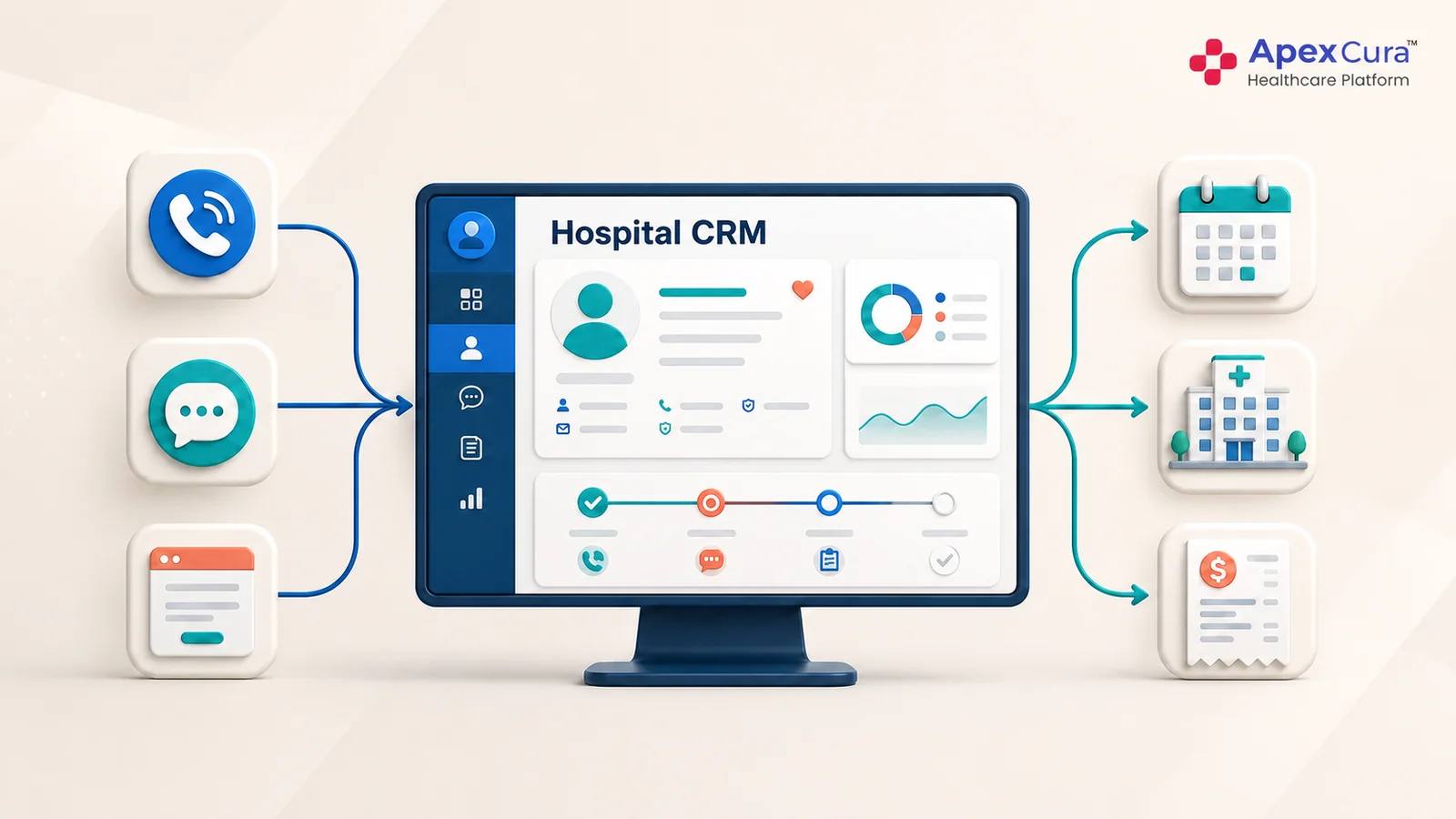
Patient enquiries can arrive through hospital calls, WhatsApp, website forms, campaigns, referrals and walk-in conversations. Separate tools can make these enquiries difficult to track. Hospital CRM Software brings connected channels into one enquiry workflow. Each record can include the patient’s need, preferred branch, speciality, source and contact history. Teams can see where the enquiry started and what happened next. They no longer need separate spreadsheets for every channel. The CRM also preserves available campaign information for later analysis. This connected view reduces missed enquiries and gives staff a clear place to begin follow-up.
Hospital CRM Manages the Patient Journey Beyond a Simple Sales Lead
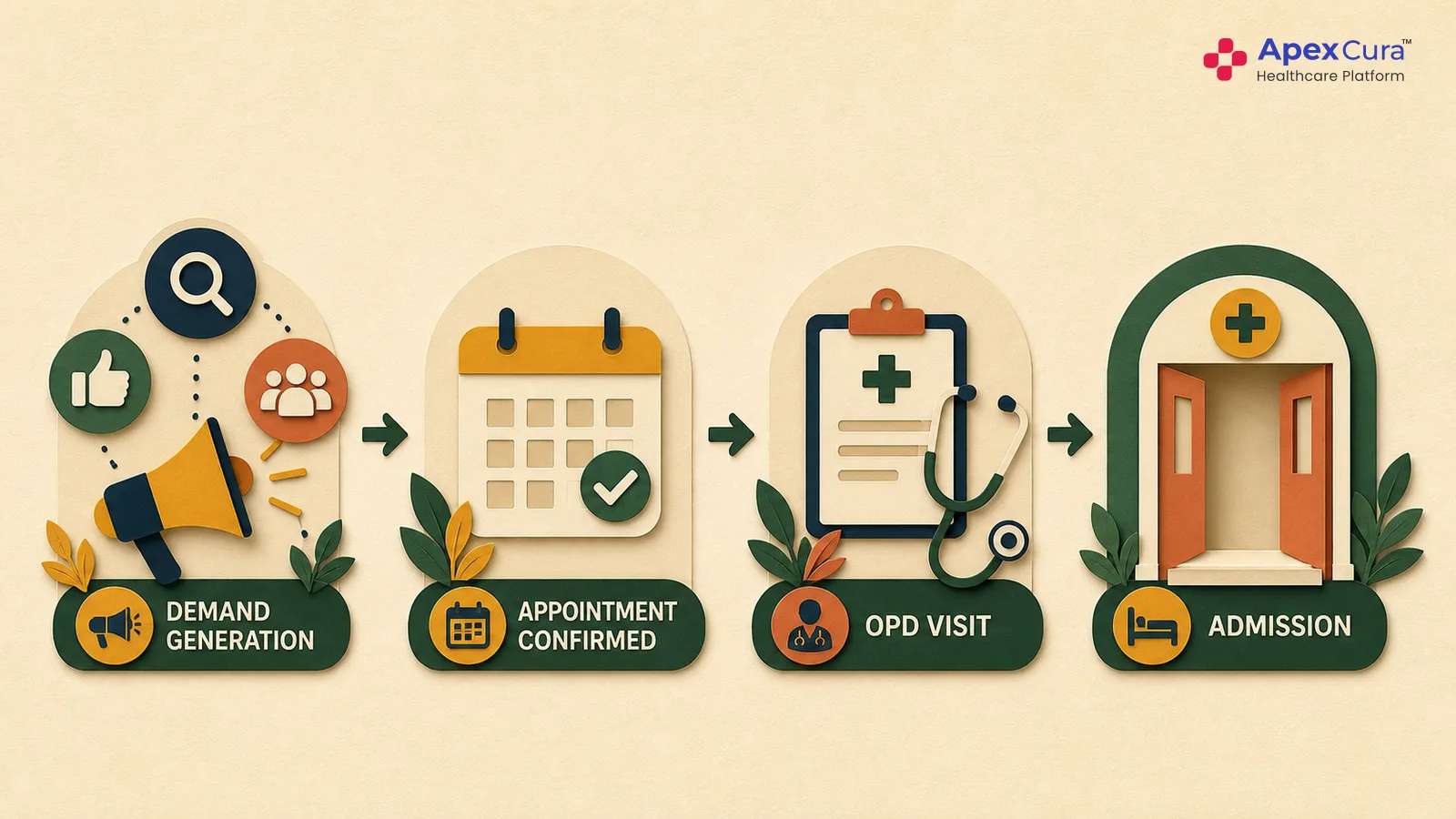
A hospital enquiry is not the same as a general sales lead in other industries. Patients may need information before choosing a doctor, branch or treatment. Some may book immediately, while others need several conversations. The CRM records these stages without treating every patient like a sales deal. It can follow qualification, appointment requests, confirmed bookings, visits and further follow-ups. It can also record why an enquiry did not progress. Hospital teams can therefore understand the patient’s decision journey. Clinical records remain within the appropriate hospital systems. The CRM manages communication, responsibility and acquisition outcomes around that journey.
Hospital CRM Creates a Single View of Patient Interactions and Follow-Ups
One patient may contact the hospital several times through different channels. A caller may later send documents through WhatsApp or submit another website form. Without a shared view, each interaction can appear unrelated. Hospital CRM software helps teams identify and connect relevant enquiry records. Staff can review earlier conversations, promised callbacks and pending actions before responding. They can also see the current owner and latest outcome. This reduces repeated questions and conflicting information. Possible duplicate records should still follow hospital-approved validation rules. The objective is one reliable operational view without incorrectly combining different patients or separate care requirements.
How Hospital CRM Software Works
Capture and Identify Every Patient Enquiry
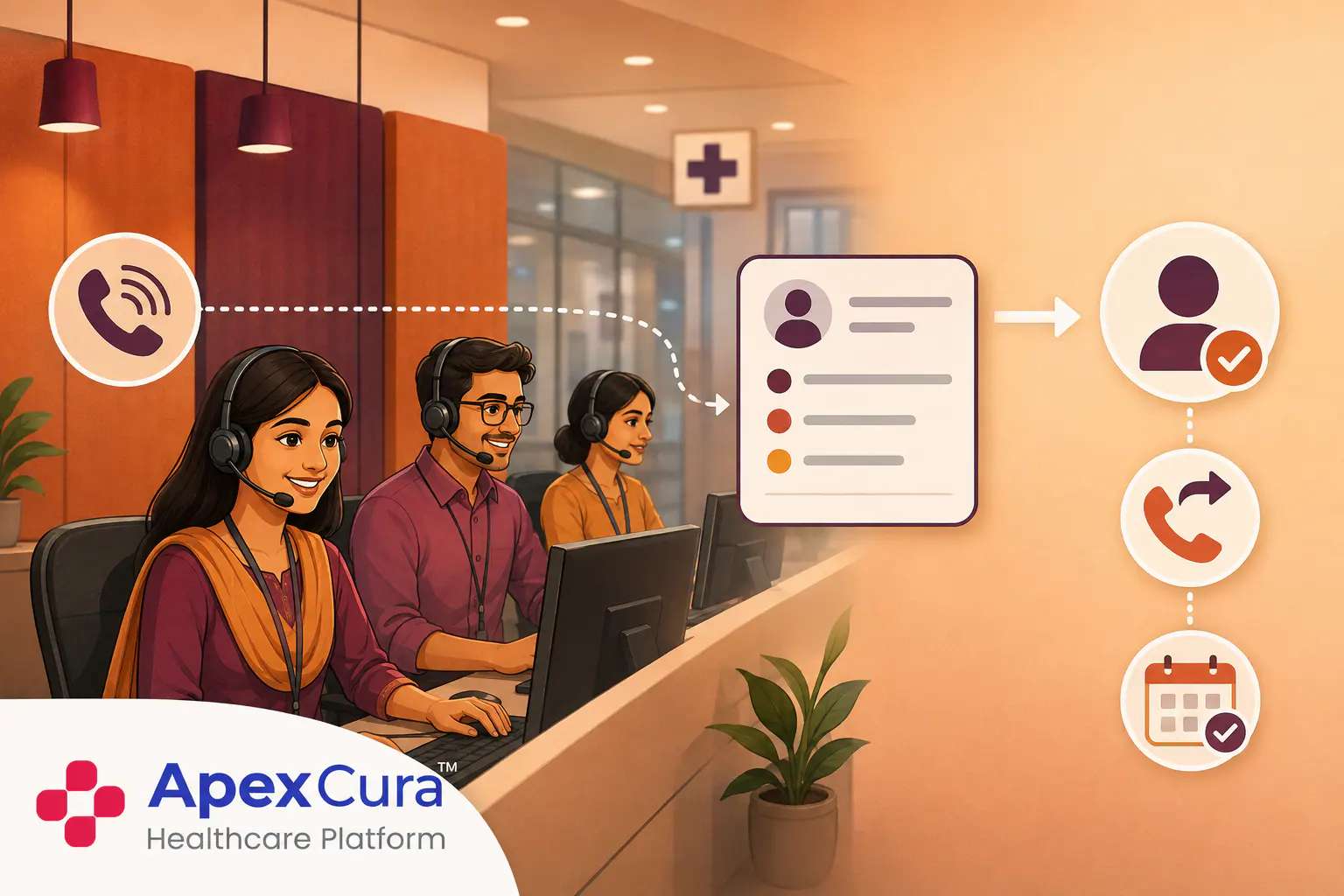
The workflow starts when a connected channel creates an enquiry record. Calls may enter through an IVR integration, while forms can arrive from hospital websites. WhatsApp and campaign enquiries can enter through their available interfaces. The CRM records the source, time, patient details and stated requirement. It can also identify whether the patient has contacted the hospital earlier. Possible matches should be reviewed using defined identity rules. Staff can correct missing information when required. Reliable capture is important because later reporting depends on the first record. An enquiry that never enters the workflow cannot be assigned, followed or measured.
Assign Leads and Manage Patient Follow-Ups
After capture, the enquiry needs a responsible owner and a clear next action. Assignment rules may consider branch, speciality, language, treatment need or team availability. The responsible employee can review the enquiry and contact the patient. The CRM records the response, outcome and next follow-up date. Reminders help staff act at the expected time. Supervisors can see unassigned enquiries, overdue actions and delayed responses. Genuine changes can move ownership to another team with a recorded reason. This process replaces informal handovers with visible responsibility. It also helps managers separate workload problems from missed or incomplete follow-up.
Connect Enquiries with Appointments, Visits and Revenue Outcomes
Booking an appointment is not the final result of patient acquisition. The patient may cancel, miss the appointment, visit another branch or arrive without the original number. Connected systems can update the CRM when appointments, visits or billing events occur. The CRM then links the original enquiry with the available hospital outcome. This helps teams distinguish an unconverted enquiry from an outcome recorded elsewhere. It also shows where patients stop progressing through the journey. Reliable linkage depends on patient identifiers and available system integrations. Hospitals should define which events represent appointments, completed visits, procedures and revenue before comparing conversion performance.
See how Apex Healthcare CRM connects patient enquiries, follow-ups, appointments, visits and revenue outcomes.
Explore Apex Healthcare CRMWhat Hospital Teams Can Understand from CRM Data
Understand Where Patient Enquiries Are Getting Lost
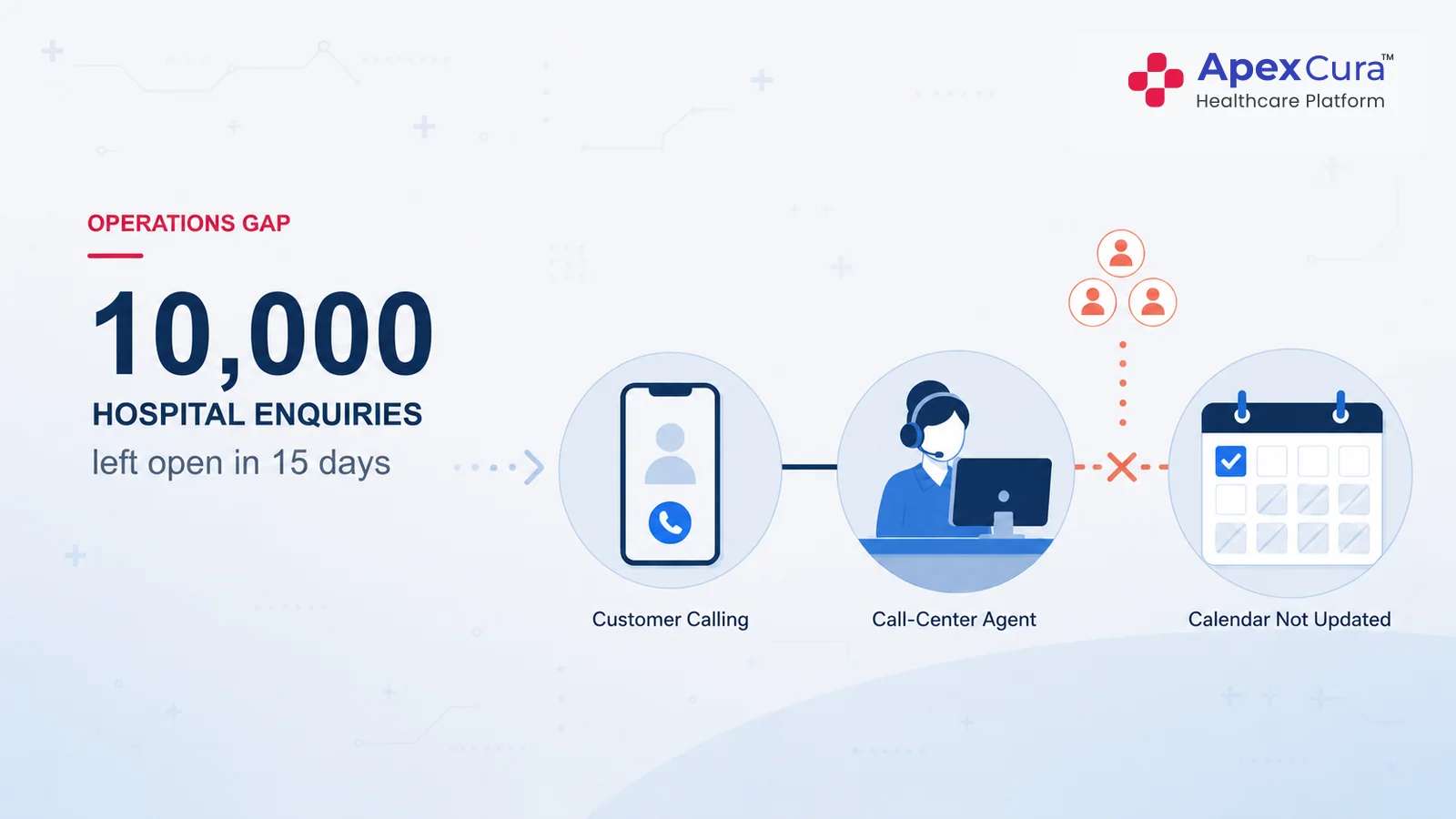
CRM data can show where valid patient interest stops moving. An enquiry may remain unassigned, receive a late response or miss its planned follow-up. A patient may book but never visit the hospital. Teams can review each stage and identify repeated reasons for inactivity. They can also separate genuine patient decisions from internal process gaps. This makes patient enquiry leakage easier to investigate. Managers can then assign corrective action to the responsible team. The objective is not to blame individual employees. It is to identify where the operating process repeatedly allows genuine enquiries to disappear.
Understand Which Channels and Teams Convert Enquiries Better
Hospitals can compare enquiry volume, response time, appointments and visits across channels and teams. A channel generating many enquiries may still produce few completed visits. Another channel may generate fewer enquiries but stronger patient intent. Team comparisons also need proper context. Branches, specialities and campaigns may receive different enquiry types. Accurate hospital enquiry source attribution preserves the channel that originally created patient interest. Managers can then compare similar workflows instead of using one broad conversion number. This helps marketing and operations teams understand both lead quality and execution quality. Better measurement supports more practical decisions about budgets, staffing and follow-up processes.
Connect Patient Acquisition with Actual Hospital Revenue
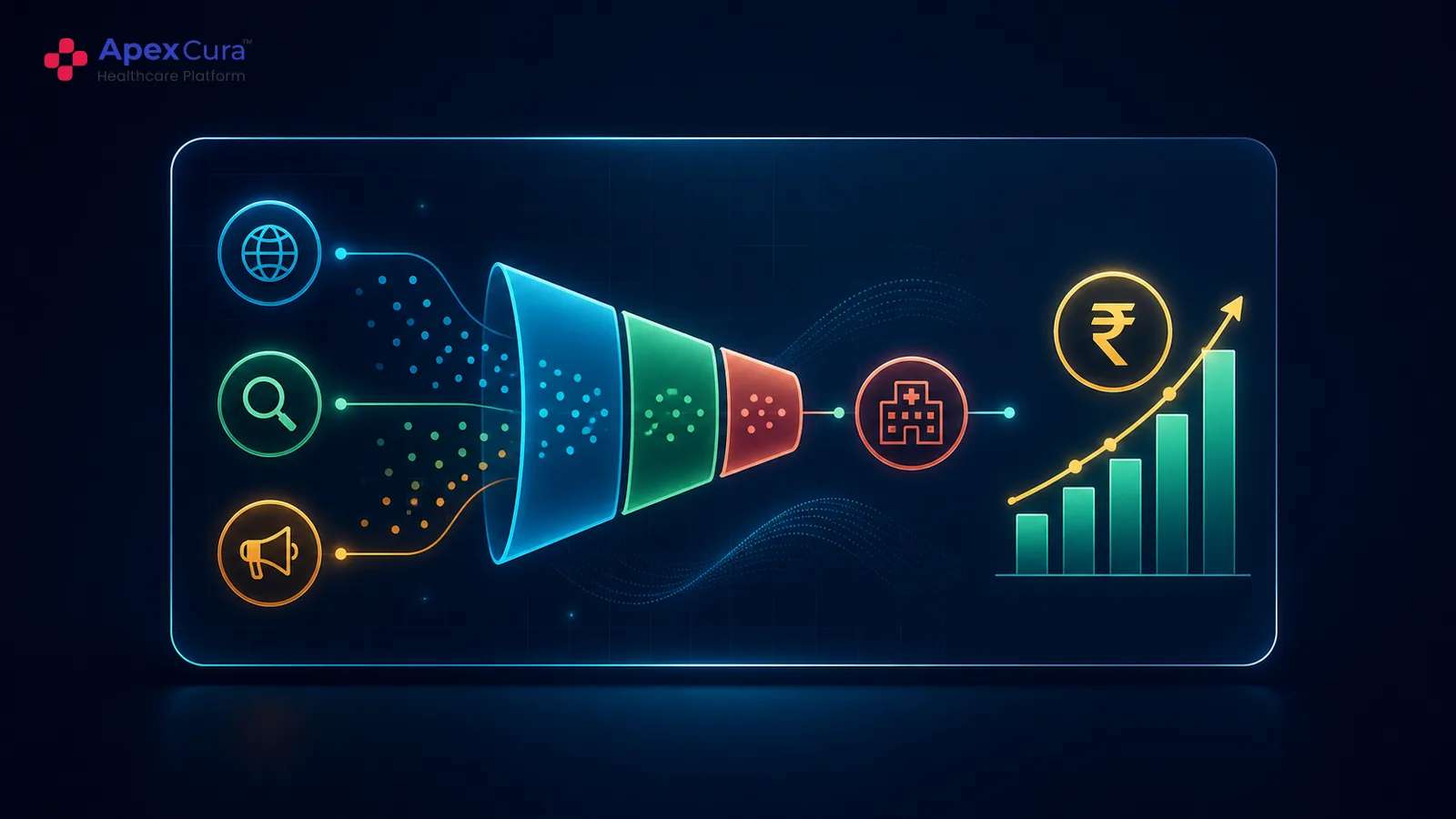
Marketing reports often stop at calls, forms or appointment requests. Hospital leadership needs to understand which enquiries result in visits, procedures and billing outcomes. CRM and hospital-system integrations can connect these events where reliable matching is available. Teams can compare revenue by source, campaign, branch, speciality or enquiry type. They can also identify patients who visited without the original lead being closed correctly. Revenue reporting should use clear definitions and approved financial data. It should not estimate outcomes without supporting transactions. This connection gives management a more complete view of patient acquisition. It links marketing activity with operational execution and measurable hospital results.
Conclusion
Hospital CRM software connects patient enquiries, ownership, follow-ups and hospital outcomes in one operational workflow. It gives call-centre, marketing and branch teams a common view of each enquiry. Connected appointment, visit and billing events help management understand what happened after the first interaction. The value does not come from storing more contact records. It comes from making responsibilities, patient progress and outcomes visible. Hospitals can then identify leakage, compare performance and improve patient acquisition using reliable operational data.