How Hospital Enquiry Attribution Could Fail
Origination source and interaction channel are confused
The source that generated an enquiry is not always the channel used in the latest conversation. A patient may originate from Google Ads but later call through the hospital’s main number. If the phone call is recorded as the source, the campaign that created the demand receives no credit. The opposite error also occurs when every later interaction is incorrectly attributed to the first campaign. Hospitals need separate fields for origination source, campaign or activity metadata and the complete interaction-channel history.
Traceability is added after campaigns have already started
Attribution cannot be repaired reliably when campaigns launch without UTM parameters, dedicated call-tracking numbers, landing-page identifiers, QR codes or offline campaign references. Agents are then asked to choose a source manually from a dropdown, often based on incomplete patient recall. This produces inconsistent data and encourages default selections such as “direct” or “other.” Traceability must be designed during campaign planning so that source metadata is captured automatically and carried behind the scenes.
Repeat patients and duplicate records distort ROI
One patient may use multiple phone numbers, while one family number may be associated with several patient registrations. The same person may also create different enquiry episodes for unrelated needs months apart. If records are merged carelessly, the original source may be lost; if they remain duplicated, one campaign may appear to generate several patients. Hospital CRM Software should therefore preserve patient identity, episode-level tracking and clear rules for uncertain matches without presenting inferred data as confirmed fact.
Key insight: Marketing attribution fails when the latest interaction channel is mistaken for the original source that created the enquiry.
How Hospitals Can Build Reliable Source Attribution
Design traceability before campaign launch
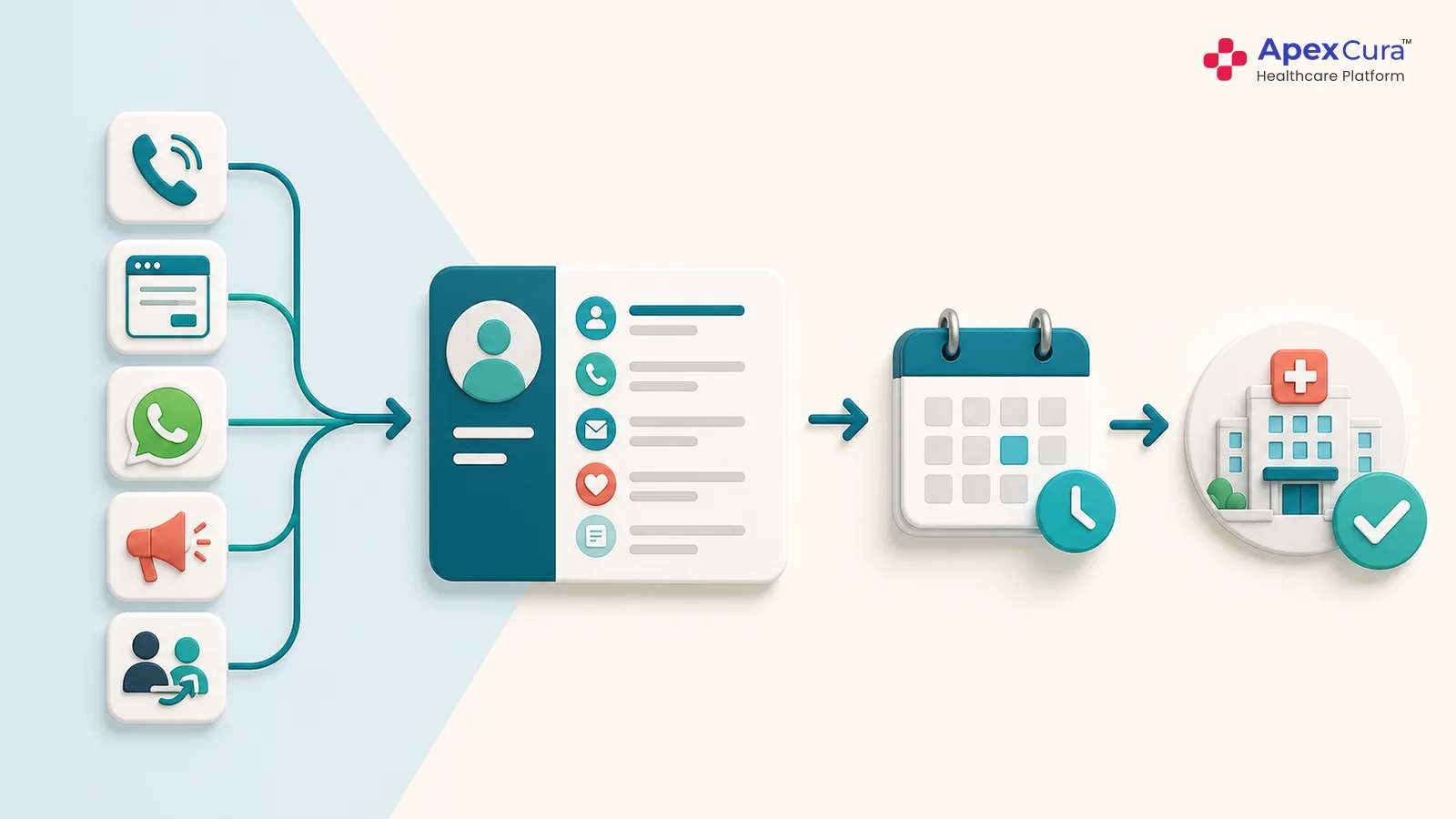
Every campaign should have a defined source tags and a mechanism for carrying its metadata into the enquiry record. Digital campaigns can use UTMs, landing-page parameters, form fields and platform identifiers. Calls can use dedicated tracking numbers or call-routing metadata. Offline camps, billboards and referral activities can use QR codes, campaign codes or dedicated contact paths. The key requirement is automatic capture; agents should not be the primary mechanism for identifying the source.
Define the attribution model and preserve evidence
Teams should decide whether campaign reporting will use first-touch, last-touch or another agreed model before performance is analysed. First-touch attribution preserves the activity that originally generated the enquiry, while later interactions remain visible in a separate history. When source evidence is incomplete, rules or AI-assisted matching may identify the most likely source, but the record should distinguish confirmed metadata from inferred attribution. This protects reporting credibility and allows uncertain cases to be reviewed.
Connect source to outcomes, not only lead counts
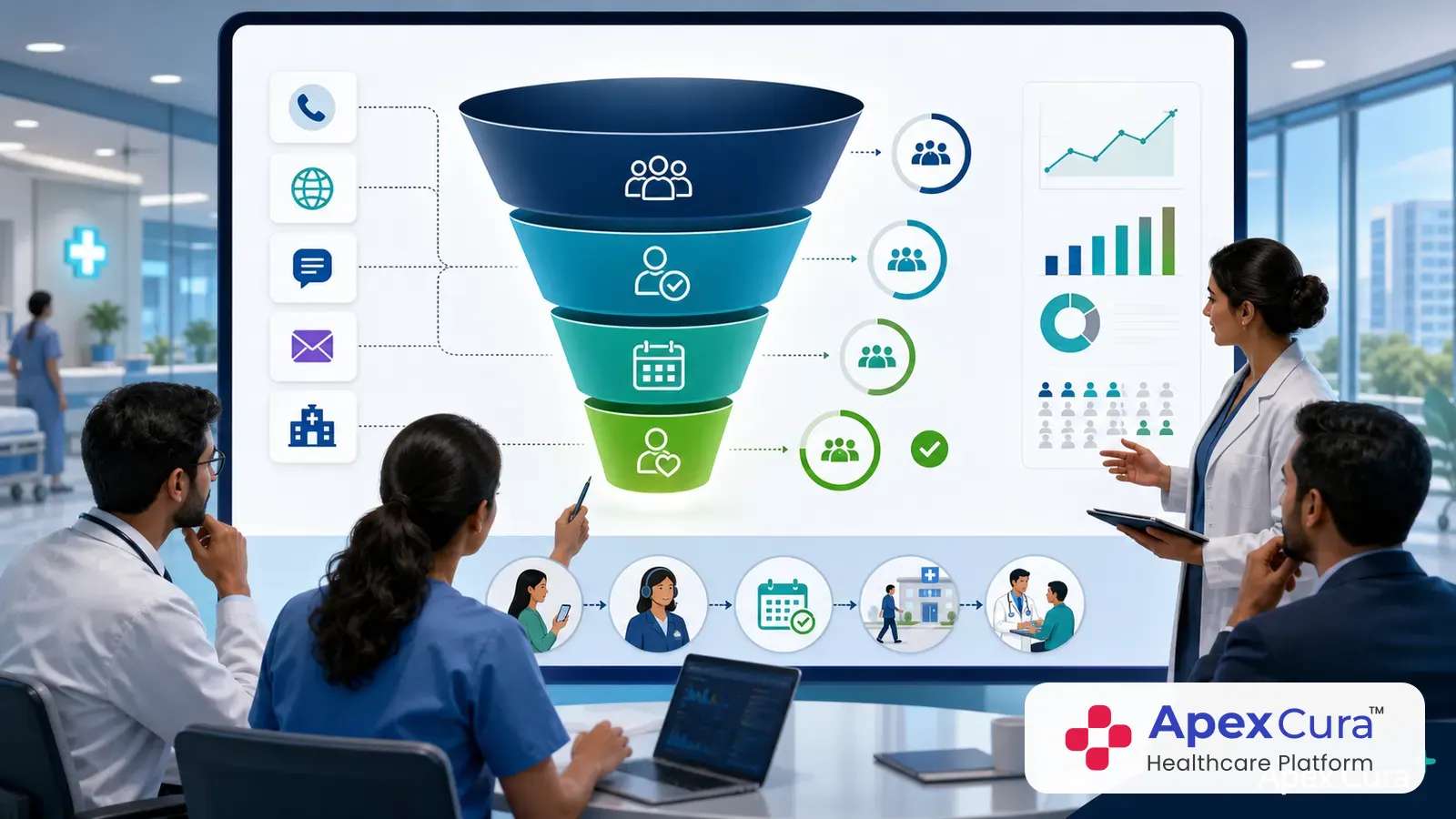
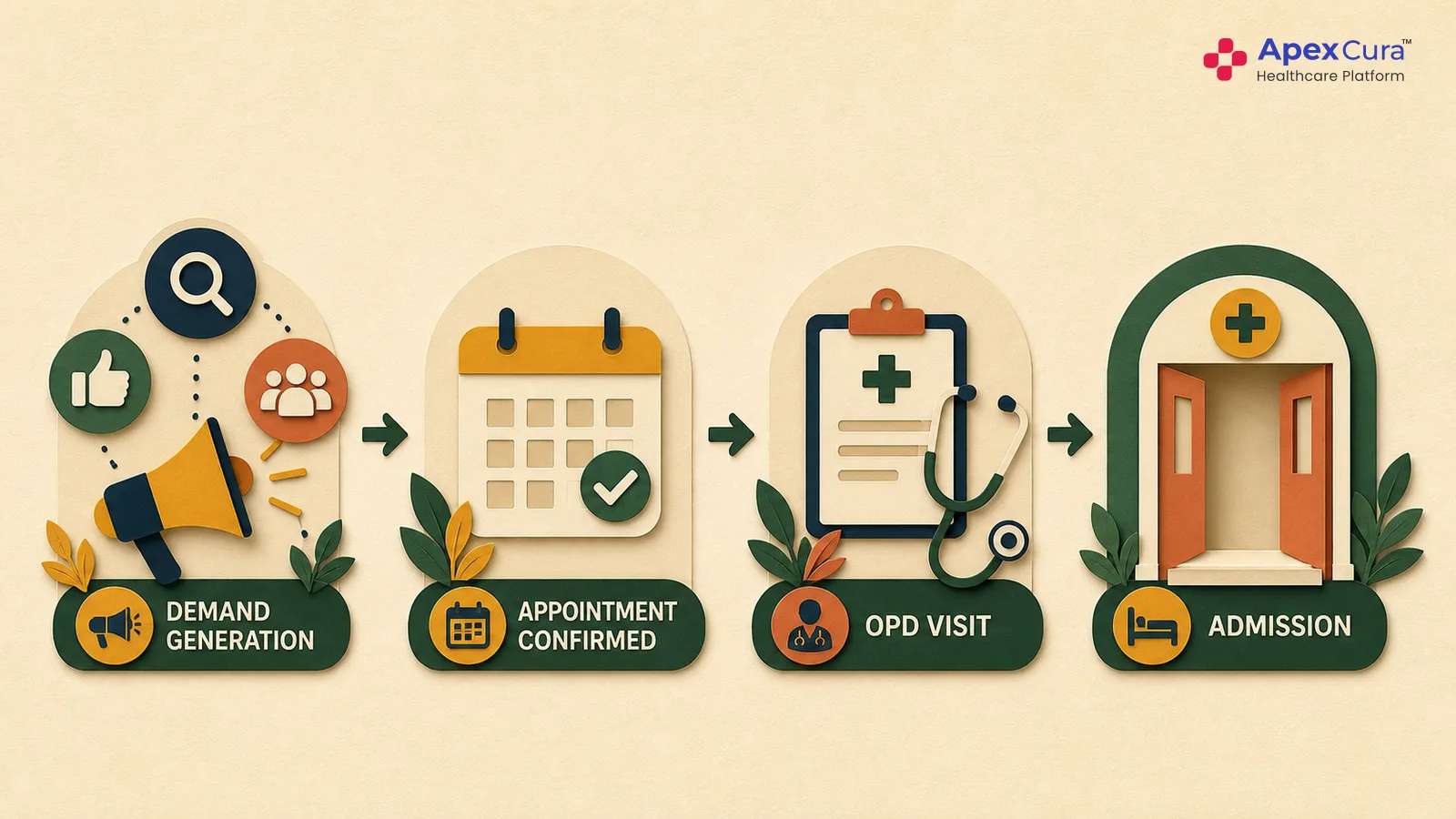
Source-wise reporting becomes useful only when an enquiry is linked to a meaningful patient outcome. Hospitals should track whether each source produced contact, qualification, appointment, completed visit and revenue where billing integration is available. Repeat patients should be handled through separate enquiry episodes so that a new need can have a new source without erasing the patient’s earlier history. This allows marketing teams to compare channels based on actual acquisition performance rather than raw enquiry volume.
Want to see whether your hospital can trace each campaign enquiry to a real patient outcome?
Lets Talk To ExploreHow Apex Cura Preserves Hospital Enquiry Attribution
Campaign metadata captured from the beginning
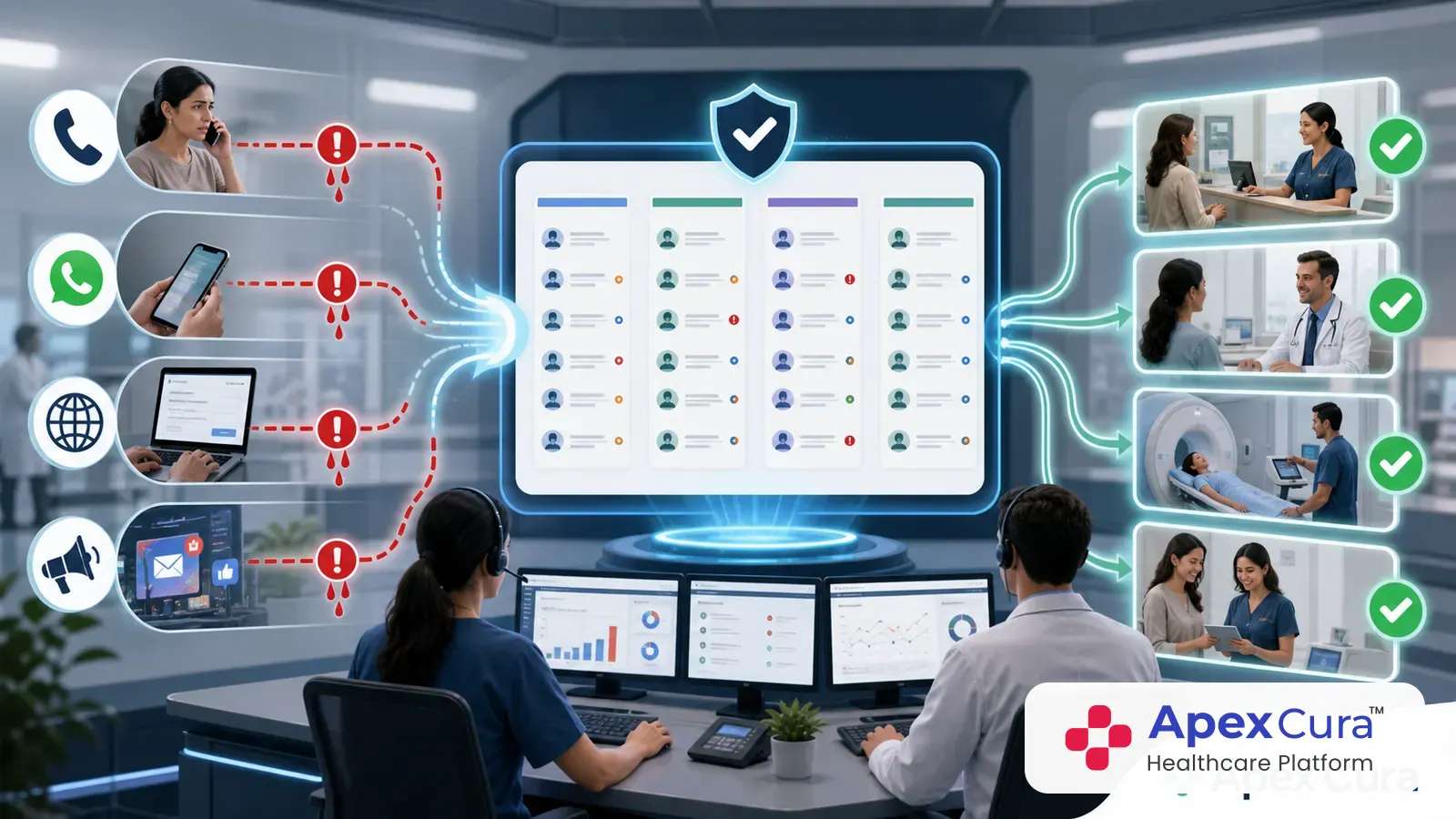
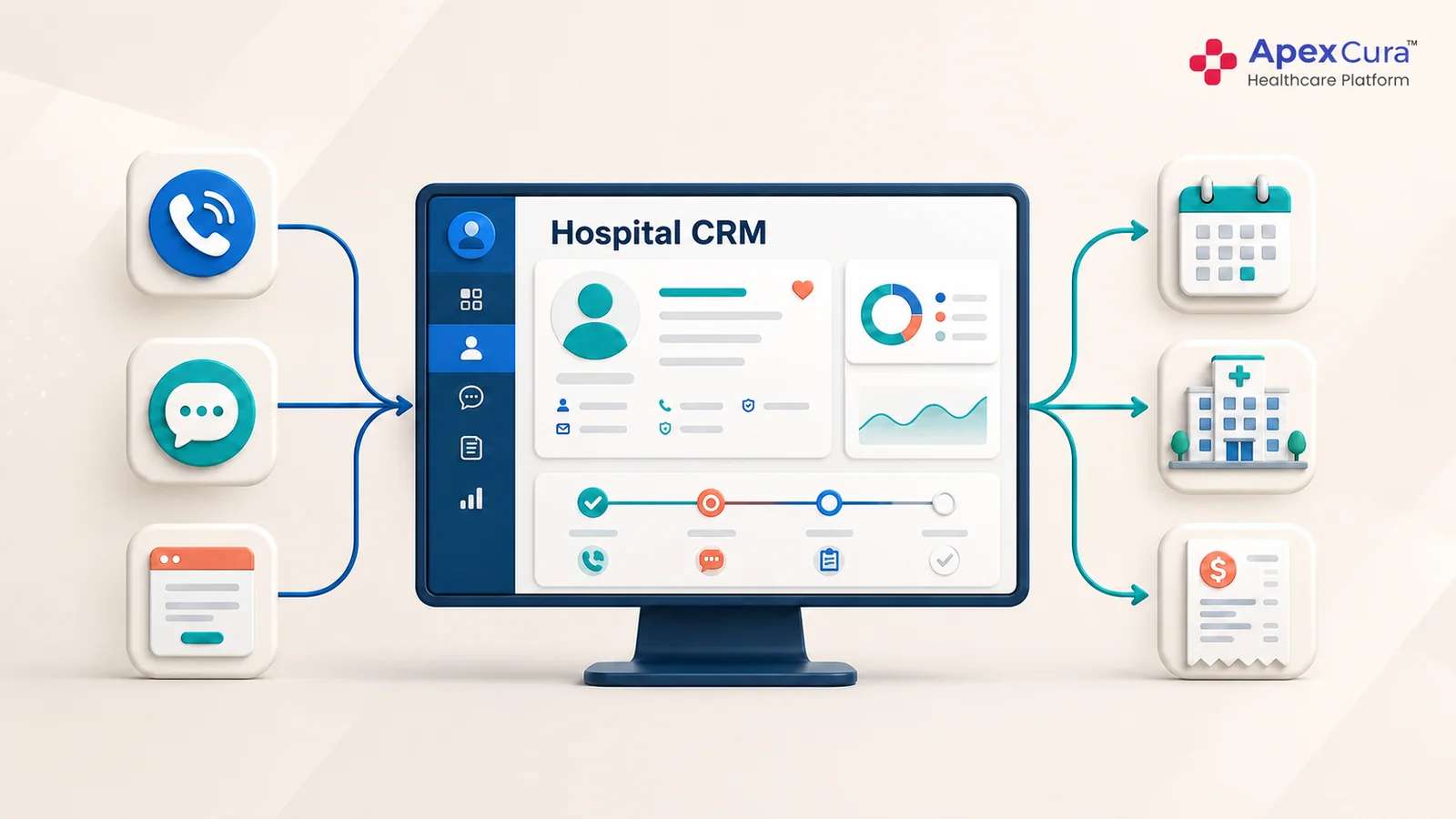
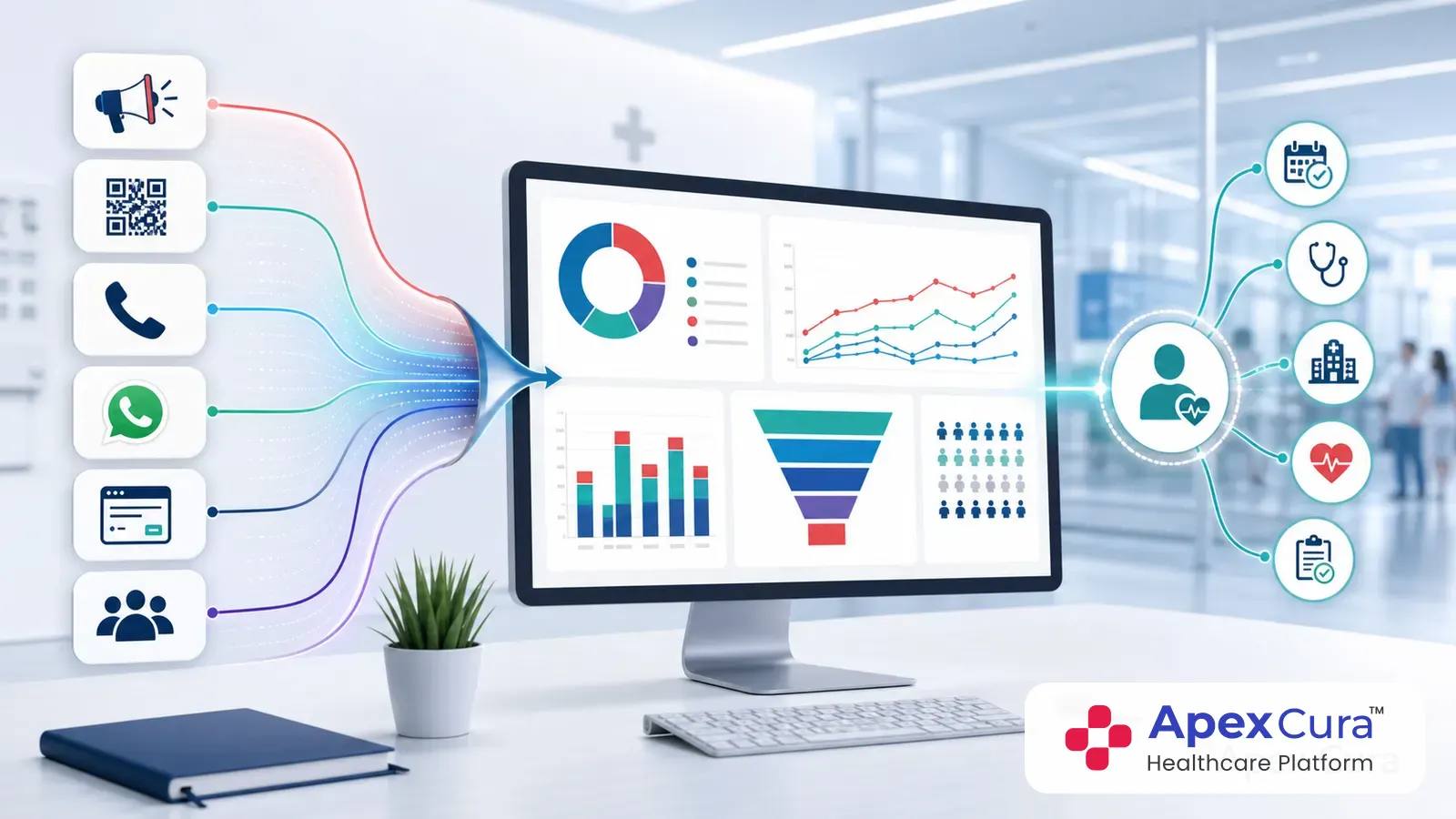
Apex Cura participates in campaign-traceability design so that enquiries from Google Ads, Facebook, Instagram, website forms, calls and offline activities carry source information into the CRM. UTMs, call-tracking identifiers, campaign codes and available WhatsApp or form metadata can be stored without asking an agent to recreate the source manually. This preserves the original campaign context and gives the call-centre team visibility into the activity, offer or service that generated the patient’s interest.
First-touch source retained across channel changes
The platform separates origination source from subsequent interaction channels. A patient who begins with an advertisement and later calls directly can retain the first-touch campaign while the direct call is added to the interaction history. A common patient profile and enquiry episodes help handle repeat needs without overwriting earlier attribution. Duplicate handling and identity-resolution rules support cases involving multiple numbers, shared family contacts and spelling variations while preserving the underlying source evidence.
Source-wise outcomes and controlled AI assistance
Where appointment, OPD and billing integrations are available, Apex Cura connects source information to downstream outcomes. Marketing and management teams can compare enquiries, appointments, completed visits and revenue by source, campaign, region or activity. Where attribution is ambiguous, ML or AI-assisted logic can suggest the most likely association, but the system can retain the distinction between captured and inferred data. This makes campaign ROI more defensible and reduces dependence on inconsistent human updates.
Conclusion
Correct hospital attribution starts during campaign planning, not after reports are requested. Hospitals must preserve first-touch source, track later interaction channels separately, resolve patient identity carefully and connect enquiries to completed outcomes. Without that continuity, channel ROI is based on incomplete or misleading data.