Why Hospital Enquiry Conversion Breaks Between Stages
One conversion rate hides several different problems
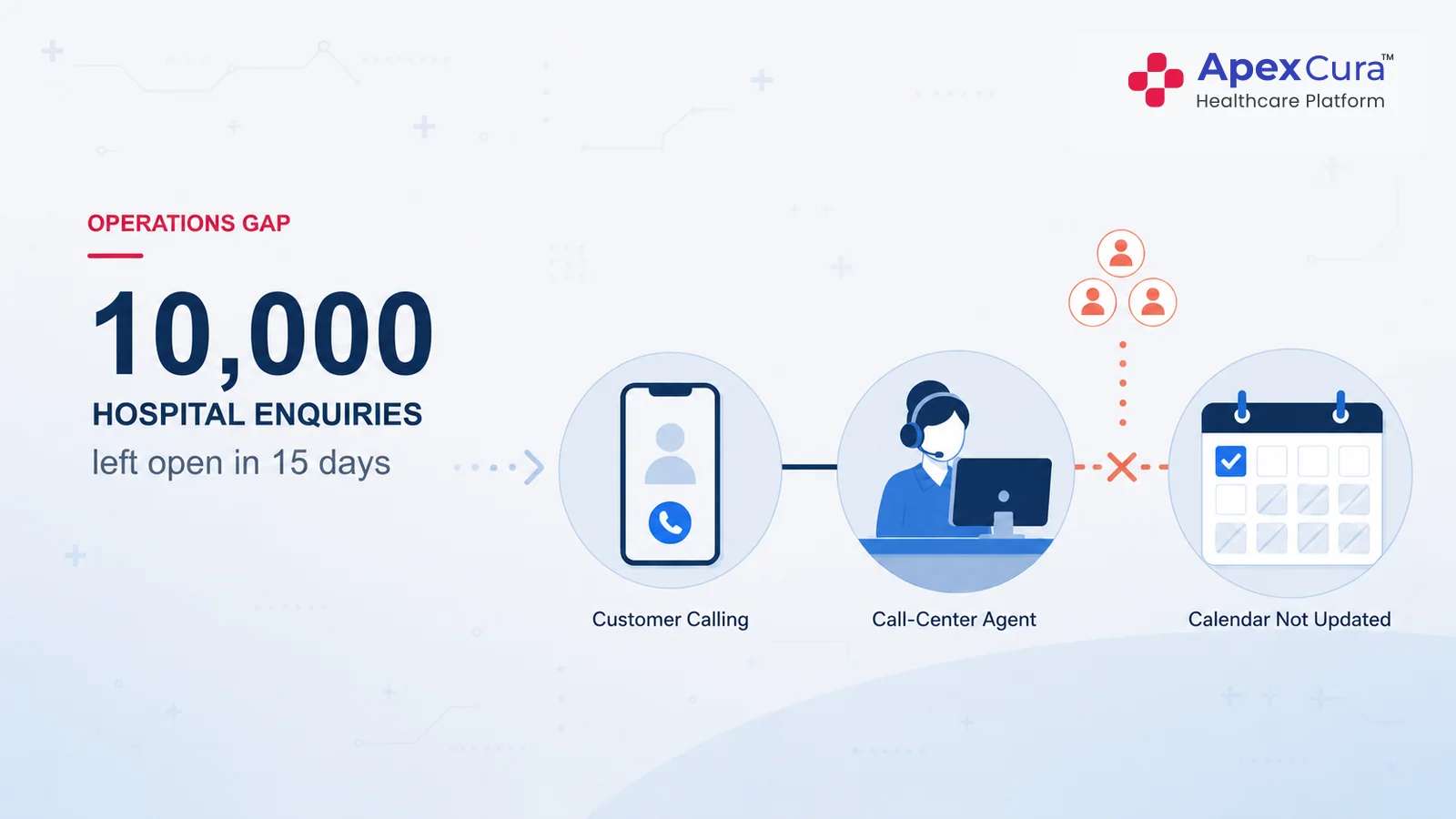
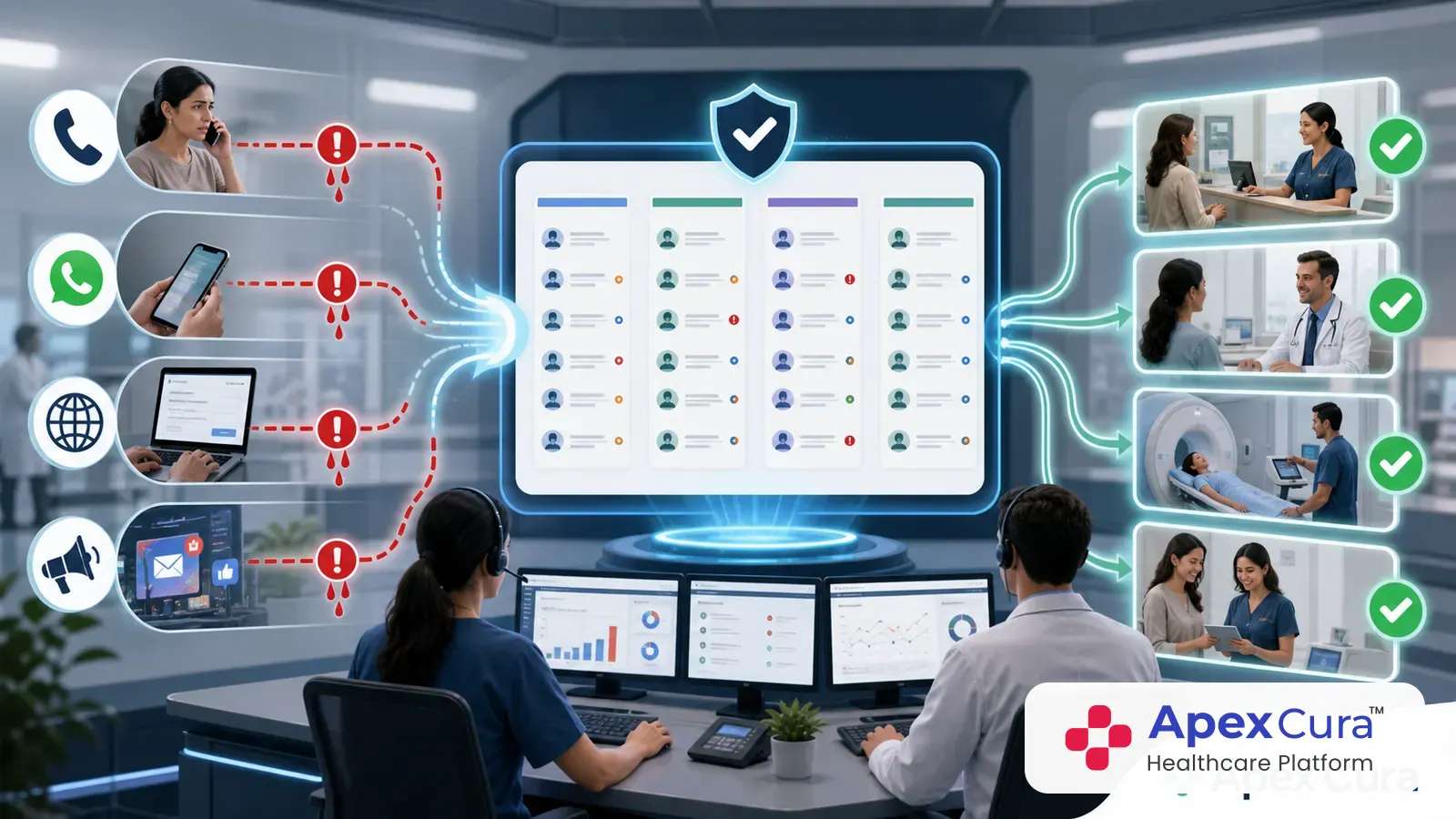
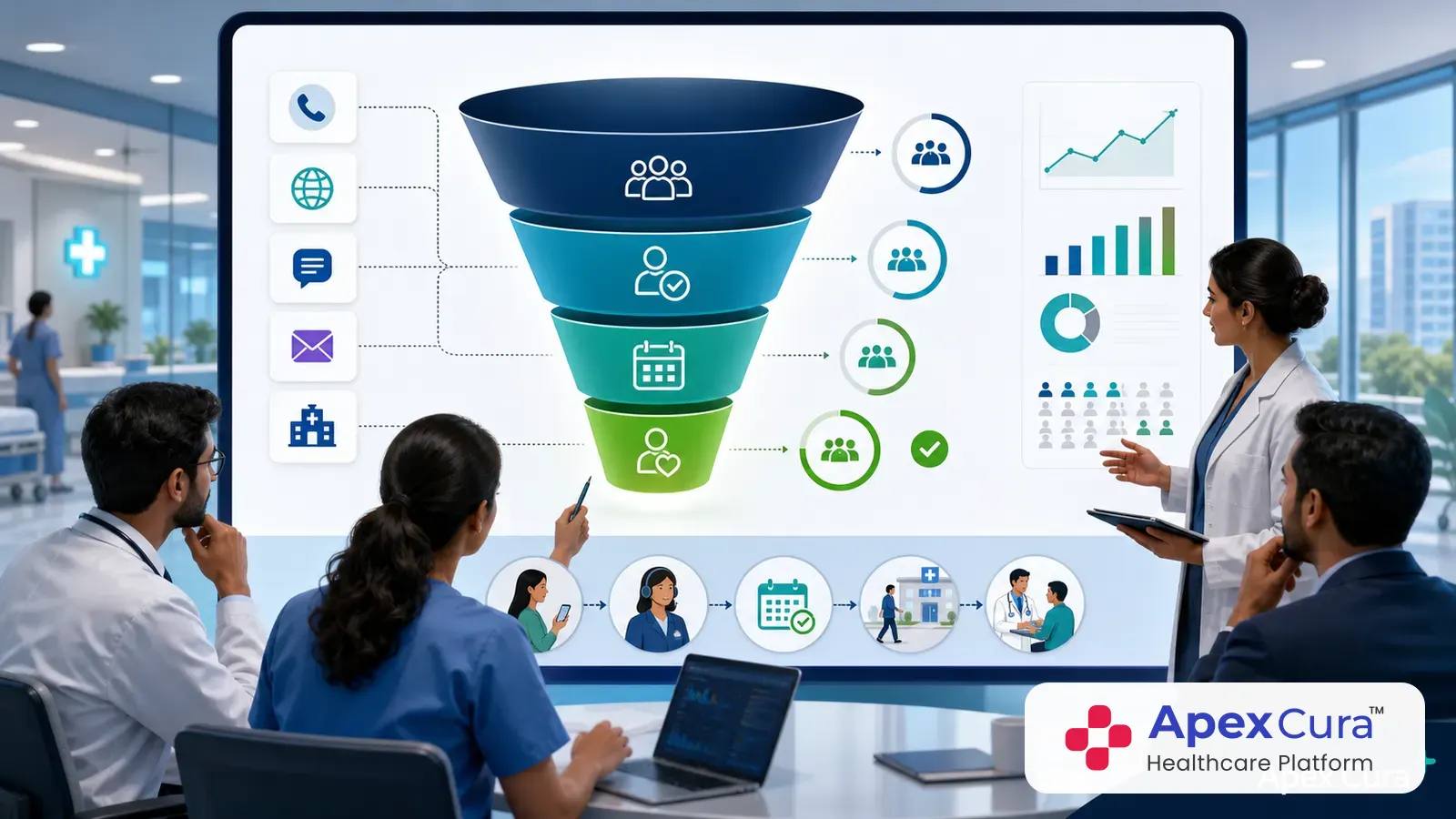
Calls, support requests and genuine treatment enquiries should not be placed in one denominator. A hospital may report a weak call-to-appointment ratio even when a large share of calls concerns reports, billing or existing appointments. Conversely, a reasonable appointment count may conceal poor contact rates or high-intent enquiries that were never followed up. A Healthcare CRM for Hospitals should provide separate measures for enquiry-to-contact, contact-to-qualified enquiry, qualified enquiry-to-appointment, appointment-to-footfall and direct conversion without a prior booking.
Weak performance is a symptom, not a diagnosis
A low call-to-appointment ratio may result from poor intent identification, weak agent engagement, inadequate explanation of taking an appointment, short call duration or limited service knowledge. A low appointment-to-footfall ratio may come from absent reminders, unresolved concerns, doctor changes or weak confirmation. Looking only at the final number leads managers to push agents for more calls instead of identifying the stage and reason for underperformance. Each weak KPI therefore requires a root-cause analysis before an SOP is changed.
Unstructured follow-up causes avoidable drop-offs
Qualified patients become inactive when ownership is unclear, retry attempts are poorly spaced or the next action depends on an agent’s memory. Five calls made within two minutes are not meaningful follow-up. It is not useful to mark a lead as lost without recording whether the concern was price, location, doctor availability, timing, a second opinion or lack of interest. Without structured stages, dispositions and lost-reason capture, the hospital cannot distinguish genuine demand loss from operational failure.
Key insight: Conversion is not one final sales target. It is the result of several measurable stages, each with its own owner, expected action and possible failure.
How Hospitals Can Improve Conversion Systematically
Define the funnel before measuring it
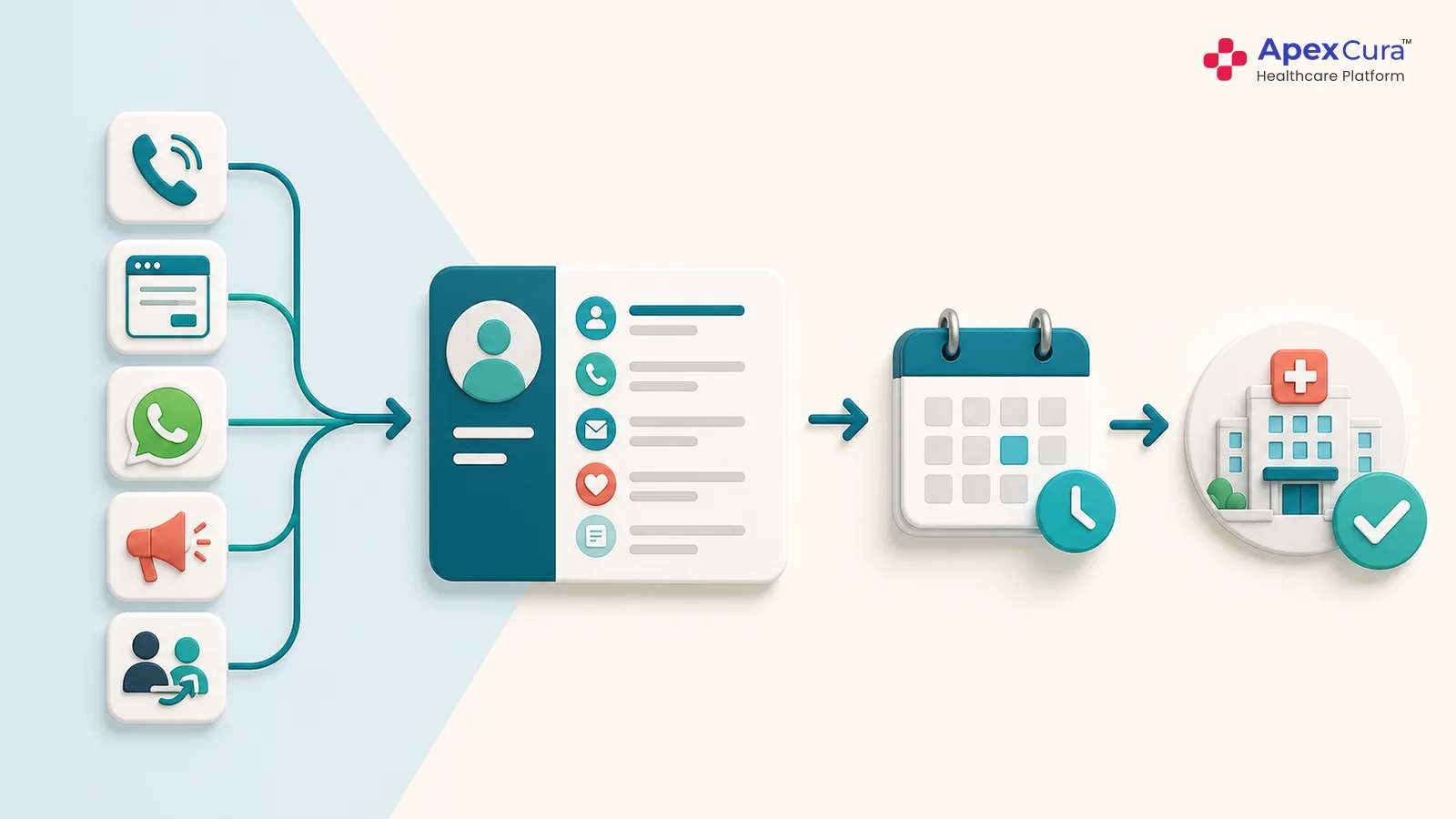
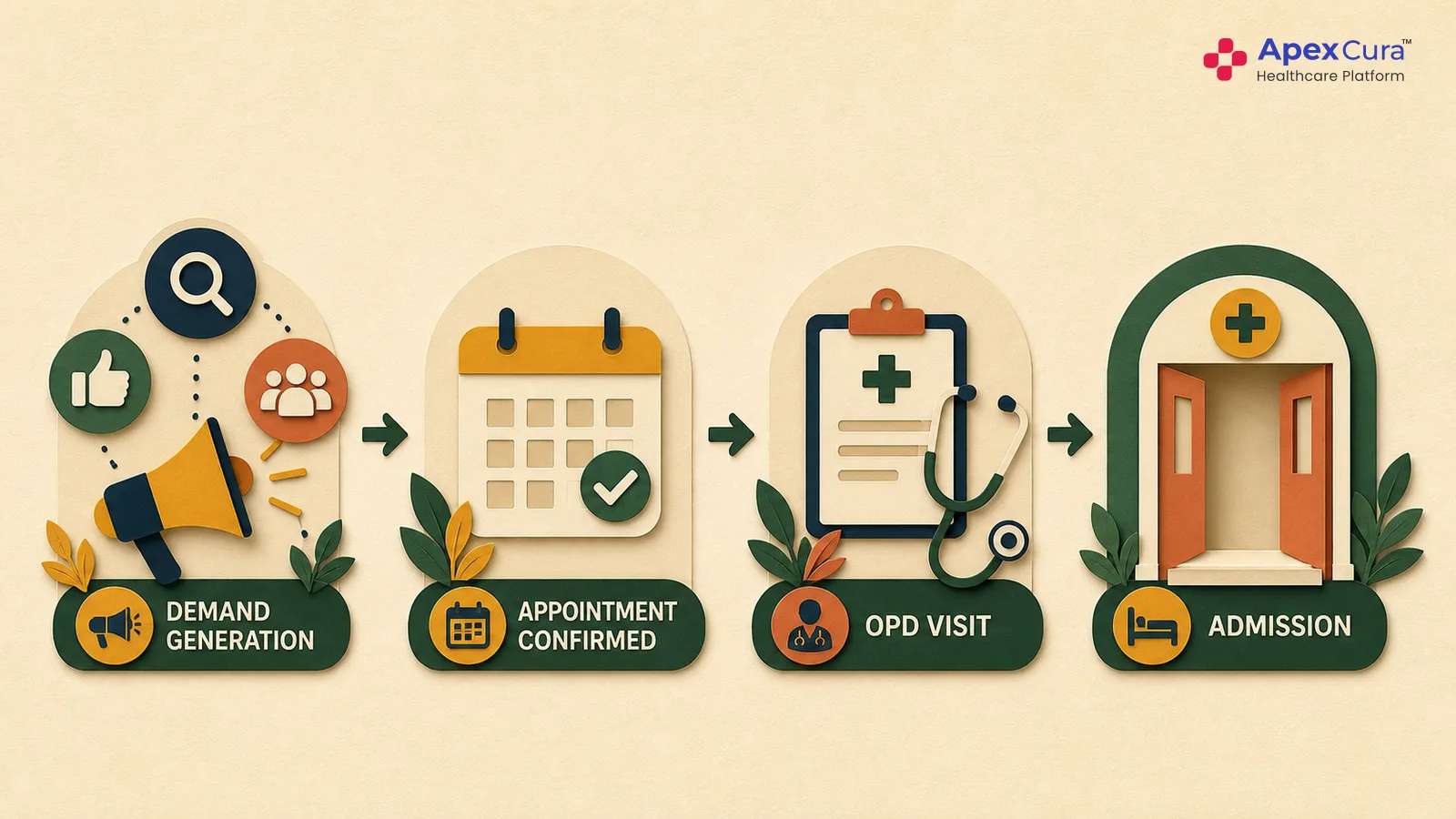
Hospitals should establish precise definitions for enquiry, qualified enquiry, appointment conversion and completed visit conversion. Each stage should have clear entry and exit criteria. A new enquiry becomes contacted only after a meaningful interaction, not merely after a dial attempt. It becomes qualified when the treatment need, location, timing and interest are sufficiently understood. An appointment should be separated from a completed visit, because booking performance and footfall performance are affected by different operational factors.
Prioritise by intent and prescribe the next action
Not every enquiry requires the same response or cadence. A patient asking for immediate consultation, surgery pricing or a specific specialist may need faster attention than a general information request. Lead scoring and intent classification should guide priority, while SOPs define first-response time, retry count, spacing, reminder channels and escalation. After an unanswered call, a relevant WhatsApp message may preserve context, but it should support rather than replace the follow-up process or ignore the patient’s communication preference.
Measure the weak stage and the likely cause
Management dashboards should show stage-wise conversion, response TAT, missed-call recovery, overdue follow-ups, lost reasons and appointment-to-footfall performance. Agent-level call analysis can then reveal whether the issue is knowledge, engagement, communication quality or process compliance. This creates a practical improvement cycle: identify the weak KPI, investigate the likely causes, define the corrective SOP and measure whether the team follows it consistently.
Want to see where valid patient enquiries are dropping out of your conversion funnel?
Lets Talk To ExploreHow Apex Cura Improves Hospital Enquiry Conversion
Structured stages and intelligent prioritisation
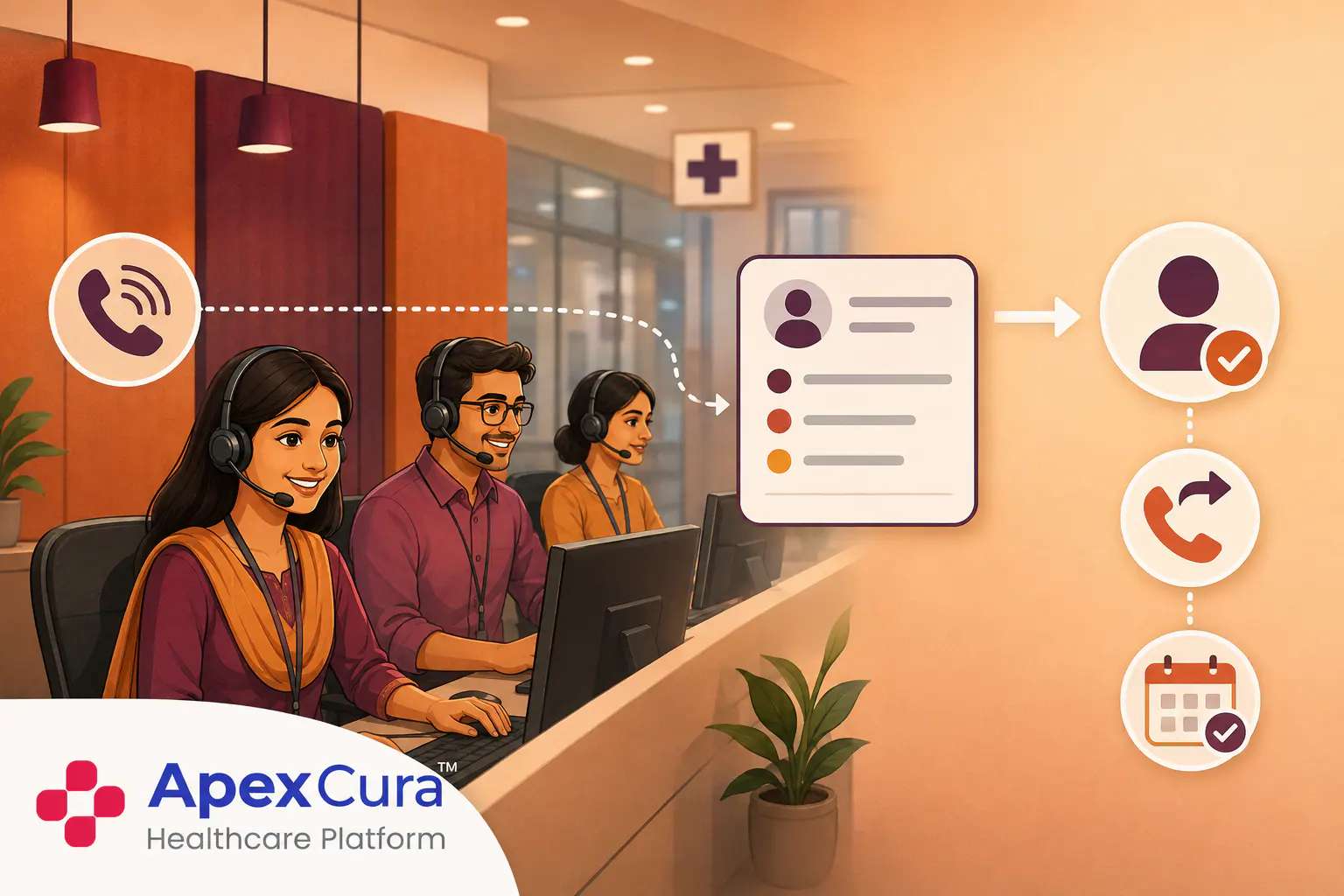
Apex Cura creates a defined enquiry lifecycle rather than leaving every agent to interpret lead status differently. AI-based intent identification and lead scoring help separate support interactions from genuine acquisition opportunities and prioritise enquiries based on patient need and readiness. Clear ownership, stage definitions and next-action rules make it easier for agents to work consistently. The system reduces the risk that a high-intent enquiry remains buried under routine calls or is marked inactive before the required actions are completed.
Automated follow-up without relying on memory
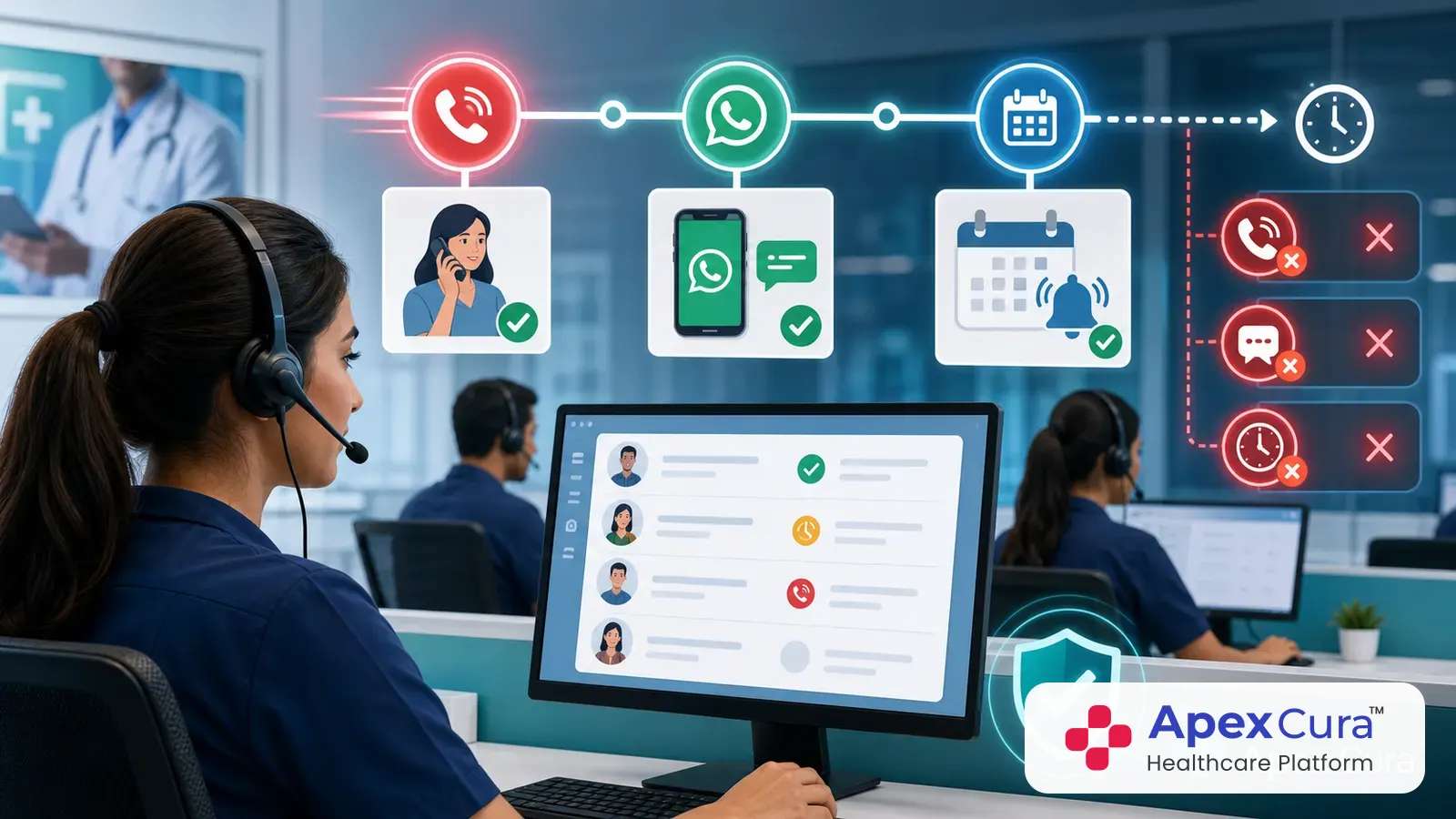
Task creation, reminders, retry logic and prioritisation guide the agent’s daily work from a single window. The system can track first-response time, the number and spacing of attempts, follow-up history and overdue activity. WhatsApp communication can be triggered after unanswered calls where appropriate, while dispositions and concern capture preserve the reason for every outcome. Supervisors gain visibility into non-compliance and can reassign or escalate enquiries before the patient becomes inactive.
Stage-wise visibility from enquiry to visit
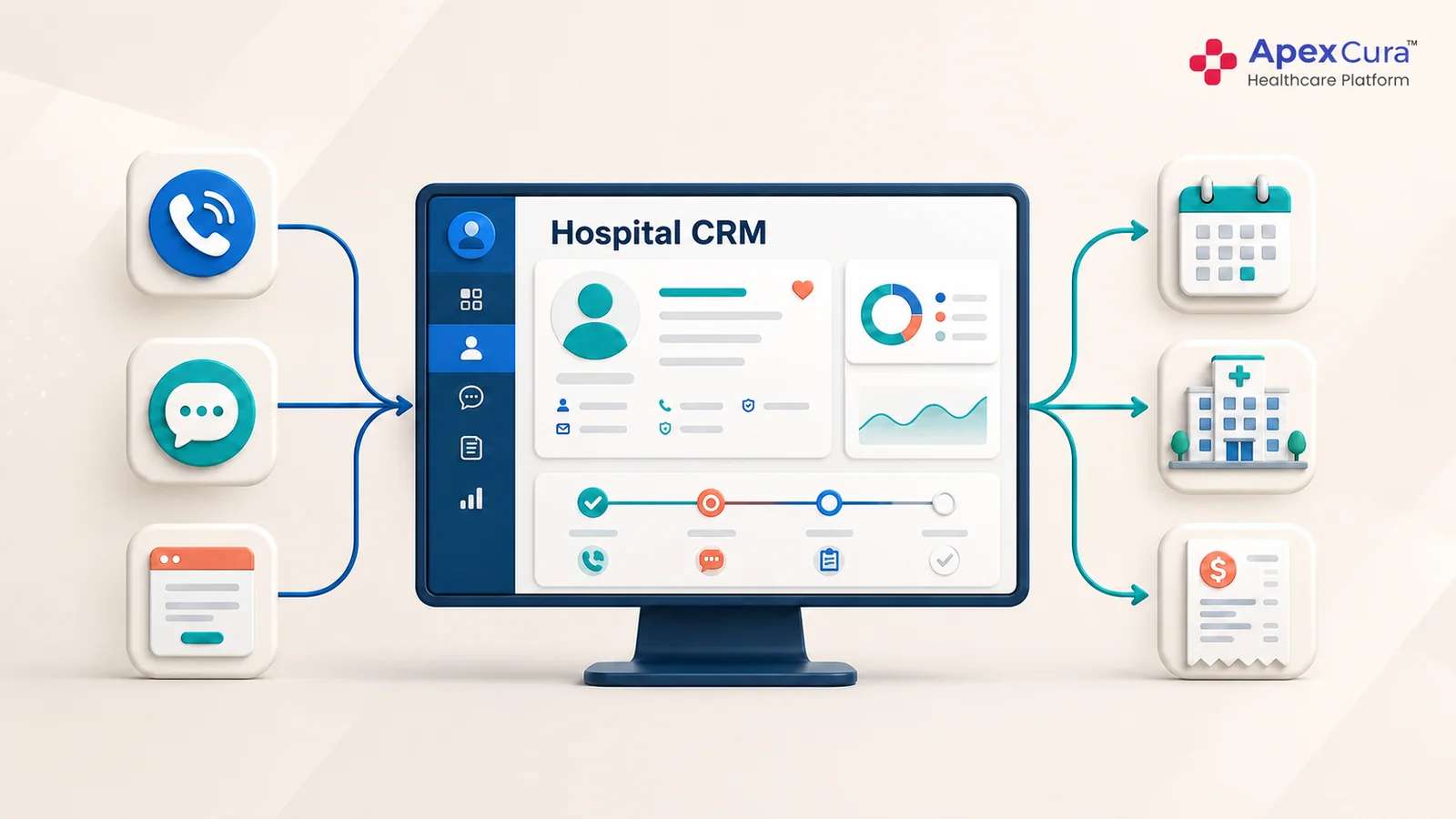
Conversion dashboards show where patients are dropping out instead of reporting only total leads and appointments. Call-quality analysis and agent metrics help explain why a stage is weak. Where integrations are available, Apex Cura links enquiries with appointments, completed OPD visits and billing outcomes, creating a defensible view of real conversion. This allows hospitals to improve the exact process stage that is failing rather than increasing marketing spend or call volume without understanding the underlying issue.
Conclusion
Hospital enquiry conversion improves when every stage is defined, owned and measured. The strongest operating model separates genuine enquiries from support traffic, prioritises patients by intent, enforces a reasonable follow-up process and links appointments to completed visits. This turns conversion from a broad target into a continuous, evidence-based improvement process.