Where Hospital Enquiries Commonly Get Lost
Leakage begins before a lead is created
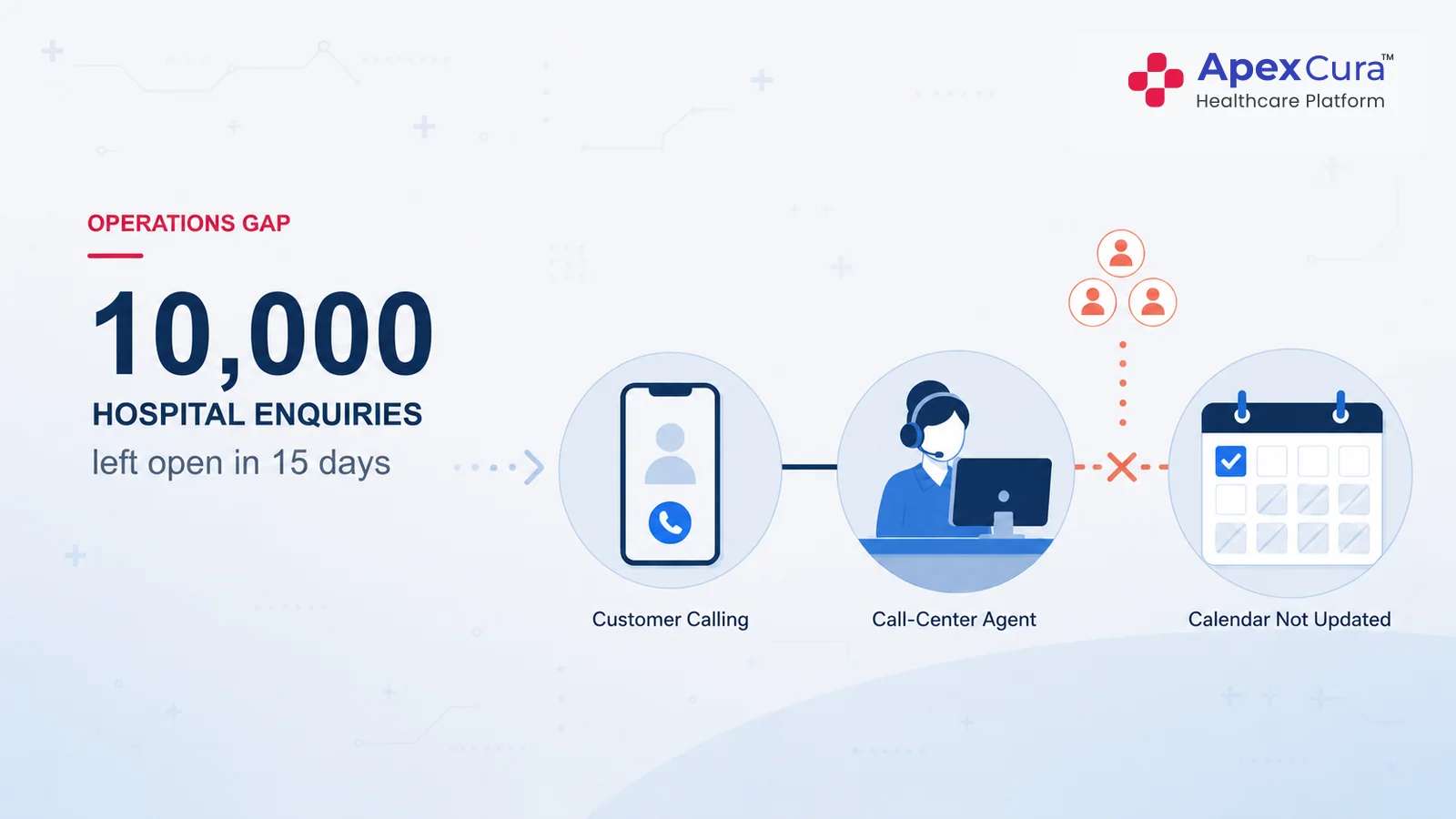
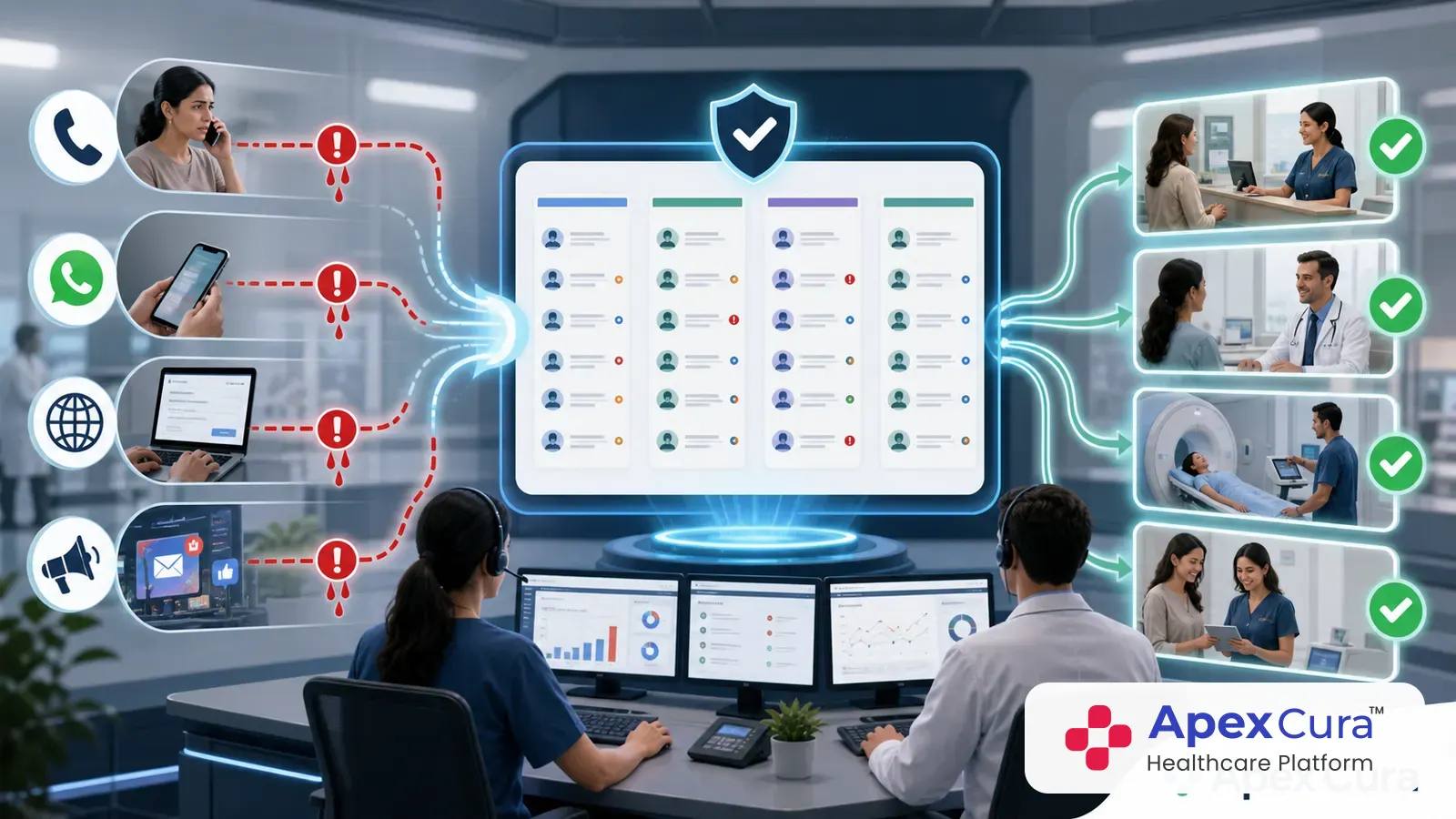
A genuine patient enquiry can disappear before anyone recognises it as a lead. An incoming call may be missed and never called back, a website form may remain in an inbox, or a WhatsApp conversation may be handled as a casual message without creating an enquiry record. Even an answered call can leak when the agent gives basic information but does not capture the patient’s treatment need, location, preferred doctor or readiness to visit. The hospital therefore sees activity, but not a complete acquisition opportunity.
Handoffs create invisible gaps
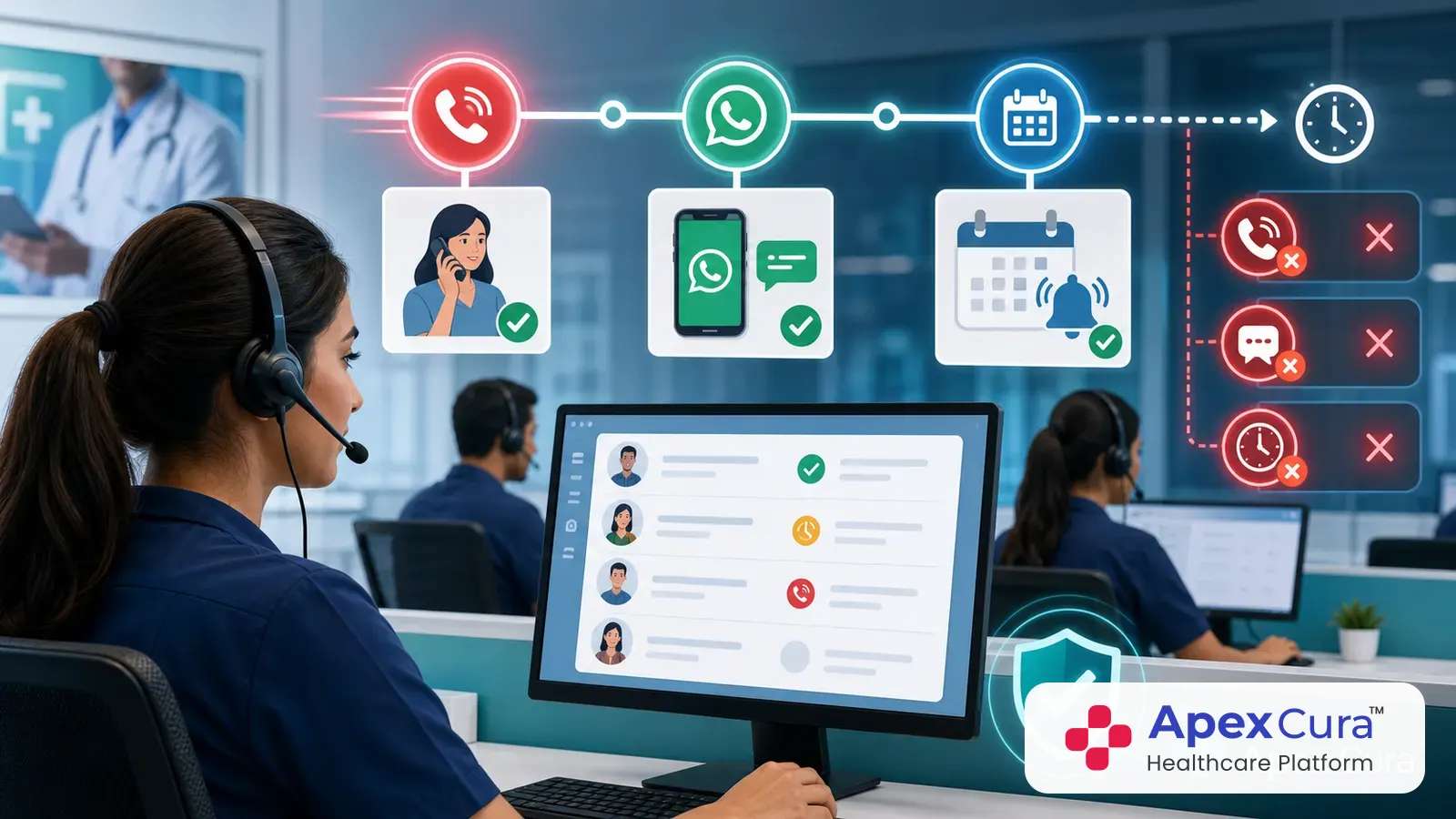
Once an enquiry is recognised, it can still be lost during assignment and follow-up. A call may be transferred to the wrong department, a lead may remain unassigned, or ownership may move through paper notes, personal WhatsApp groups and spreadsheets that supervisors cannot monitor. A Patient Enquiry Management CRM gives employees one place to see what they need to do next and when they need to do it. Delayed callbacks, incomplete retries and missing dispositions then appear as individual mistakes, although the real problem is a fragmented operating process.
Appointments are not the final proof
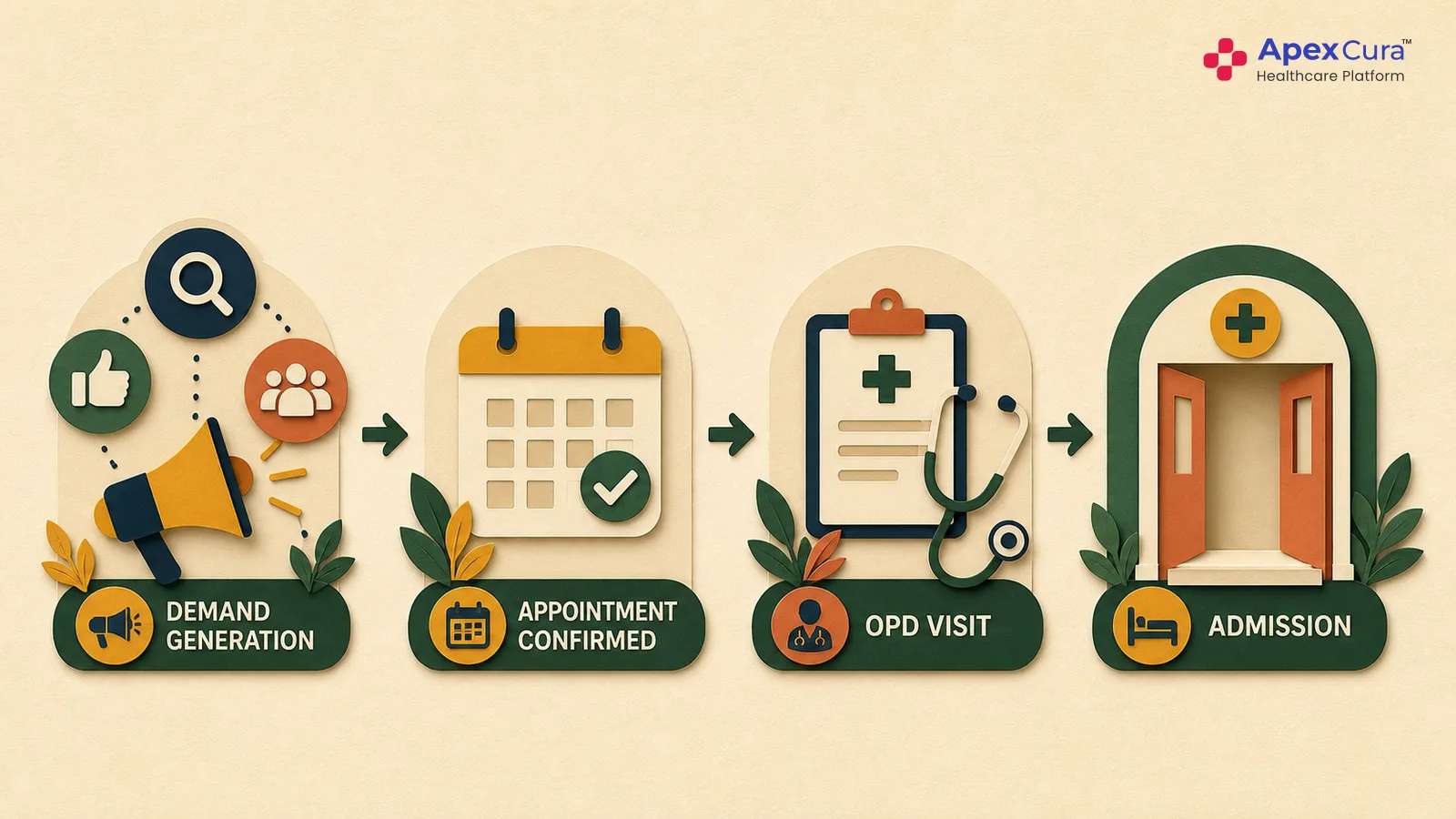
Leakage also occurs when the hospital cannot connect an enquiry to its eventual outcome. A patient may book through one channel, visit through another number, or arrive directly without the call-centre team updating the lead. Without linkage to appointments, completed OPD visits and billing outcomes where integrations permit, management cannot distinguish a failed follow-up from an unrecorded conversion. The result is unreliable conversion reporting, unclear marketing ROI and a false belief that more enquiries are required.
Key insight: Hospital enquiry leakage is not one missed call. It is the cumulative loss across capture, understanding, ownership, follow-up and outcome tracking.
How Hospitals Can Build a Better Enquiry Process
Create one accountable enquiry lifecycle
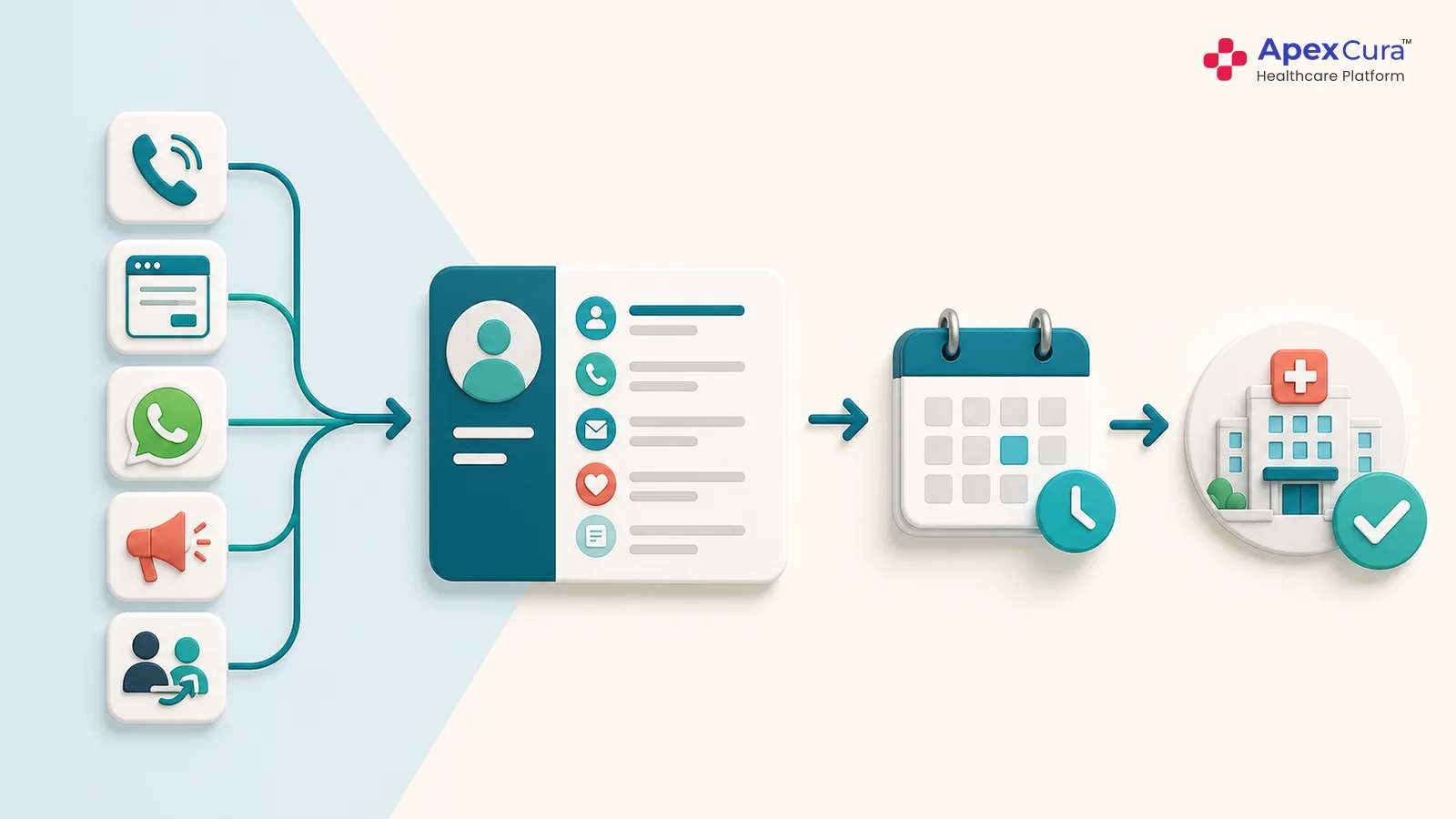
Hospitals should first define what qualifies as a genuine enquiry and create a common lifecycle for every channel. Each incoming call, missed call, WhatsApp conversation, website form or campaign response should be automatically captured wherever possible. The record should include the patient’s need, source, interaction history and current stage. Every stage must have a responsible owner, an expected next action and a measurable timeline. This prevents enquiries from remaining in informal communication channels where neither the call-centre team nor management can track them.
Replace memory with workflow controls
Follow-up should be governed by clear SOPs rather than personal memory. The hospital must define response TAT, the appropriate number of attempts, the spacing between retries, required dispositions and the conditions for escalation or reassignment. Overdue tasks should be visible to supervisors before the patient becomes inactive. The same system should preserve the history of transfers, callbacks and patient concerns, so the next employee can continue the conversation with context instead of asking the patient to repeat the entire requirement.
Measure leakage stage by stage
Management should review more than total leads and appointments. Useful indicators include missed calls without callbacks, captured interactions without enquiry records, unassigned enquiries, overdue tasks, enquiries without dispositions, transfers without ownership and appointments without confirmed visit outcomes. These metrics show where the operating process is breaking. When appointment, OPD and billing systems are integrated, hospitals should link the enquiry to the completed outcome, giving marketing and operations teams one defensible view of acquisition performance.
Want to see how your hospital can track and prevent enquiry leakage?
Lets Talk To ExploreHow Apex Cura Helps Hospitals Prevent Enquiry Leakage
One window for enquiries across channels
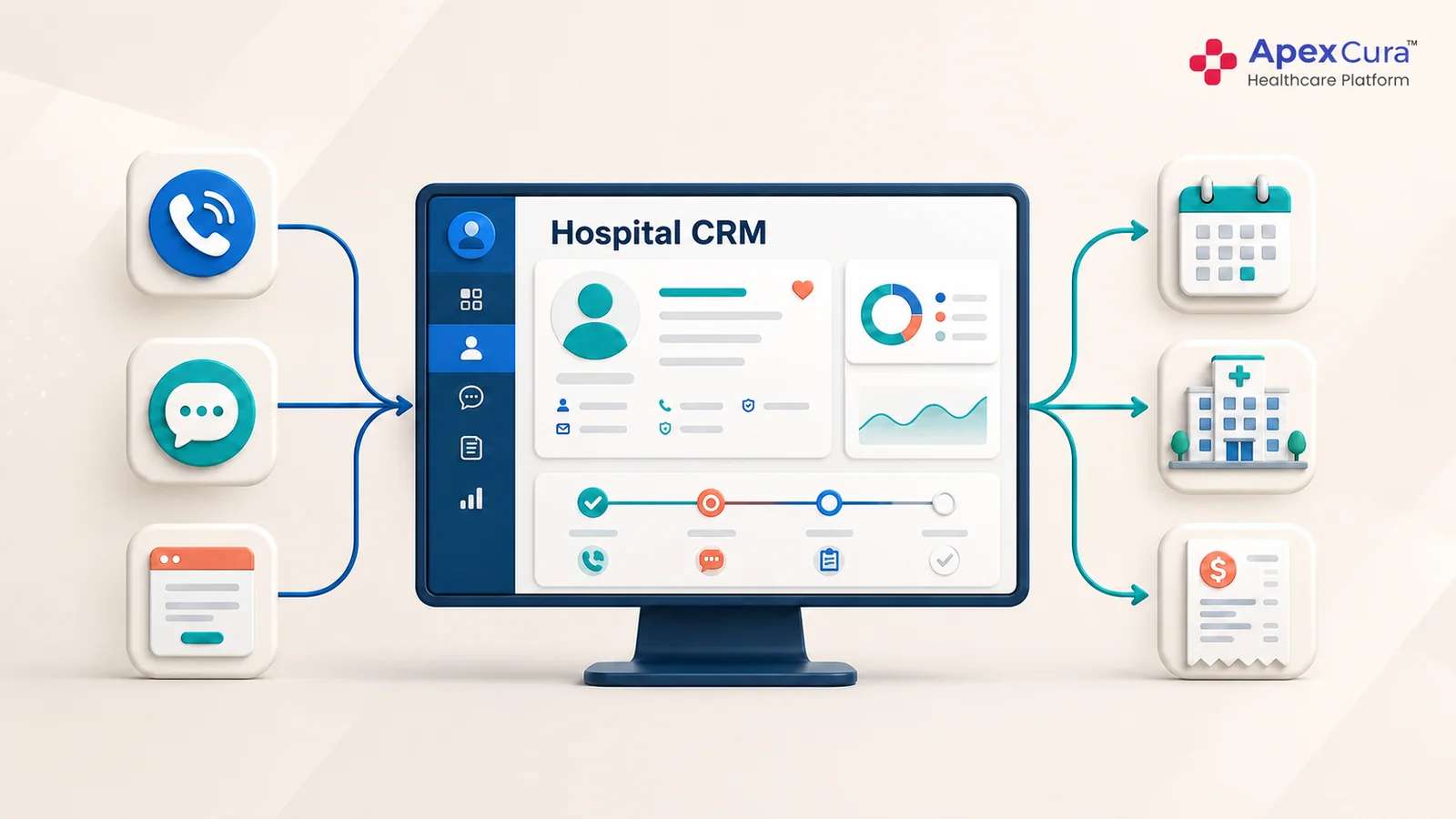
Apex Cura brings incoming calls, missed calls, WhatsApp conversations, website forms and campaign enquiries into a common enquiry-management workflow. Records can be created automatically instead of depending on an employee to copy information from one tool to another. AI-based intent identification helps classify the interaction and understand the patient’s need, while a common patient profile reduces fragmentation across repeated interactions. This gives the team a single working view and helps management account for enquiries that would otherwise remain hidden inside channel-specific systems.
Automated ownership, retries and reminders
The platform assigns enquiries to the appropriate team or specialist using defined routing rules and maintains clear ownership throughout the lifecycle. Retry logic, reminders and task prioritisation guide agents on what must be handled next, while dispositions and follow-up history preserve what happened during every attempt. Supervisors can see overdue work, delayed responses and non-compliance with SOPs without waiting for manual reports. The objective is not to ask call-centre agents to remember more, but to remove coordination and prioritisation complexity from their daily work.
End-to-End visibility of customer Journey
Where hospital systems are integrated, Apex Cura connects the enquiry with appointment, OPD visit and billing outcomes. Leakage and conversion dashboards then show which enquiries were missed, which were delayed, where ownership failed and which interactions ultimately produced visits. This creates a more accurate baseline for improving patient acquisition. Hospitals can focus on specific workflow failures instead of increasing marketing expenditure without knowing whether existing demand is being captured, followed up and converted properly.
Conclusion
Hospitals do not prevent enquiry leakage by generating more leads or asking teams to work harder. They prevent it by capturing every genuine interaction, assigning clear ownership, enforcing follow-up workflows and connecting enquiries to completed patient outcomes. A unified enquiry-management process makes existing demand visible and gives management the evidence required to fix each leakage point.