Doctor Clinical Input
The doctor speaks or enters clinical findings, diagnosis, medicines, investigations, advice and follow-up instructions. See how voice-to-prescription AI for hospital doctors follows this natural flow.
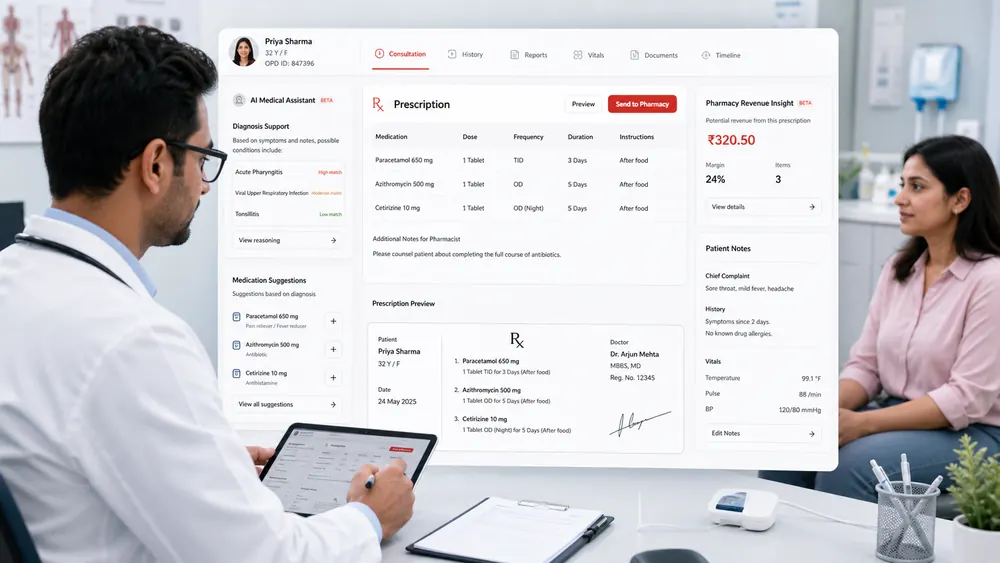
OPD Rx uses medically aware AI to convert doctor voice instructions into a structured digital OPD prescription draft. Doctors can review, modify and approve every draft before issuing the final prescription. The software can also capture ICD codes and make admission, procedure, test and revisit recommendations visible to authorised hospital teams.
Doctors can speak or enter clinical information during the consultation. The AI organises these instructions into a structured prescription draft for doctor review, correction and approval. OPD Rx does not diagnose patients, recommend medicines independently or issue prescriptions without doctor approval. The qualified doctor retains clinical responsibility. Learn how AI prescription software for hospital OPDs can support doctor workflow while preserving clinical control.
The doctor speaks or enters clinical findings, diagnosis, medicines, investigations, advice and follow-up instructions. See how voice-to-prescription AI for hospital doctors follows this natural flow.
The AI prescription assistant organises the doctor's clinical input into a structured draft. It does not issue a prescription independently.
The doctor verifies the clinical information, corrects the draft where required and approves the final prescription.
Generate a consistent digital OPD prescription containing medicines, dosage, investigations, clinical advice and follow-up information.
Move from doctor narration to reviewed prescription, coded record, and operational follow-up.
The doctor reviews the patient and conducts the outpatient consultation.
Clinical findings, diagnosis, medicines, investigations, and advice are dictated.
The assistant converts the doctor's instructions into an AI-generated prescription draft with specialty-aware medical documentation.
The clinician verifies, edits, approves, and issues the structured prescription.
Admission, procedure, test, or revisit advice becomes visible to authorised hospital teams.
Improve doctor adoption without sacrificing clinical control, structure, or downstream visibility.
Convert doctor narration into a structured prescription draft during the consultation.
Interpret terminology and documentation patterns relevant to different departments.
Record diagnostic codes as part of the structured OPD documentation workflow.
Organise diagnosis, medicines, dosage, investigations, advice, and follow-up consistently.
Keep the clinician in control before generating the final patient prescription.
Capture admission, procedure, investigation, and revisit recommendations for follow-up.
Allow authorised teams to understand pending recommendations and patient next steps.
Connect OPD documentation with downstream appointments, admissions, procedures, and outcomes.
Digital adoption improves when the software supports the way doctors speak, think, review and recommend next actions. Hospitals planning digital OPD prescription implementation should evaluate workflow fit before scaling.
Make the reviewed clinical record and recommendations available where authorised teams need them.
Reduce documentation friction for doctors while creating structured information for patients and hospital teams.
Reduce typing effort by converting spoken clinical instructions into a structured draft.
Capture diagnosis, investigations, advice, medicines, and next steps in one consultation record.
Provide readable, standardised, printable prescriptions across departments.
Improve availability of ICD-coded information for reporting and continuity.
Make doctor recommendations visible to counseling, admissions, and operations teams.
Connect outpatient recommendations with tests, procedures, admissions, and follow-up outcomes.
OPD Rx converts doctor voice instructions into structured clinical notes and prescription drafts, reducing typing and documentation effort.
The medically aware assistant interprets specialty terminology, consultation patterns, medicines, investigations, diagnosis, and follow-up instructions.
Doctors review, edit, and approve the AI-generated draft before the prescription is finalised, printed, or stored.
No. OPD Rx structures the clinical instructions provided by a qualified doctor. The doctor reviews, corrects and approves every prescription before it is issued.
Yes. It captures diagnosis, ICD codes, findings, investigations, treatment advice, procedures, and recommended follow-up actions.
Voice-assisted documentation reduces typing, preserves consultation flow, and allows doctors to approve structured prescriptions quickly.
Yes. Hospitals can configure prescription formats for review, printing, storage, and authorised digital sharing with patients.
OPD Rx digitises doctor recommendations and makes them available to authorised counselling, admissions, operations, and medical teams.
Yes. OPD Rx integrates with HIMS, EMR, appointments, laboratory, pharmacy, and downstream workflows through available APIs.
Practical guides on voice documentation, doctor adoption, e-prescriptions, and hospital integration.
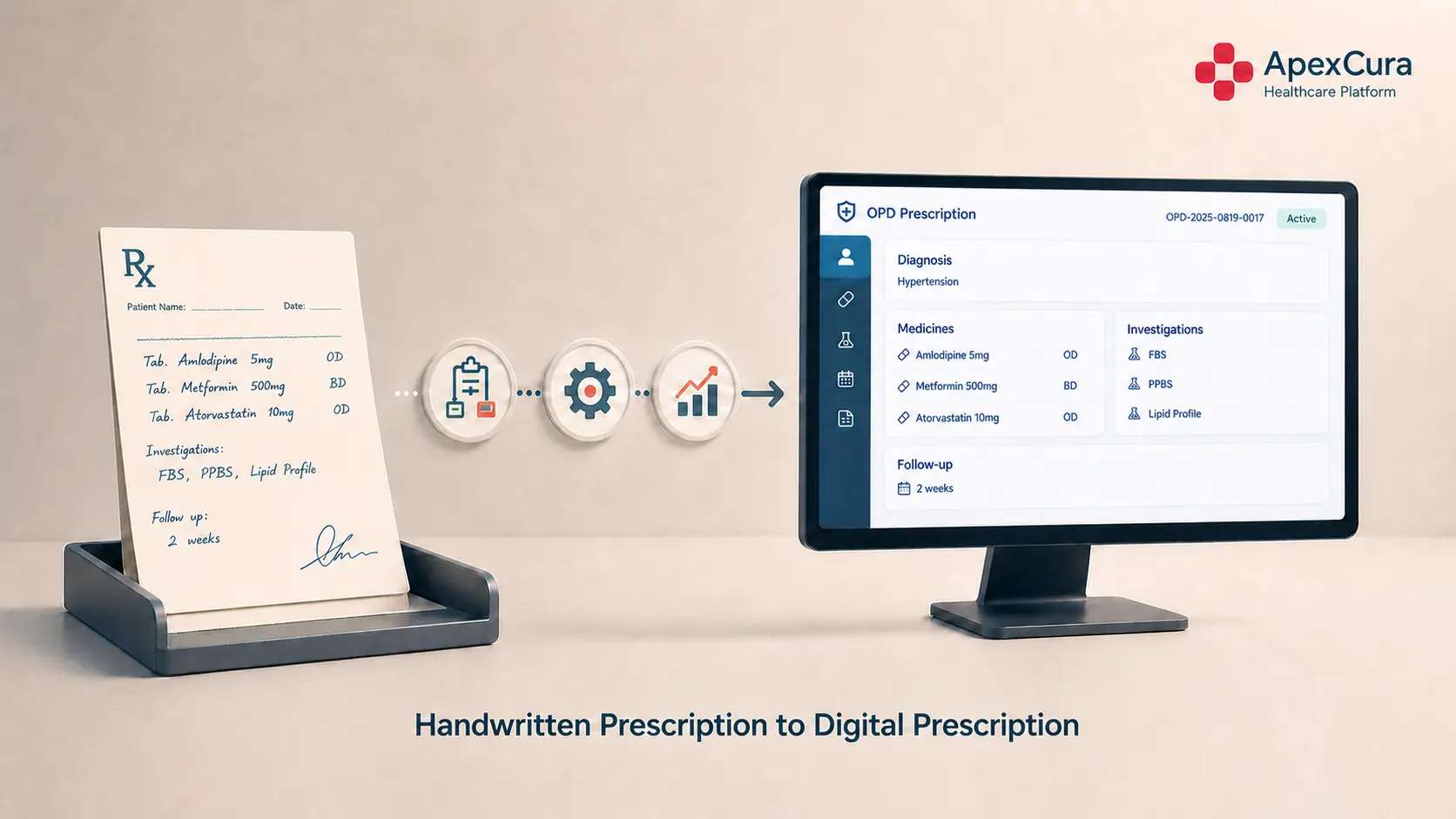
Map workflows, evaluate software and resolve adoption problems before scaling digital prescriptions.
Read article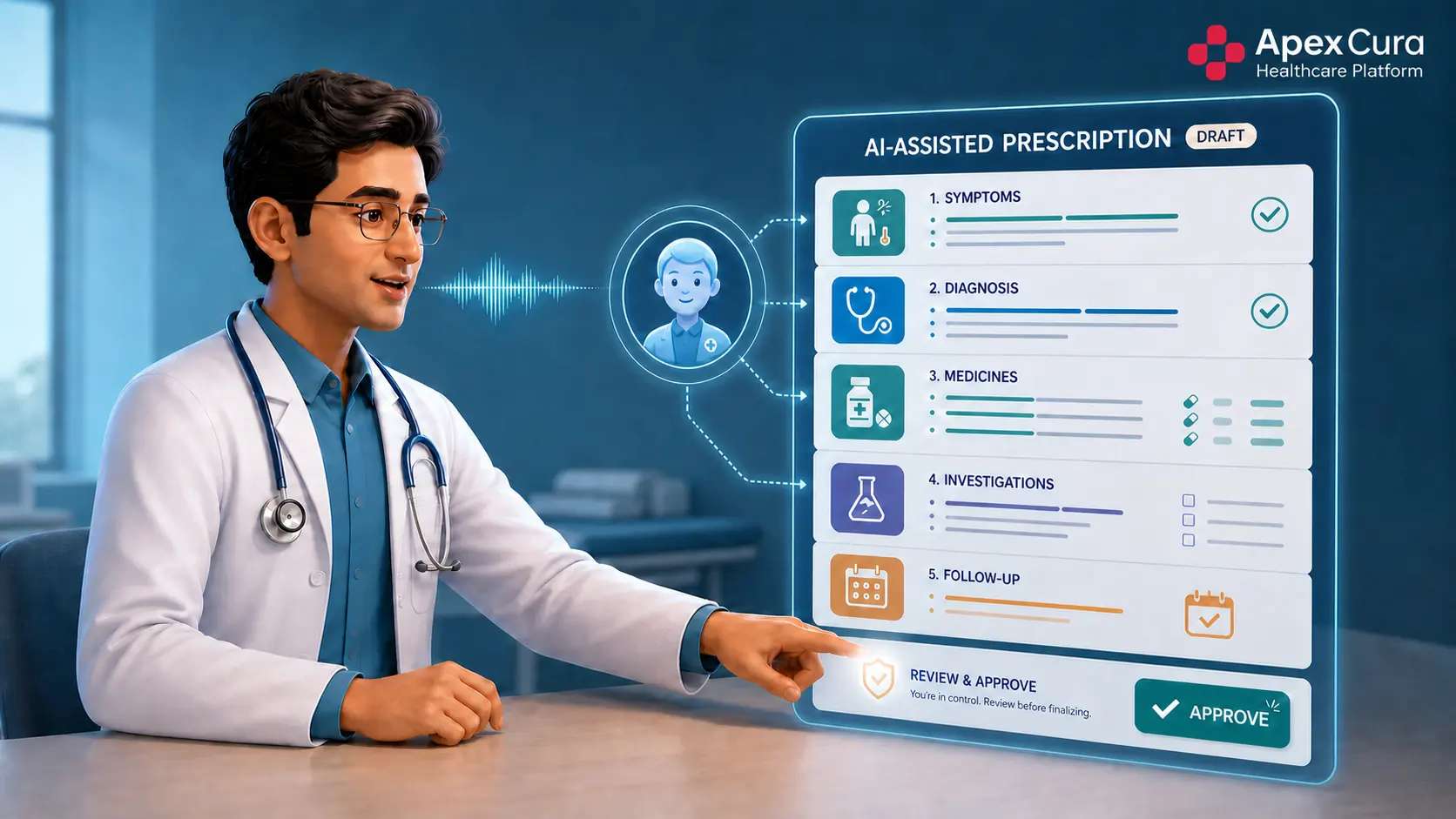
Learn how doctors can dictate naturally while AI structures a prescription draft for clinical review and approval.
Read article
At Apex Cura, we specialize in providing cutting-edge healthcare technology solutions tailored to meet the unique needs of the Hospitals. With a focus on leveraging AI and advanced analytics, we are dedicated to empowering hospitals to achieve operational excellence and superior patient care and drive better financial and medical outcomes.
© Copyright 2026.
All rights reserved.


