Why Digital Prescription Writing Creates Friction in Hospital OPDs
Structured Forms Can Interrupt the Consultation
Many digital prescription systems ask doctors to move between separate fields for complaints, diagnosis, medicines, dosage, investigations and follow-up advice. The structure may help the software, but repeated typing, searching and selection can interrupt the consultation.
This becomes especially difficult in a busy OPD. When documentation requires more attention than the doctor's normal prescription process, adoption can suffer and teams may return to paper or incomplete digital records.
Doctors Communicate Clinical Information in a Natural Flow
Doctors do not normally think in software fields during a consultation. They listen to the patient, assess the clinical situation and communicate diagnosis, medicines, investigations and advice as one connected thought process.
A useful digital workflow must create structure without forcing the doctor to manually classify every instruction. This is the documentation problem that voice-to-prescription AI for hospital doctors is intended to address.
What AI-Assisted Prescription Writing Means
AI Organises the Doctor's Instructions Into a Draft
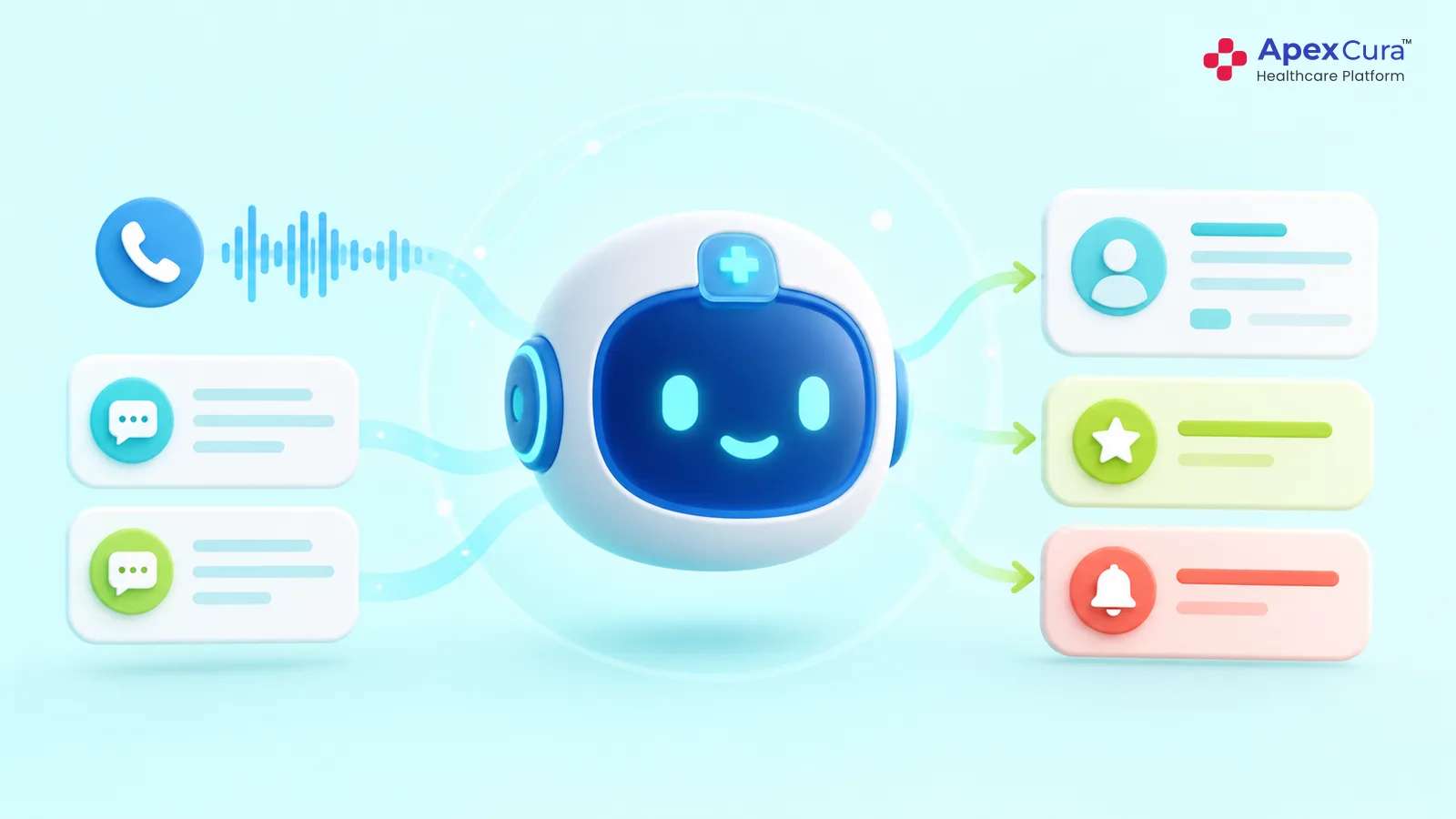
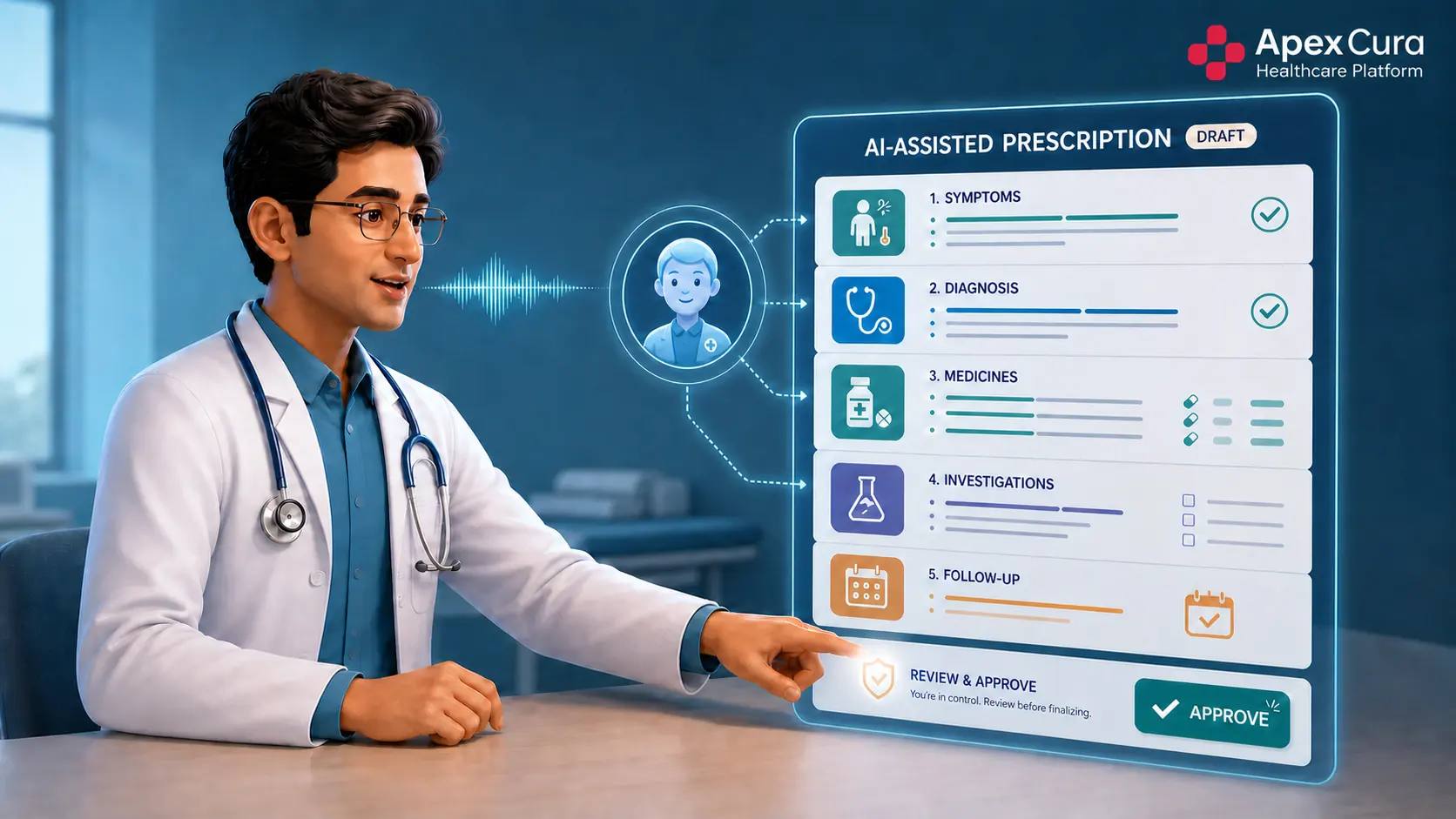
In an AI-assisted prescription workflow, the doctor remains the source of the clinical instructions. The doctor can speak or enter the information they would normally document during the OPD consultation.
The AI organises those instructions into a structured draft containing the relevant prescription fields. It supports documentation; it does not make the prescribing decision.
The Workflow Preserves Clinical Control
The doctor reviews the structured draft, corrects it where required and approves the final prescription. This review step keeps the qualified doctor in control of the clinical information issued to the patient.
AI should therefore be understood as a prescription documentation assistant, not an autonomous prescriber.
How AI Prescription Writing Works During an OPD Consultation
1. The Doctor Conducts the Consultation
The doctor examines the patient and determines the appropriate diagnosis, medicines, investigations, advice and follow-up. Clinical responsibility remains with the doctor throughout the consultation.
2. The Doctor Provides Clinical Instructions
The doctor speaks or enters the clinical information in their normal working style instead of manually completing every prescription field.
3. AI Creates a Structured Prescription Draft
The AI identifies the prescription components supplied by the doctor and organises them into structured fields such as diagnosis, medicines, dosage, investigations, advice and review.
4. The Doctor Reviews, Corrects and Approves
The doctor verifies the draft, makes any required corrections and approves it before the final prescription is issued. The draft does not become a completed prescription without this clinical review.
Discuss how OPD Rx can support doctor-reviewed prescription workflows across your hospital.
Discuss Hospital OPD Prescription WorkflowBenefits of Structured Prescription Drafts for Hospitals
Reduce Manual Typing and Structuring
Voice or natural clinical input can reduce the need to type and classify each prescription element separately. The workflow stays closer to the way doctors already document consultations.
Create Readable and Consistent Prescription Information
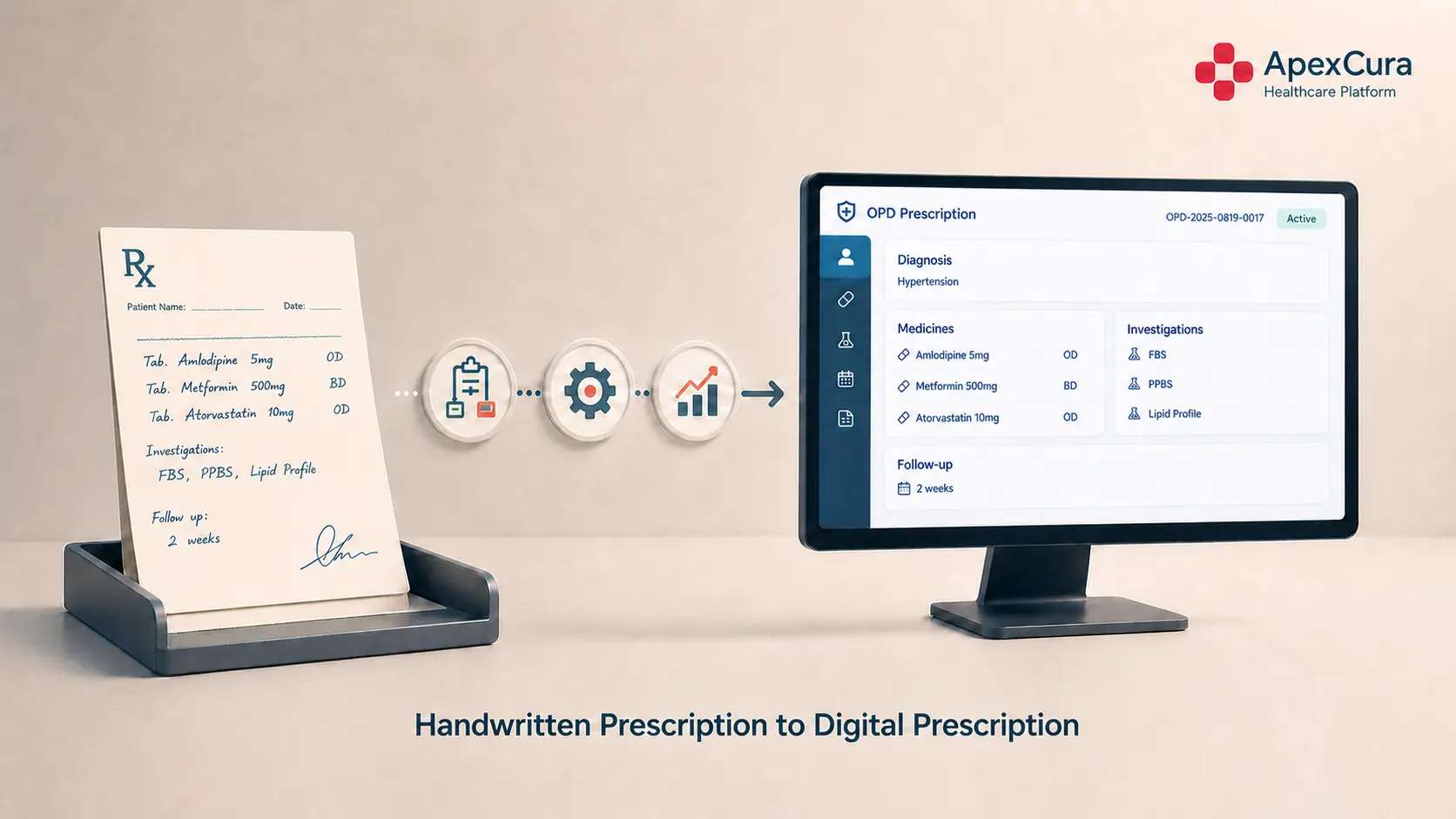
A reviewed digital OPD prescription presents medicines, dosage, investigations, advice and follow-up information in a readable structure. This reduces dependence on interpreting handwriting or inconsistent layouts.
Make Approved Information Available to Authorised Systems
Once the doctor approves the prescription, structured information can be made available for authorised downstream care and operational use through relevant hospital integrations.
How Hospital Masters and Systems Support the Workflow
Connect Instructions With Hospital Masters
Hospital drug, investigation and service masters help convert the doctor's instructions into information that matches the hospital's established records. This reduces reliance on unstructured free text where supported by the integration.
Integrate the Approved Prescription With Relevant Systems
OPD Rx can integrate prescription data with relevant HIMS, EMR, pharmacy, laboratory, appointment and hospital systems. The exact workflow depends on the hospital's available masters and integrations.
Hospitals planning a wider move from paper should separately evaluate workflow mapping, integration requirements and adoption through a digital OPD prescription implementation guide.
What AI Prescription Writing Does Not Do
AI-assisted prescription writing does not diagnose patients, independently recommend treatment or issue prescriptions without a doctor. It structures the clinical instructions supplied by a qualified doctor, who remains responsible for reviewing and approving the final prescription.
Conclusion
AI-assisted prescription writing can help hospital OPDs create structured digital prescription drafts without turning the consultation into a typing-heavy process. The value comes from adapting documentation to the doctor's clinical instructions while preserving review and approval.
With OPD Rx, the doctor supplies the clinical information, AI organises it into a structured draft and the doctor approves the final prescription. Hospitals gain a more usable digital documentation workflow without transferring clinical responsibility to the software. Learn more about the AI-assisted digital OPD prescription workflow.