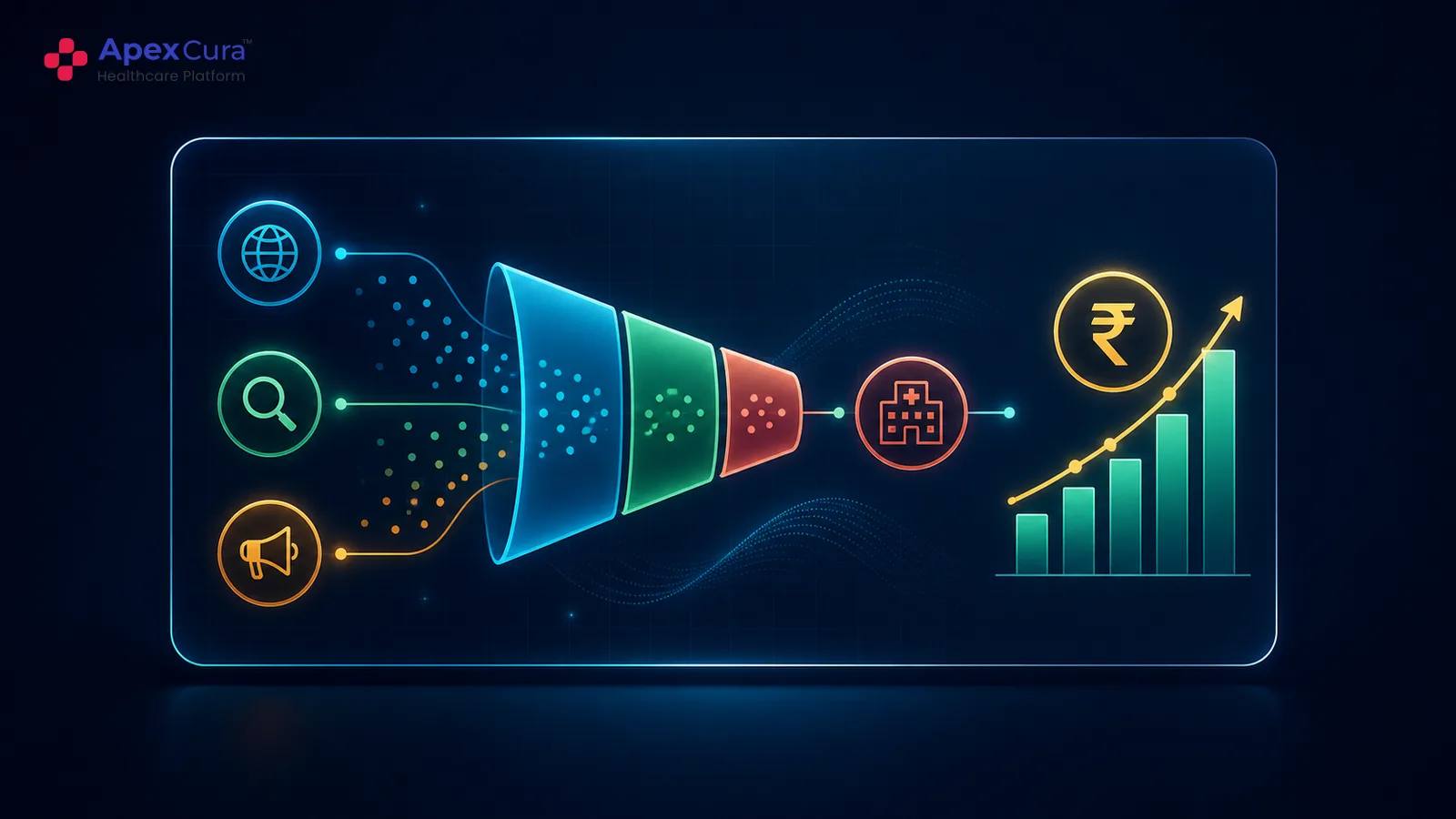
Measuring the Hospital Patient Conversion Funnel
Tracking Enquiries, Appointments and OPD Visits
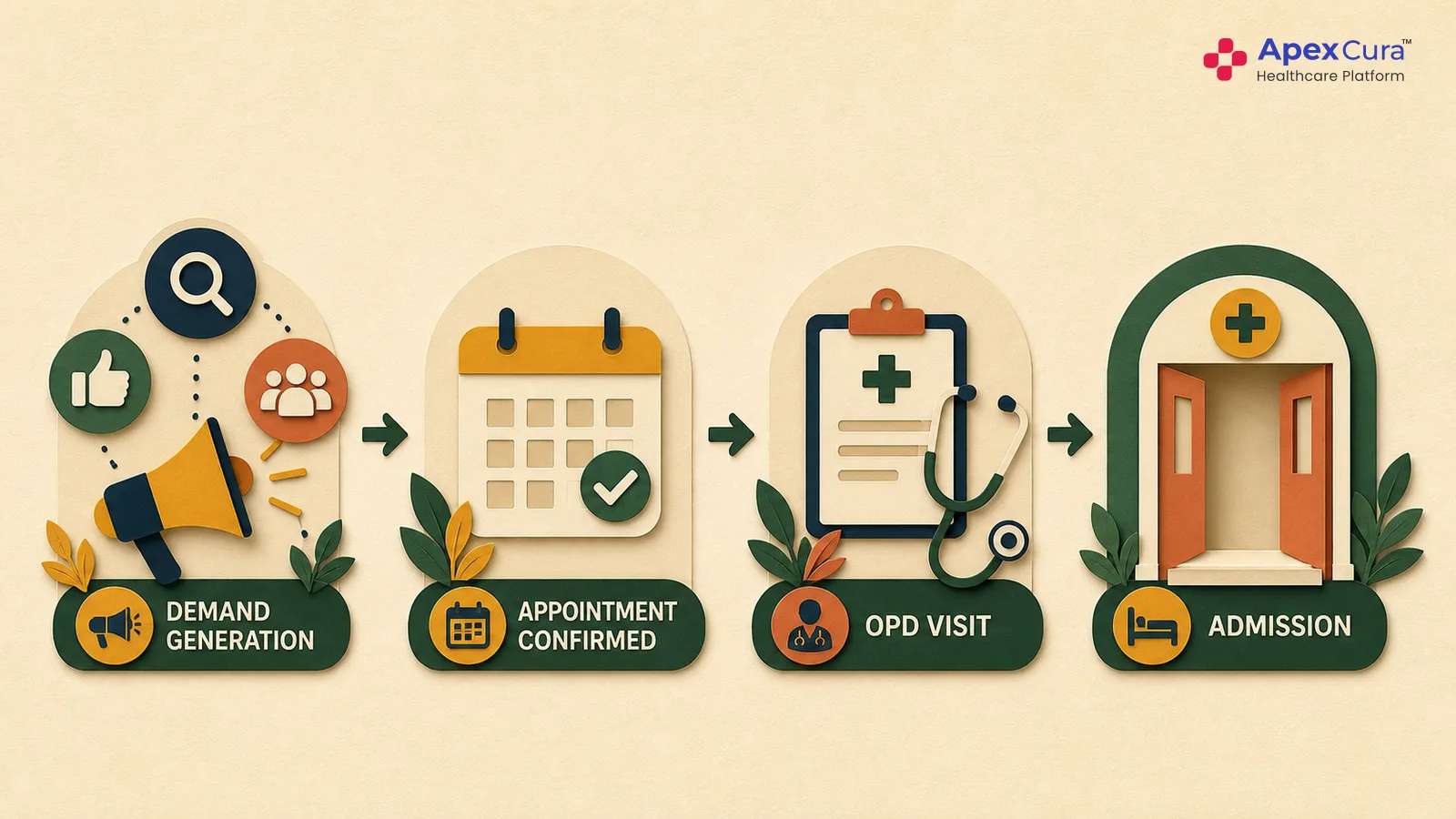
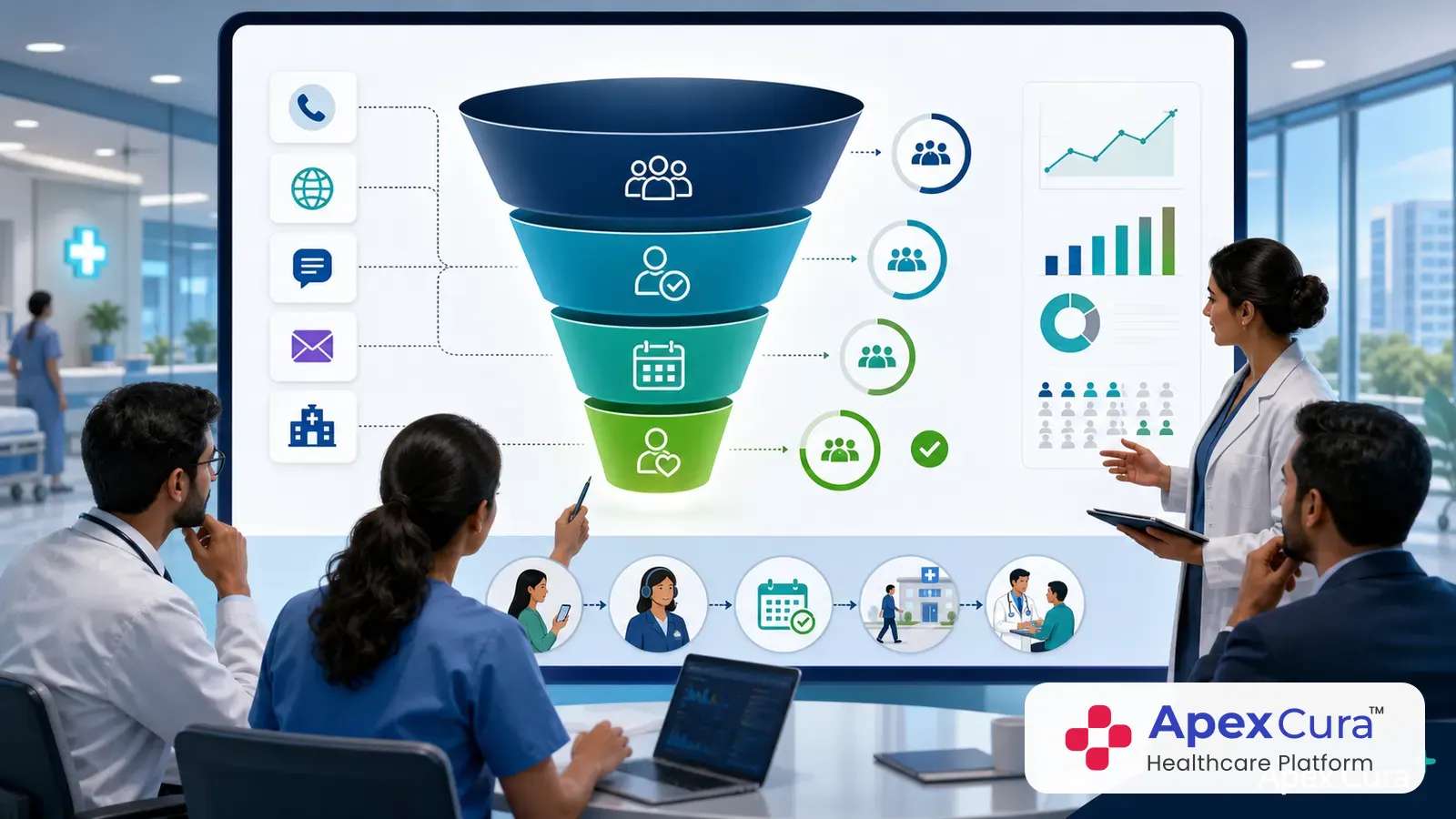
The basic hospital conversion funnel begins with enquiries, then moves to appointments and completed OPD visits. Each stage needs a clear definition.
Enquiry: An enquiry may count when valid patient contact details and a service need are available. An appointment should represent a confirmed booking, while an OPD conversion should require an actual hospital visit.
Appointment: CRM and appointment integrations can update these events using reliable patient identifiers. Hospitals should compare overall volume with conversion by source, branch, speciality and team.
Visit: This shows whether patients are being lost before contact, during appointment booking or after the appointment has already been confirmed.
Measuring Conversion From OPD to Procedure or Admission
Some patient journeys continue after the first consultation. The doctor may advise diagnostics, a procedure, treatment or admission. Hospitals should track these outcomes when integrations and approved data allow reliable linkage. The measurement should distinguish advice given, counselling completed, service booked and service delivered. These are different operational stages.
Teams should also record known reasons when the patient does not proceed. Connecting OPD with later outcomes helps leadership understand which enquiries create meaningful hospital activity. It avoids judging marketing only by lead counts. Financial reporting should always use confirmed billing transactions and agreed attribution rules rather than estimated patient value.
Finding Drop-Offs Across the Patient Journey
Funnel analytics shows where patient movement reduces sharply. A large gap between enquiries and contacts may indicate slow response or invalid details.
- A gap between appointments and OPD visits may point to no-shows, poor reminders or scheduling problems. Loss after consultation may involve counselling, cost, availability or patient choice.
- Managers should examine the records behind each number before deciding the cause.
- Segmenting the funnel by speciality, branch, source and time period provides better context.
- The purpose is to identify a specific stage that needs attention.
- Teams can then investigate the workflow and test a practical improvement instead of applying broad changes everywhere.
Understanding Attribution and Acquisition Performance
Identifying the True Source of Every Patient Enquiry
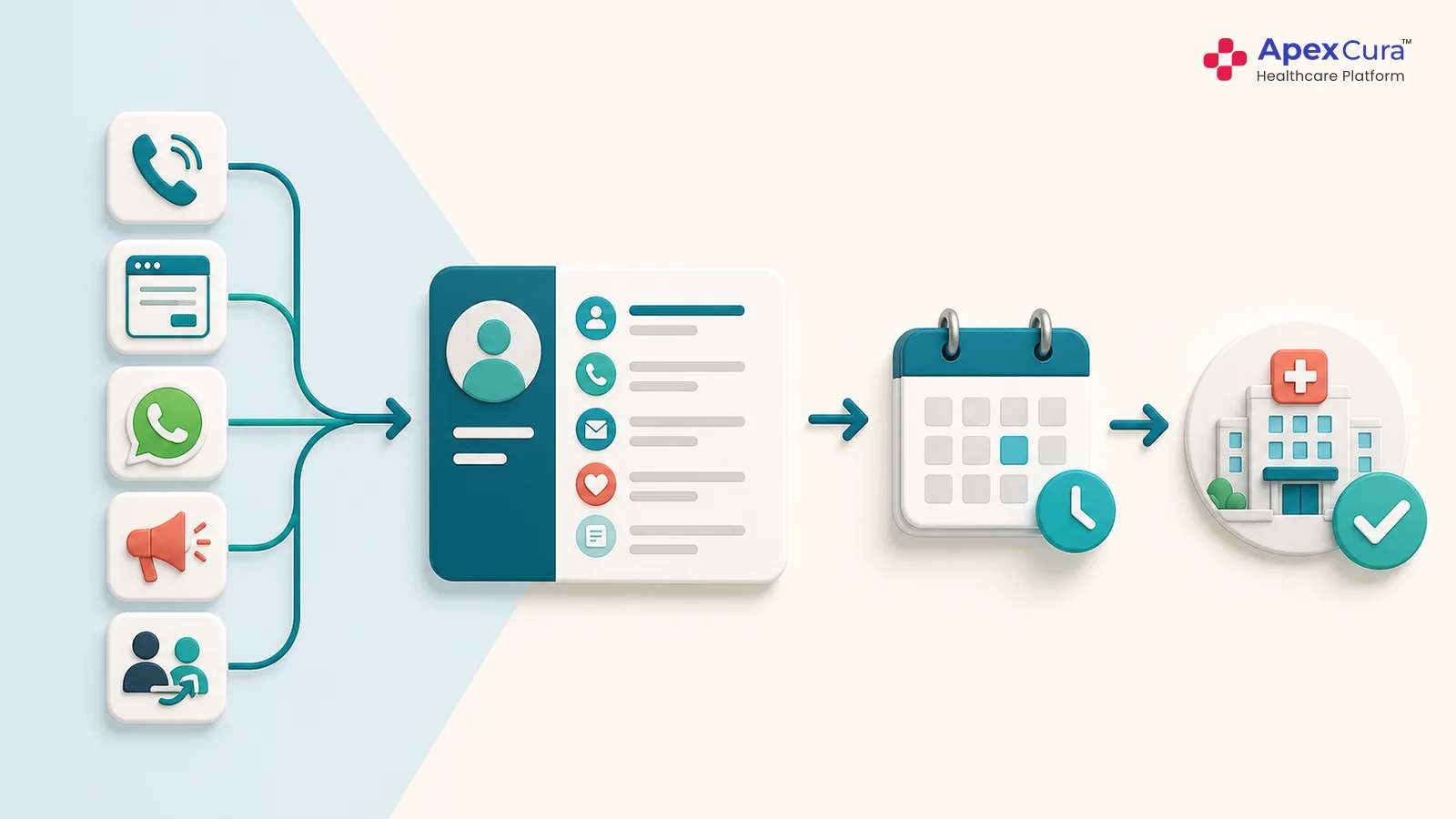
Patient enquiries may begin with Google Ads, Meta, organic search, referrals, calls, WhatsApp or offline activity. The CRM should preserve the best available first-touch source when the record is created. Campaign parameters, tracked numbers and connected forms can improve accuracy.
Staff may add a source for offline enquiries using a controlled list. Hospitals also need rules for repeat contacts and patients using multiple channels. Source values should not be overwritten simply because another team handled the lead later.
Reliable attribution starts with consistent capture. Without it, marketing comparisons can reward the last visible interaction instead of the channel that created patient interest.
Connecting Marketing Sources With Patient Conversion
A source that creates many leads may not create many completed visits. Hospitals should compare channels using contact rate, appointment conversion and OPD conversion. This separates enquiry volume from patient intent and operational execution. For example, one campaign may create broad interest that needs several follow-ups. Another may bring fewer patients who book quickly. Teams should compare similar specialities and locations before changing budgets. They should also review whether slow response affected a source unfairly. Hospital CRM Analytics helps marketing and operations examine the same journey. This supports decisions based on actual patient outcomes instead of platform lead totals alone.
Measuring Revenue by Source, Branch and Speciality
Revenue attribution connects confirmed hospital billing with the original patient enquiry where a reliable match exists. Management can compare revenue by channel, campaign, branch, speciality and service.
Source: The report should define which transaction date and revenue type are included. It should also explain how existing patients, repeat visits and multiple enquiries are treated.
Operations: These controls prevent misleading totals. Revenue data can reveal sources that generate fewer but more relevant patients.
Revenue: It can also show branches that convert enquiries well but lose patients at later stages. Used carefully, attribution helps hospitals align marketing investment, counsellor effort and operational capacity with measurable outcomes.
Connect enquiry sources, conversion stages and hospital revenue in one measurable view.
Explore Apex Healthcare CRMUsing CRM Analytics to Improve Hospital Performance
Measuring Counsellor and Contact-Centre Performance
CRM analytics can show how teams handle patient enquiries. Useful measures include response time, contact rate, follow-up adherence, pending leads and appointment conversion.
- Supervisors should compare employees working on similar enquiry types and shifts. A counsellor handling complex procedures may need more conversations than a routine appointment team.
- Quality review should therefore consider both numbers and conversation context.
- Managers can use the data to identify coaching needs, workload imbalance or missing information.
- The objective is not constant surveillance.
- It is to ensure patients receive timely, accurate follow-up and to give teams the support required to manage their assigned workload effectively.
Identifying Revenue Leakage Through CRM Data
Potential revenue can be lost when genuine patient need receives no complete action. CRM data can reveal missed calls, unattended leads, overdue follow-ups, appointment no-shows and OPD patients who did not complete an advised next step. These records should be reviewed using hospital-approved follow-up rules. Not every non-conversion is recoverable, and patient choice must be respected.
The useful question is whether an internal gap prevented a valid opportunity from progressing. Grouping leakage by reason, branch and stage helps managers identify repeated problems. Corrective action may involve routing, staffing, schedule visibility, counselling or better coordination with hospital operations.
Turning CRM Dashboards Into Management Action
A dashboard creates value only when teams use it to make decisions. Management should review a focused set of measures at a regular frequency. Each abnormal trend needs an owner and a date for follow-up.
Teams can investigate the related records, confirm the operational reason and agree on one change. The result should be measured in the next review. Examples include reducing first response time, clearing ageing leads or improving appointment attendance.
Dashboards should make exceptions easy to find rather than display every available number. This creates a repeatable cycle of visibility, responsibility, correction and measurement across hospital acquisition teams.
Conclusion
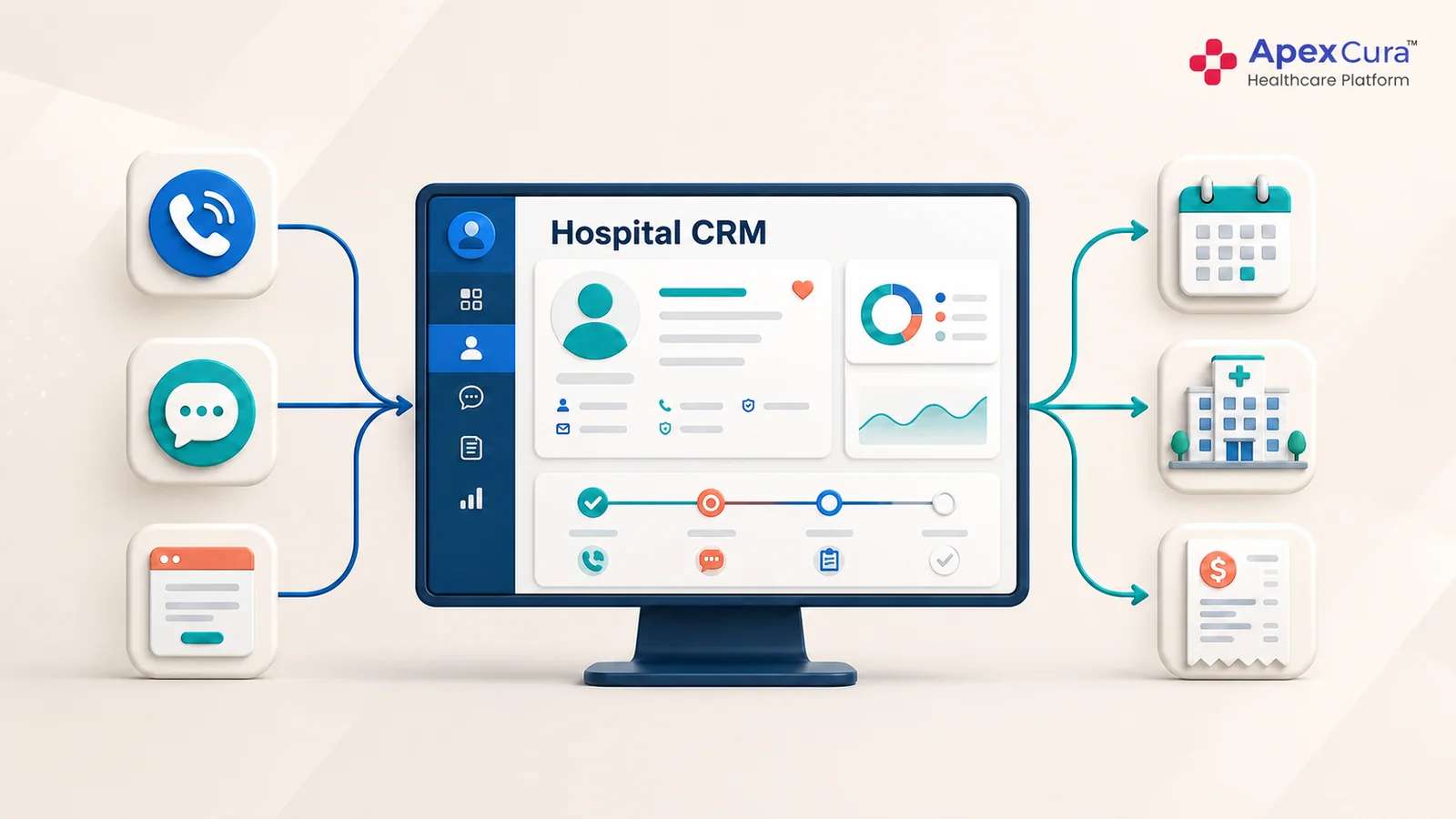
Hospital CRM analytics connects patient enquiries with appointments, visits, later care stages and supported revenue outcomes. Clear definitions make funnel and attribution reports easier to trust. Hospitals can then identify drop-offs, compare channels and understand team performance with proper context. The purpose is not to create more dashboards. It is to find specific operational gaps and assign action. When marketing, CRM and hospital data work together, leadership can improve patient conversion and use acquisition resources more effectively.