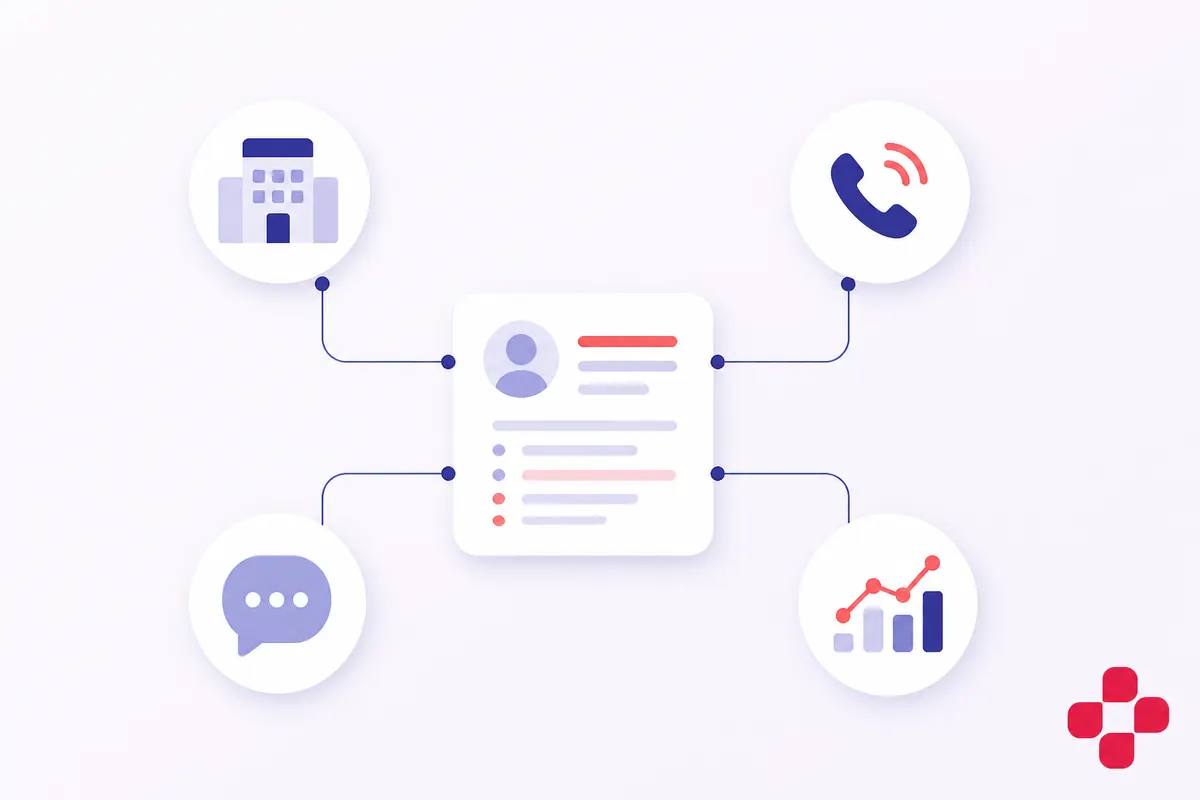
Why Hospital CRM Integration Matters
Understand How One Patient Journey Spans Many Systems
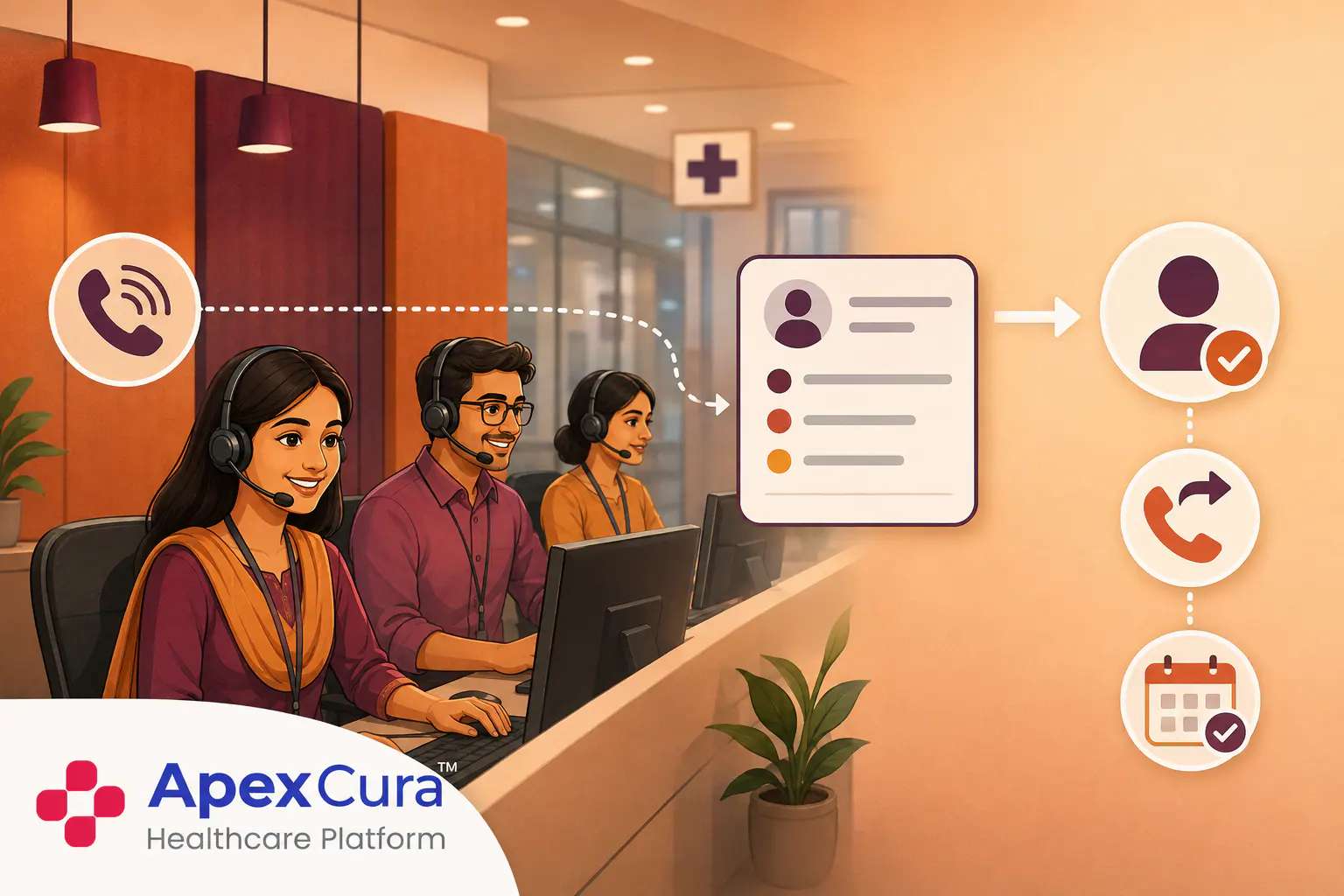
The patient experiences one hospital journey, but the hospital may record it across several systems. A call platform stores the first conversation. A website or social channel holds the original campaign.
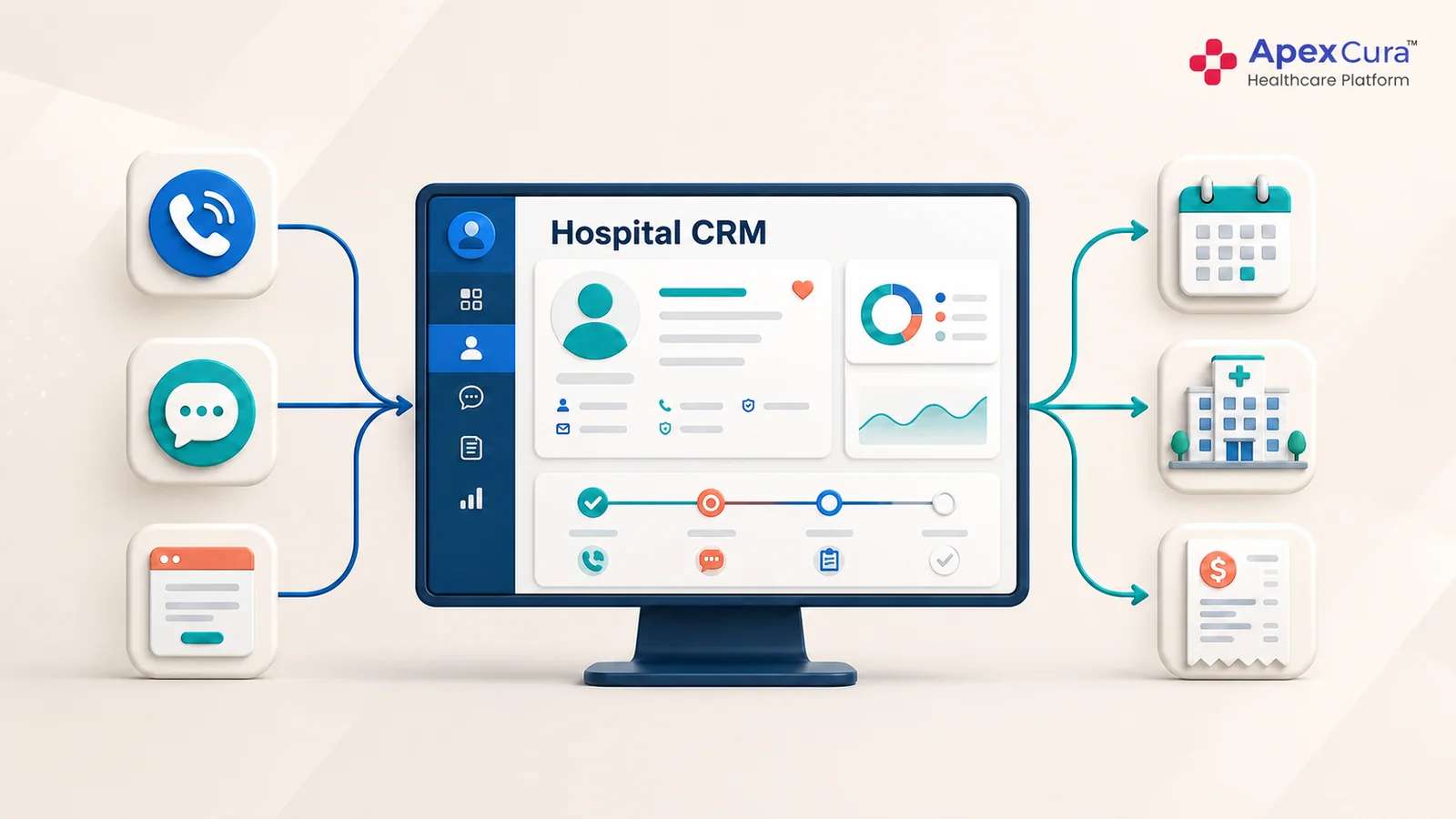
CRM records the follow-up, while appointment software confirms the booking. HIMS identifies the completed visit and billing stores the transaction. Each system performs a useful role, yet none may show the whole journey independently.
Staff then depend on calls, exports and spreadsheets to understand what happened. Integration allows selected events to move between these systems. It gives teams continuity without expecting the CRM to replace operational, clinical or financial systems that already own important records.
Prevent Duplicate Records and Manual Reconciliation
Disconnected systems often create repeated patient records and manual updates. An employee may copy a website enquiry into CRM, enter the appointment elsewhere and later search HIMS to confirm whether the patient visited.
- Names and phone numbers can be entered differently, making matching difficult. Reports then require manual reconciliation at the end of the week or month.
- Integration can create records automatically and pass reliable identifiers with each event.
- Duplicate controls should still allow authorised correction when two records represent the same patient.
- The aim is not to remove every human check.
- It is to reduce routine copying, make exceptions visible and prevent different teams from maintaining conflicting versions of the same acquisition journey.
Preserve Enquiry Source Across the Complete Journey
Source information can disappear when a patient moves from a campaign to WhatsApp, a call and then an appointment. If the latest channel replaces the original source, marketing attribution becomes unreliable. CRM integration should preserve the first known source, available campaign details and later interaction channels as separate information. The same record can then connect with appointments, visits and supported revenue outcomes. Hospitals also need rules for repeat enquiries and existing patients using several channels. Reliable attribution depends on consistent capture and patient matching, not only on dashboard design. Preserving source history helps management understand which channels created demand and how hospital teams converted that demand.
Connect the Systems That Hold Patient Interactions and Outcomes
Connect Calls, Websites, WhatsApp and Social Enquiries
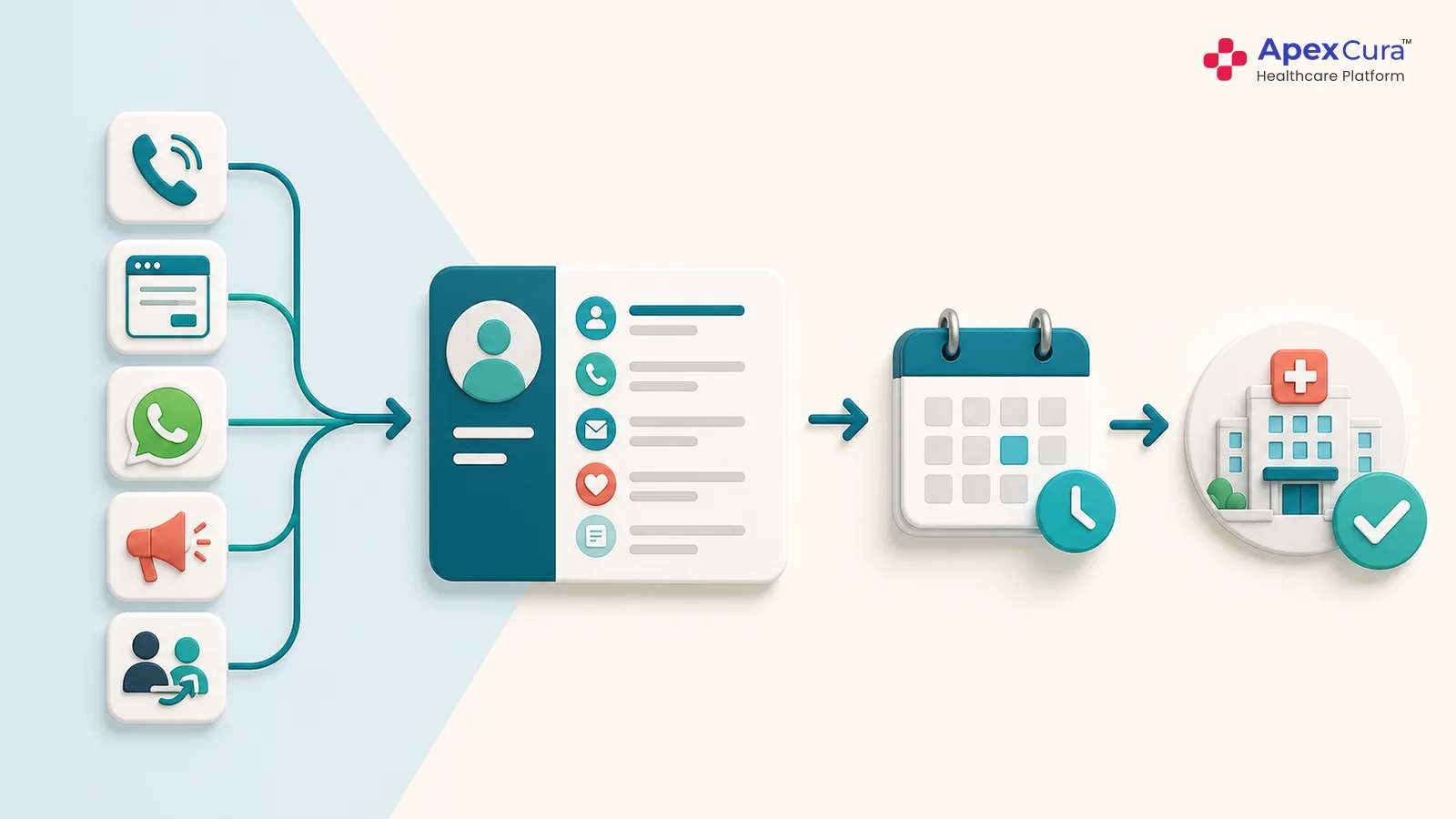
Patient enquiries may enter through IVR or call-centre platforms, website forms, landing pages, WhatsApp, Facebook or Instagram. Each connected source should create or update a usable CRM record with the available patient details, time, source and enquiry context.
Calls: Call integrations can link recordings and dispositions. Forms can preserve campaign parameters.
Web: Messaging integrations can retain relevant conversation history and hand off cases requiring human action. Hospitals should define which interactions count as enquiries and how repeat contacts are matched.
Messages: Good integration creates one operational work item for the responsible team. It should not produce a new lead every time the same patient uses another supported channel.
Connect Appointments and HIMS Patient Visits
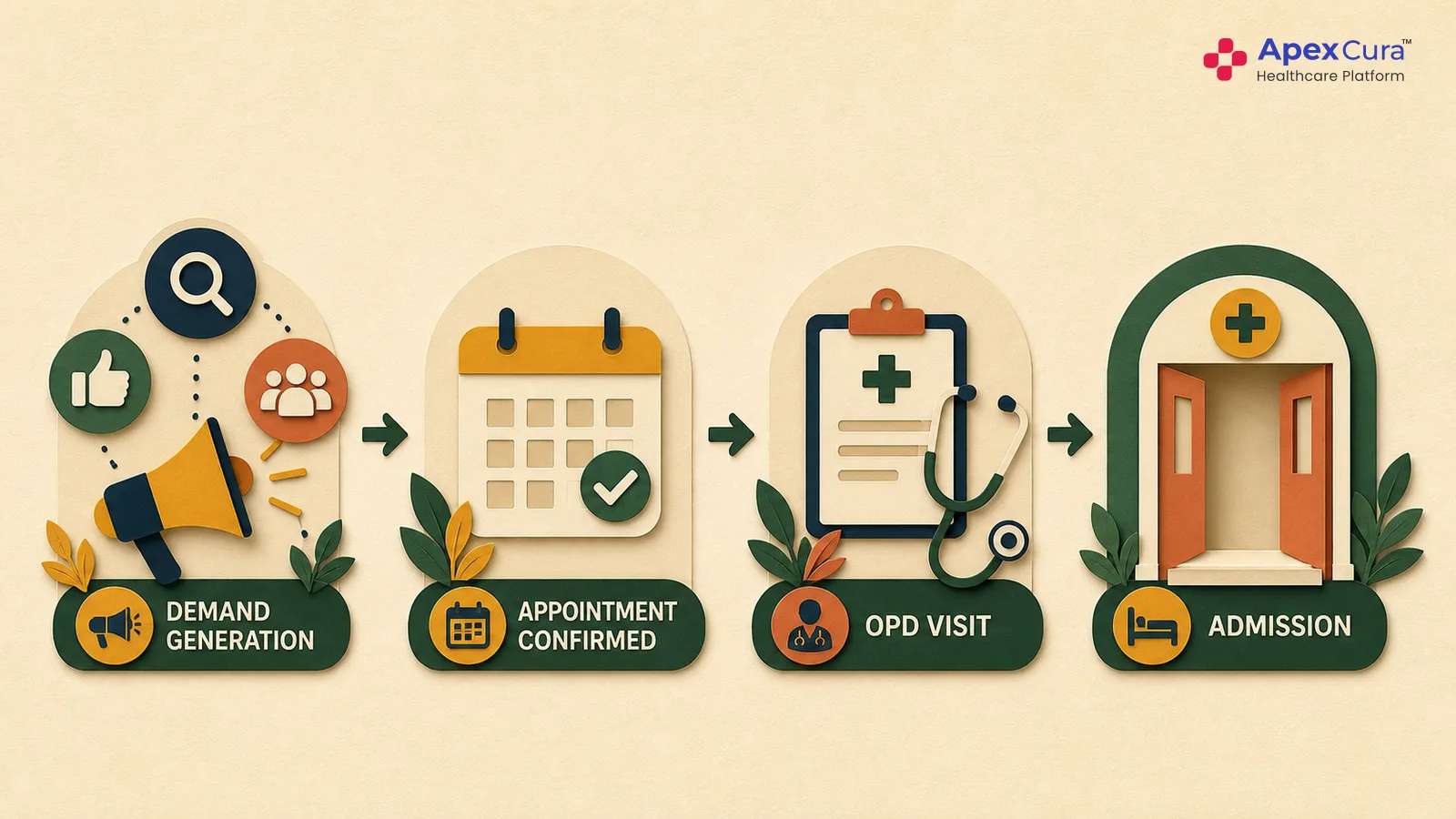
Appointment integration allows CRM teams to see whether an enquiry became a booking, was rescheduled or remained incomplete. HIMS integration can confirm whether the patient registered, completed the OPD visit or moved to another recorded service. These events should return to the same acquisition record using reliable patient identifiers. Staff then avoid asking patients for information the hospital already has.
Managers can distinguish appointment conversion from completed visits and identify no-shows or operational drop-offs. The CRM should receive only the information needed for the approved workflow. Detailed clinical records should remain in the responsible hospital system. Integration supports continuity while preserving each system’s proper role and access controls.
Connect Confirmed Billing and Revenue Outcomes
Revenue tracking becomes reliable only when it uses confirmed transactions from the hospital’s billing system. CRM integration can connect approved billing outcomes with the original enquiry where patient matching is dependable.
- Hospitals should define which revenue types, dates and services are included. They also need rules for repeat visits, existing patients and multiple enquiries.
- The result should not treat every open lead as expected revenue.
- It should show supported outcomes that actually occurred.
- This connection helps leadership compare sources, branches and specialities using more than lead volume.
- It also reveals when strong enquiry generation is weakened by poor follow-up, appointment no-shows or later operating gaps.
Connect hospital enquiry sources with appointments, patient visits and confirmed revenue outcomes.
Explore Apex Healthcare CRMBuild Reliable and Governed CRM Integrations
Use Reliable Patient Identity and Event Definitions
Integration depends on knowing which records belong to the same patient and what each event means. Hospitals should identify the available patient, enquiry, appointment and visit identifiers before building connections. Phone numbers can help but may be shared, changed or entered incorrectly.
Matching rules should therefore allow controlled review of uncertain cases. Teams must also agree on the meaning of events such as appointment booked, patient arrived and visit completed. The source system for each event should be clear.
Reliable identity and definitions make conversion reporting easier to trust. Without them, technically successful data movement can still create duplicate journeys, incorrect attribution and misleading management reports.
Handle Corrections, Failures and Delayed Updates
Hospital systems do not always update at the same time. A patient may reschedule, a billing entry may be corrected or a network failure may delay an event. Integration design should explain how retries, corrections and cancellations are handled. Teams need visibility into records that failed to move and a controlled way to resolve them. Updates should be safe to repeat without creating duplicate appointments or leads. The CRM should also show when information is pending rather than presenting an old status as current. Planning for exceptions is as important as designing the normal flow. Reliable integration makes failures visible and recoverable instead of allowing silent gaps to weaken the patient journey.
Govern Access, Data Use and Integration Changes
Every integration should have a defined operational purpose and use only the information needed for that purpose. Access must follow hospital roles and approved privacy controls.
Access: Clinical notes and unrelated medical information should not move into marketing or acquisition workflows. Hospitals should document which system owns each field, who can correct it and how long relevant data is retained.
Purpose: Changes to APIs, masters or workflow stages need controlled testing before release. Management should periodically review whether integrations remain accurate and useful.
Change: A governed hospital CRM integration creates a dependable acquisition view while respecting patient information, system ownership and the responsibilities of hospital teams.
Conclusion
Hospital CRM integration connects the systems that capture patient demand with those that record appointments, visits and confirmed revenue. It reduces duplicate entry, preserves source information and gives teams a more complete view of the acquisition journey. Useful integration depends on reliable patient identity, clear event definitions, recoverable failures and appropriate access controls. The objective is not technical connectivity by itself. It is to help hospital teams understand what happened after an enquiry arrived and help leadership measure which channels, workflows and branches create meaningful patient and business outcomes.