How Doctor Queues Differ From Other Hospital Queues
Common Types of Queues Inside a Hospital
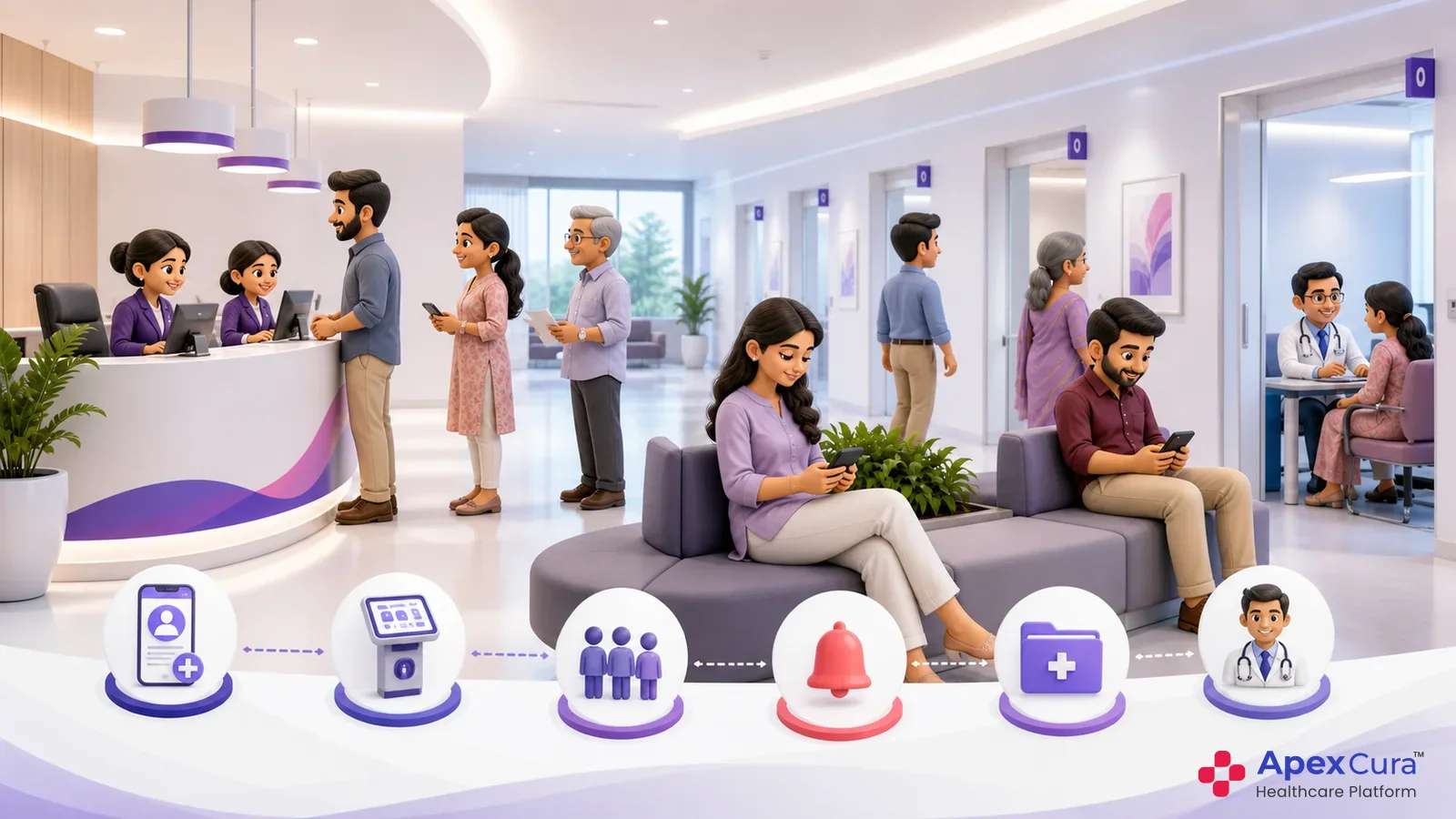
Hospitals manage several queues during a patient visit. A patient may wait for registration or billing, meet a doctor, proceed to a laboratory or radiology service and later visit the pharmacy. Each queue represents a different service stage, resource and operating pattern.
Transactional queues: Billing and pharmacy work usually progresses through defined processing steps.
Diagnostic queues: Laboratory and radiology flow depends on the requested service, equipment and preparation.
Doctor queues: Consultations depend on the clinical problem, doctor availability, nurses measuring vitals, patient arrival times, appointment schedules and other changing session conditions.
These queues may be connected within the patient journey, but they should not be treated as one uniform line. This article focuses specifically on doctor-wise consultation queues.
Why Billing, Pharmacy and Diagnostic Queues Are Usually More Process-Driven
Billing, pharmacy and many diagnostic queues generally follow recognisable processing stages. They mostly depend on a single modality technician, the relevant machine and the patient being ready. Their speed may vary, but workload, available counters or equipment, preparation requirements and average service time usually remain the same.
Hospitals can often respond by opening an additional counter, redirecting suitable work or adjusting staffing during busy periods. However, the underlying sequence is usually more process-driven than a clinical consultation. This comparison does not mean that every service queue is simple. It shows why the logic used for a billing line cannot automatically govern a doctor’s waiting queue.
Why Doctor Queues Are More Dynamic and Clinically Dependent
Consultation time cannot be treated as a fixed transaction. One patient may require a brief review, while another needs a longer examination, discussion or coordination with the clinical team. The pattern also varies across specialities, doctors and OPD sessions. A static token sequence cannot anticipate every legitimate difference.
Doctor availability adds another layer. A doctor may start late, move between rooms, pause for a clinical responsibility or attend an emergency. Hospital teams must preserve appropriate clinical priority while keeping the remaining queue understandable. The system should therefore reflect actual availability and real-time changes, possible waiting time and the next best alternative if needed. Its role is to maintain visibility when the planned session and real conditions diverge.
What Changes Doctor Queue Behaviour During an OPD Session
Doctor Room Changes and Shared Consultation Rooms
A doctor may begin in one consultation room and move later because of a shift change, equipment need or revised room allocation. In another OPD, multiple doctors may use the same room at different times. The queue cannot remain attached to an outdated location when the doctor’s operating room changes.
Room status, doctor availability and patient-location information should remain synchronised. Authorised floor staff need to update the active assignment and confirm which waiting patients are affected. Displays and staff views should then reflect the current room without creating a second competing queue. This helps teams direct patients correctly, avoid crowding outside the wrong room and continue the doctor consultation queue with less confusion.
Doctor Delays, Pauses and Emergency Clinical Interruptions
A doctor queue may remain active even when consultations temporarily stop. The doctor might arrive after the scheduled start, pause between consultations, attend an inpatient requirement or leave for emergency care. Patients already registered and waiting do not disappear during this interruption, so the queue needs an accurate operational status.
Floor teams should record whether the doctor is delayed, unavailable or expected to resume. They should avoid creating an unsupported return time when the clinical situation is uncertain. Teams can monitor the queue and make operational decisions. When consultations resume, the system should continue from the controlled sequence rather than rebuilding the line informally. Clear status reduces contradictory updates from different staff members and helps management identify sessions requiring intervention.
Late Arrivals, No-Shows and Missed Patient Turns
Patient behaviour changes the planned consultation sequence. An appointment may arrive after its scheduled time, a patient may leave the waiting area, and another patient may not attend at all. Calling a patient who is absent creates a missed turn, but placing every late arrival at the front can disadvantage patients who arrived on time.
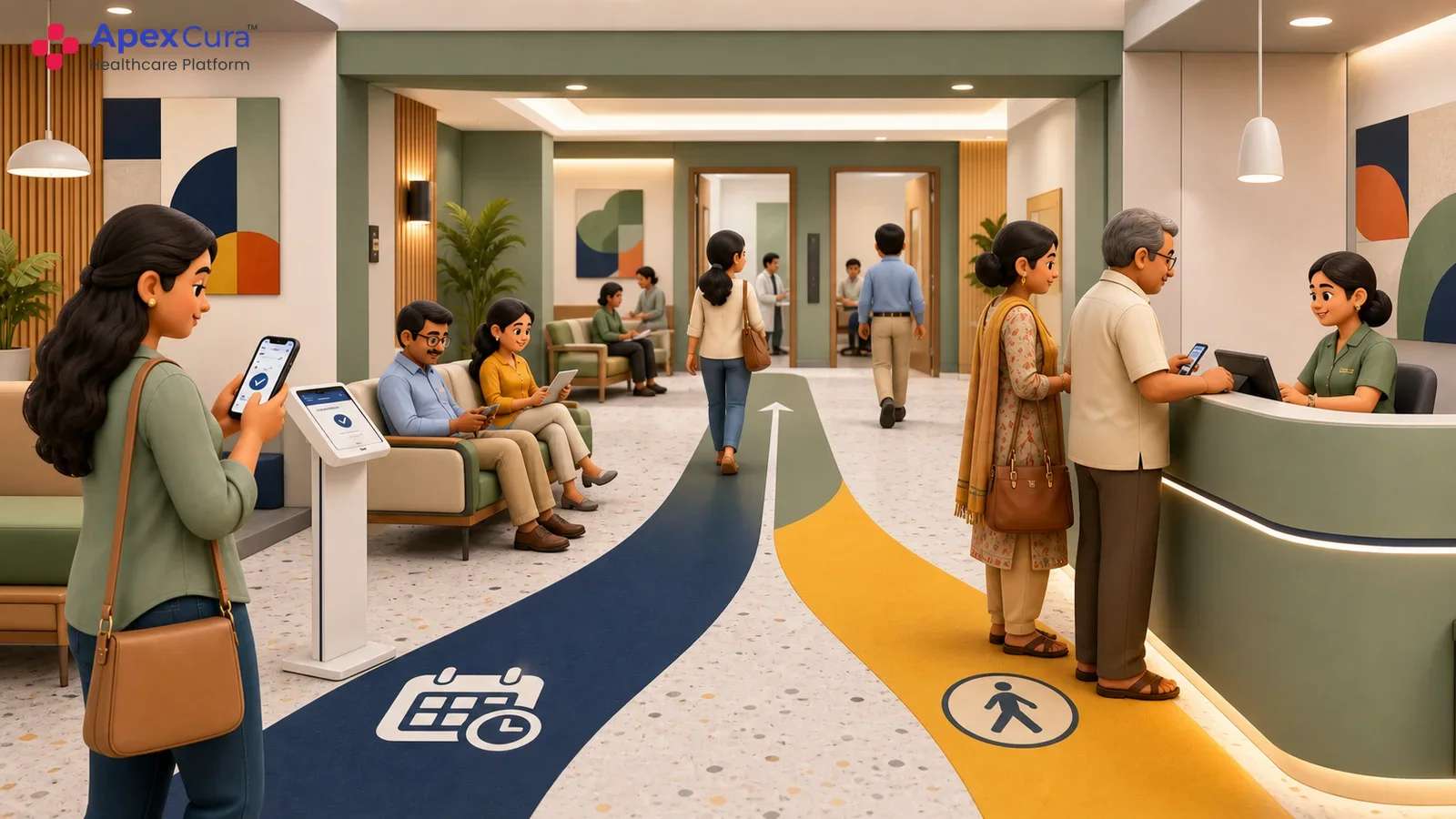
Hospitals need defined rules for confirming arrival, marking a no-show, recalling a missed patient and placing a late arrival back into the queue. These rules should work with the hospital’s appointment and walk-in queue management approach. Authorised staff may handle genuine exceptions, but the resulting position should remain visible. This preserves a consistent patient queue journey without pretending that every session follows its original schedule.
Coordinate doctor-wise queues, changing rooms, authorised priorities and patient updates through one connected OPD view.
Explore Doctor Queue ManagementHow Doctor Queue Management Systems Maintain Operational Control
Maintaining Separate Doctor-Wise Queues and Real-Time Status
Each participating doctor needs a separate operational queue. It should show the patients currently waiting for that doctor, the active room, consultation progress, present availability and any temporary interruption. A combined departmental list may help management see overall demand, but it cannot replace the doctor-wise sequence used by floor teams.
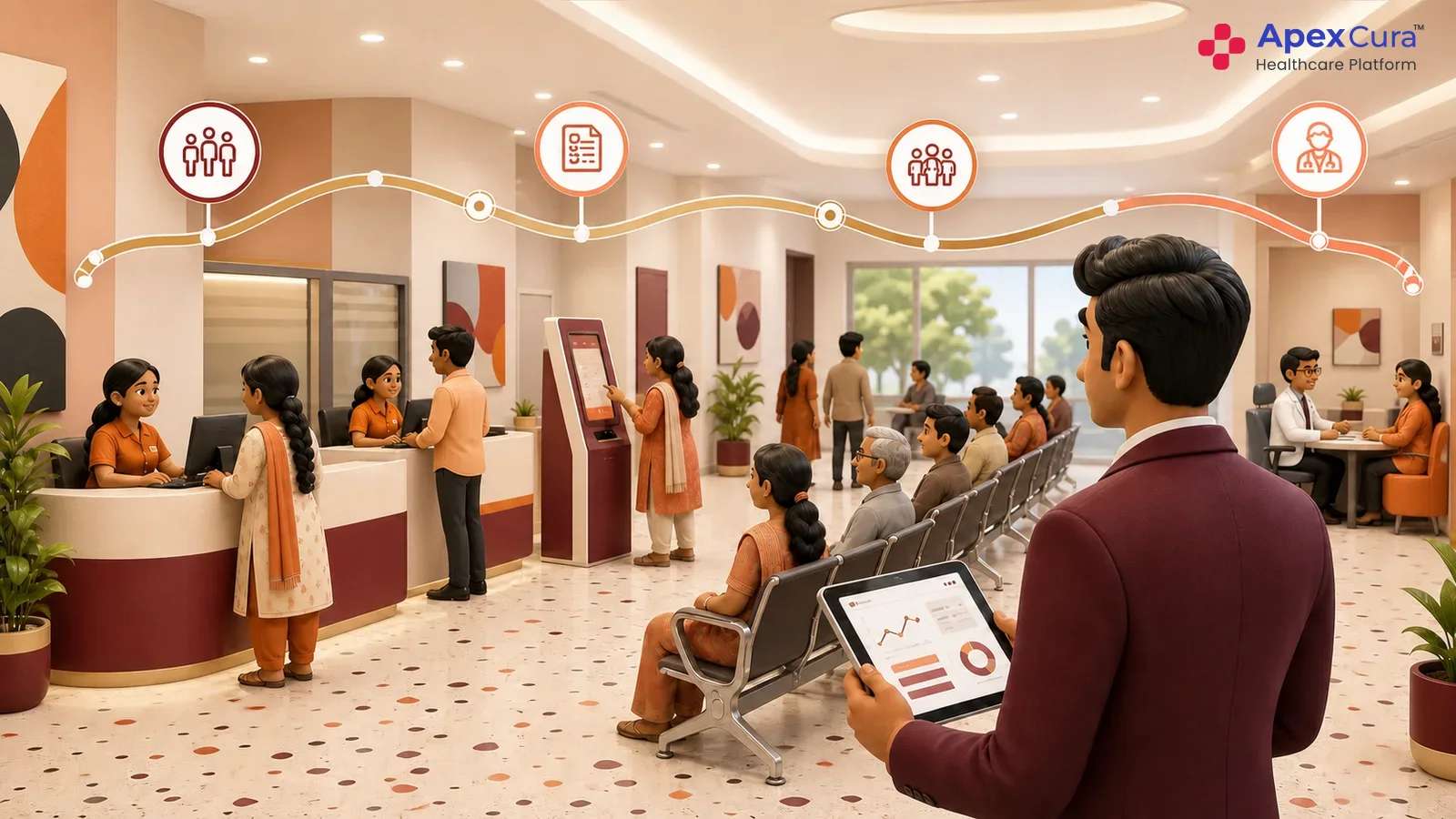
A doctor queue management system should update this view as registrations, arrivals, consultation states, room assignments and authorised changes occur. Staff can then distinguish a long but moving queue from one that has stopped because the doctor is unavailable. This shared status helps the doctor, secretary, front desk and floor manager work from the same operational picture instead of maintaining separate handwritten lists or verbal updates.
Managing Priority Changes, Overrides and Queue Re-Sequencing
No static rule can cover every condition during a hospital OPD session. Clinical priorities, emergency situations, delayed appointments, patient readiness and operational disruptions may require a change to the expected order. The system can apply hospital-defined priority rules, while authorised staff retain the ability to manage genuine exceptions.
An override should be controlled rather than hidden. The revised position, responsible user and reason should remain visible so teams understand why the sequence changed. Re-sequencing should consider patients who have already waited and those temporarily marked unavailable. The objective is not to automate clinical priority decisions. It is to translate decisions into one consistent queue and prevent informal changes from producing conflicting token calls, staff instructions or patient expectations.
Keeping Staff and Patients Updated When Doctor Queues Change
Operational control is incomplete if only one staff member knows that the doctor queue changed. The doctor, secretary, front desk and floor team need a consistent view of the active room, current consultation status, waiting sequence and confirmed delay. Patients need clear information appropriate to the waiting area and communication channel.
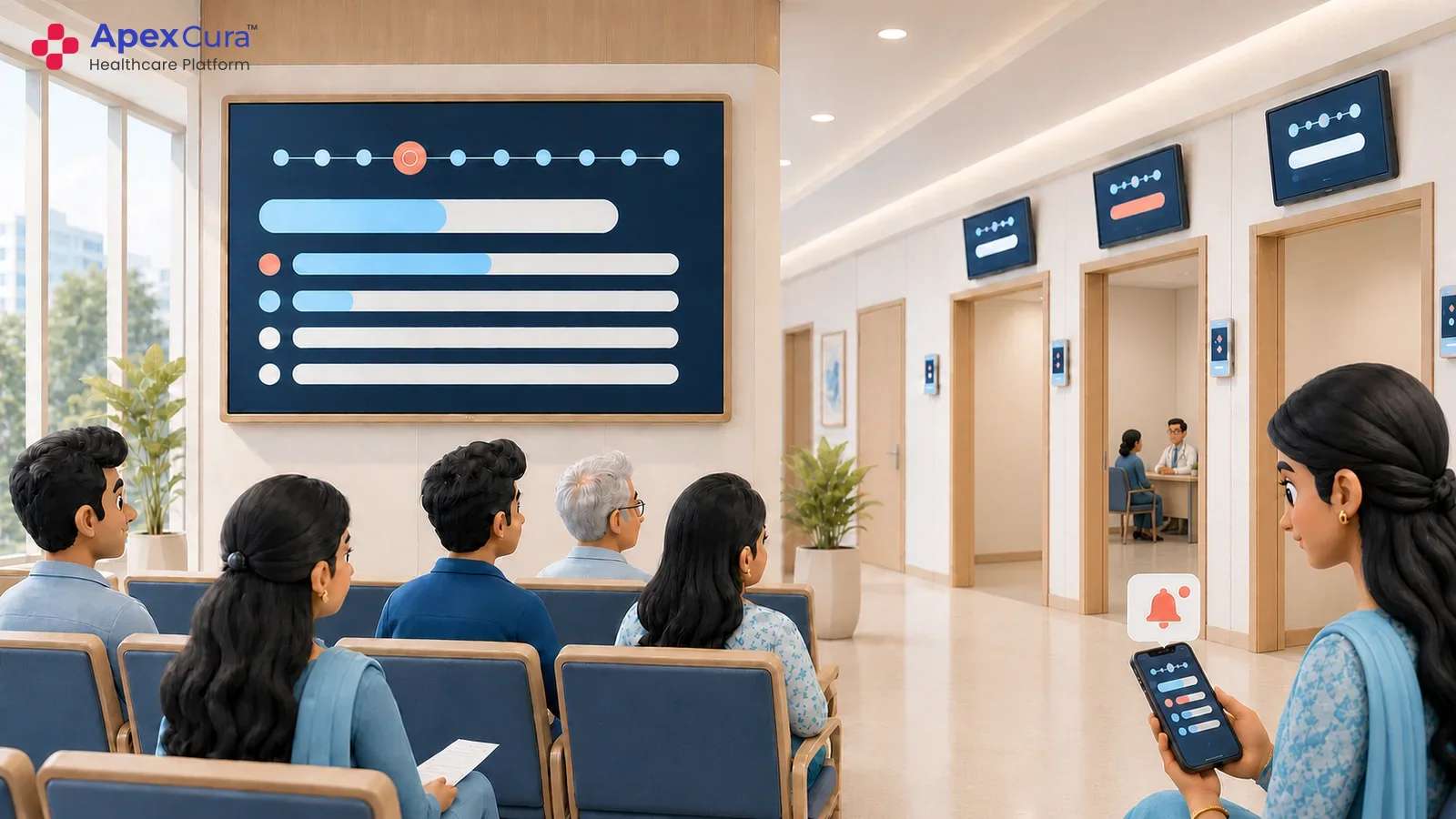
Hospital OPD queue displays and patient updates can communicate live token movement, room changes and doctor status. Configured WhatsApp updates can help affected patients when relevant information changes. Communication should reflect confirmed operational facts rather than speculative waiting-time promises. When every channel draws from the current queue state, hospitals can reduce repeated questions and contradictory directions while keeping authorised teams responsible for the decisions behind each change.
Conclusion
Doctor queue management requires more than issuing tokens in a fixed sequence. Consultation duration, speciality, doctor availability, room assignments, emergency interruptions and patient arrival behaviour can reshape the queue throughout an OPD session. Hospitals therefore need doctor-wise queues with status, controlled priority changes and clear communication for staff and patients. A suitable system should reflect confirmed operational conditions without predicting clinical time or replacing clinical judgement. When room changes, pauses, late arrivals and missed turns are recorded in one shared view, floor teams can maintain a consistent consultation sequence and respond with greater clarity when the original OPD plan changes.