A Mother and Child Hospital Group Across Andhra Pradesh and Telangana
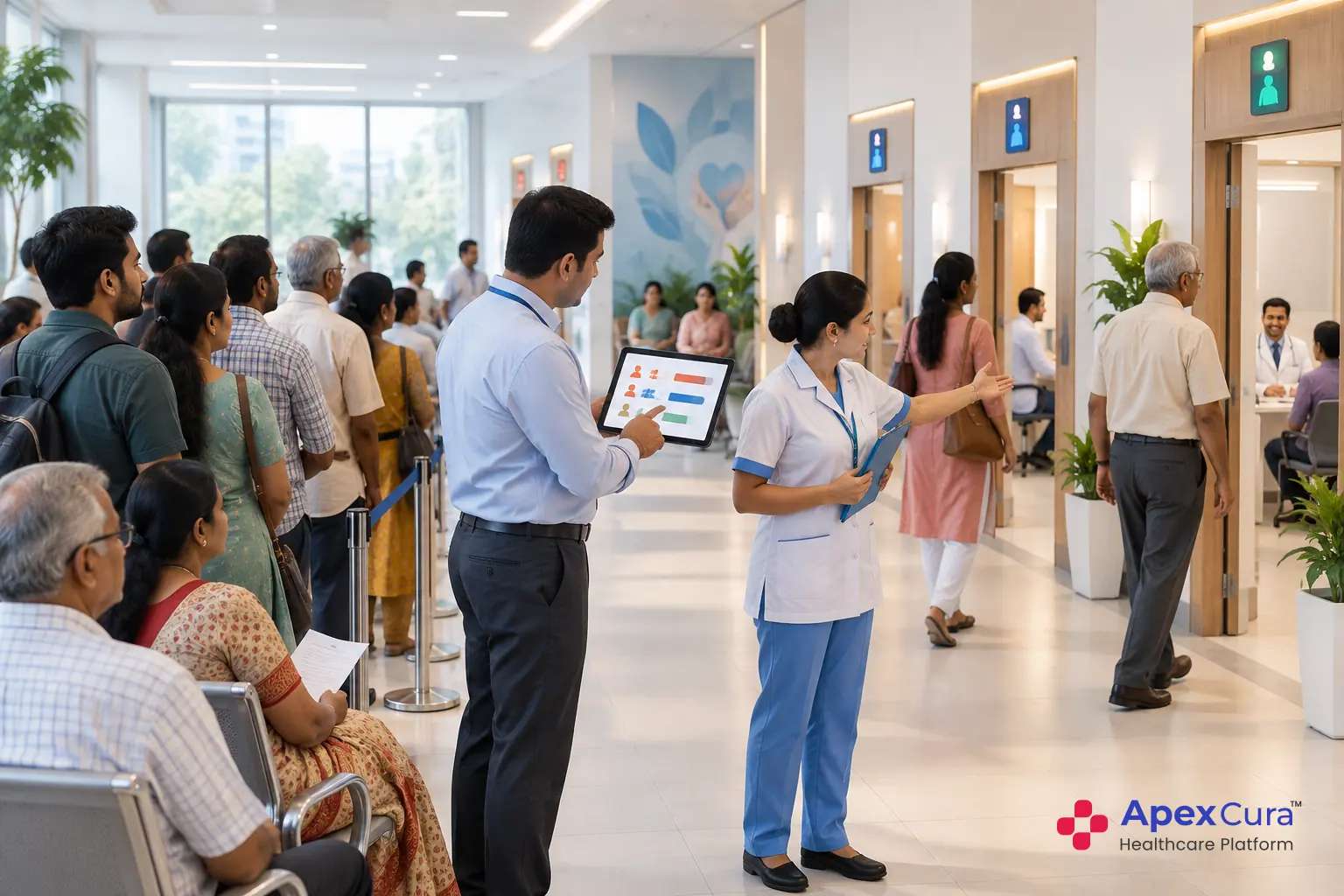
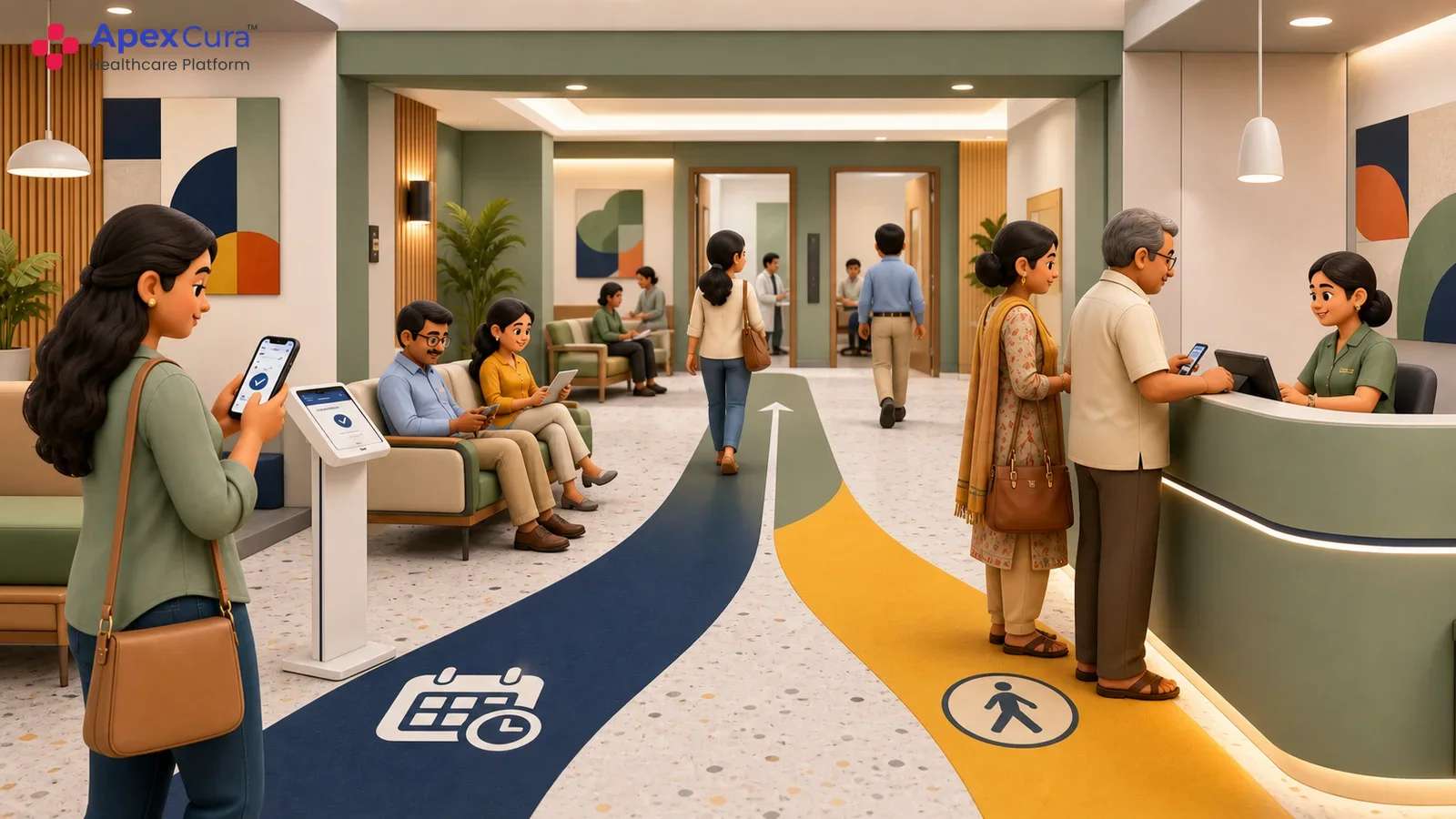
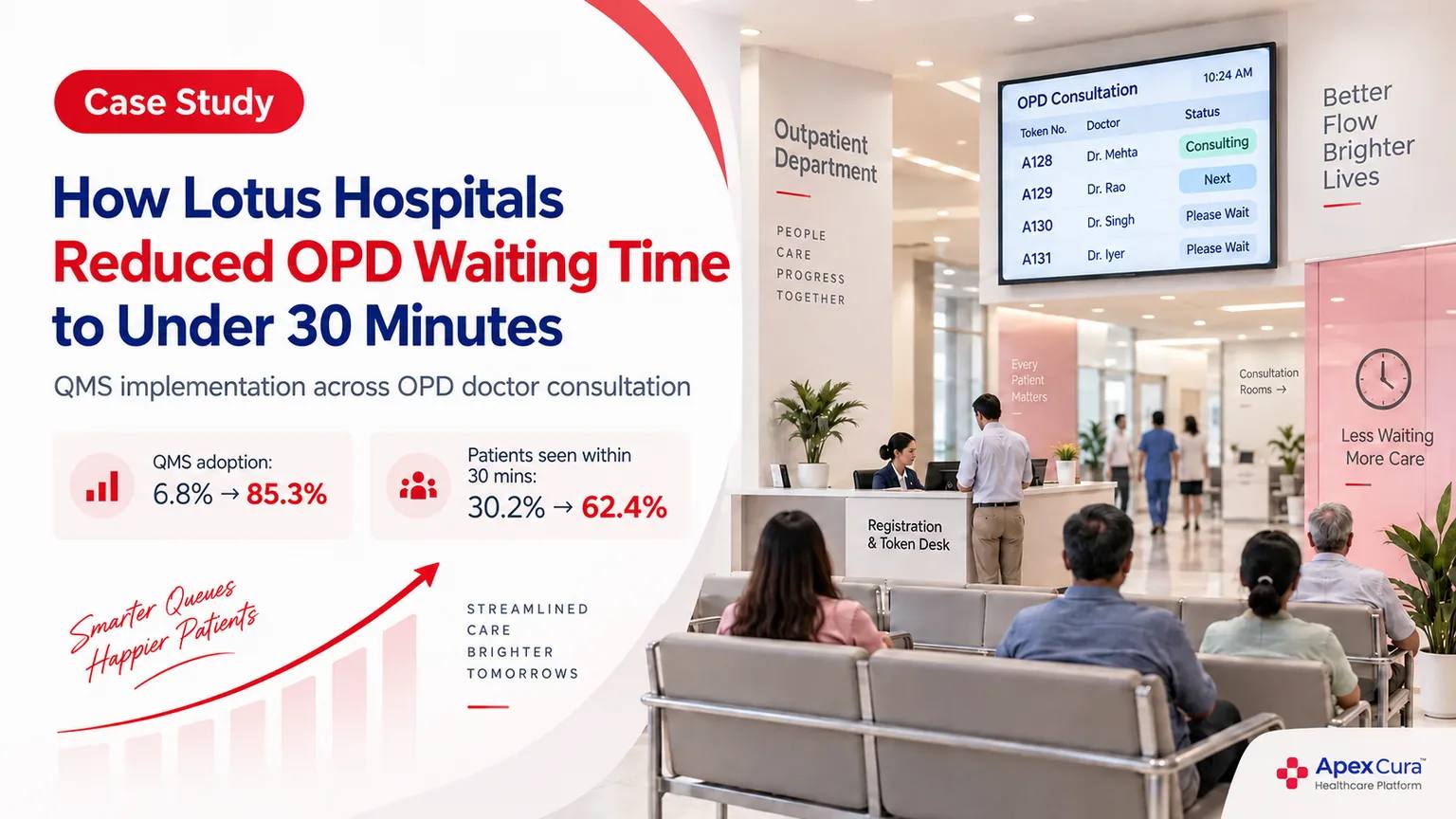
Lotus Hospitals is a mother and child hospital group with four branches across Andhra Pradesh and Telangana. Its OPDs handle patients coming for paediatrics, obstetrics, gynaecology and other related consultations. Some patients book an appointment before coming to the hospital. Others come directly as walk-ins. Both groups finally wait outside the consultation rooms for their turn with the doctor. This is a normal OPD situation seen in many hospitals. The challenge was not the presence of appointment or walk-in patients. The challenge was managing both groups fairly when they reached the same doctor queue at different times during daily operations.
Before QMS, Staff Managed Patient Order Manually Using Physical Files
Appointment Patients Felt Their Scheduled Time Was Not Being Honoured
Before QMS, the consultation order was managed mainly through patient files kept outside the doctor room. Staff generally arranged the files based on arrival. This looked simple, but it did not properly consider the appointment time already given to a patient. A patient could reach the hospital on time and still find several walk-in files ahead. From the patient’s side, there was no clear reason for taking an appointment if the allotted time was not considered after arrival. This led to repeated questions at the nursing desk and complaints that appointment timings were not being honoured during busy hospital OPDs.
Walk-In Patients Also Waited Longer While Staff Struggled to Prioritise Both Groups
Walk-in patients had a different concern. They came early, completed registration and waited, but could be moved behind appointment patients without knowing why. Staff had to make this decision repeatedly for every doctor queue. Giving full priority to appointments was unfair to walk-ins who had already waited. Following only arrival order made appointments meaningless. Late appointment arrivals, temporary doctor delays and patients not being present when called made the file order more difficult to maintain. Without one accepted rule, patients could not understand their position and staff could not confidently explain who would be called next during every OPD session.
Apex QMS Brought Appointment Patients and Walk-Ins Into One Digital Queue
Hospital-Specific Grace Periods and Priority Rules Determined the Patient Order
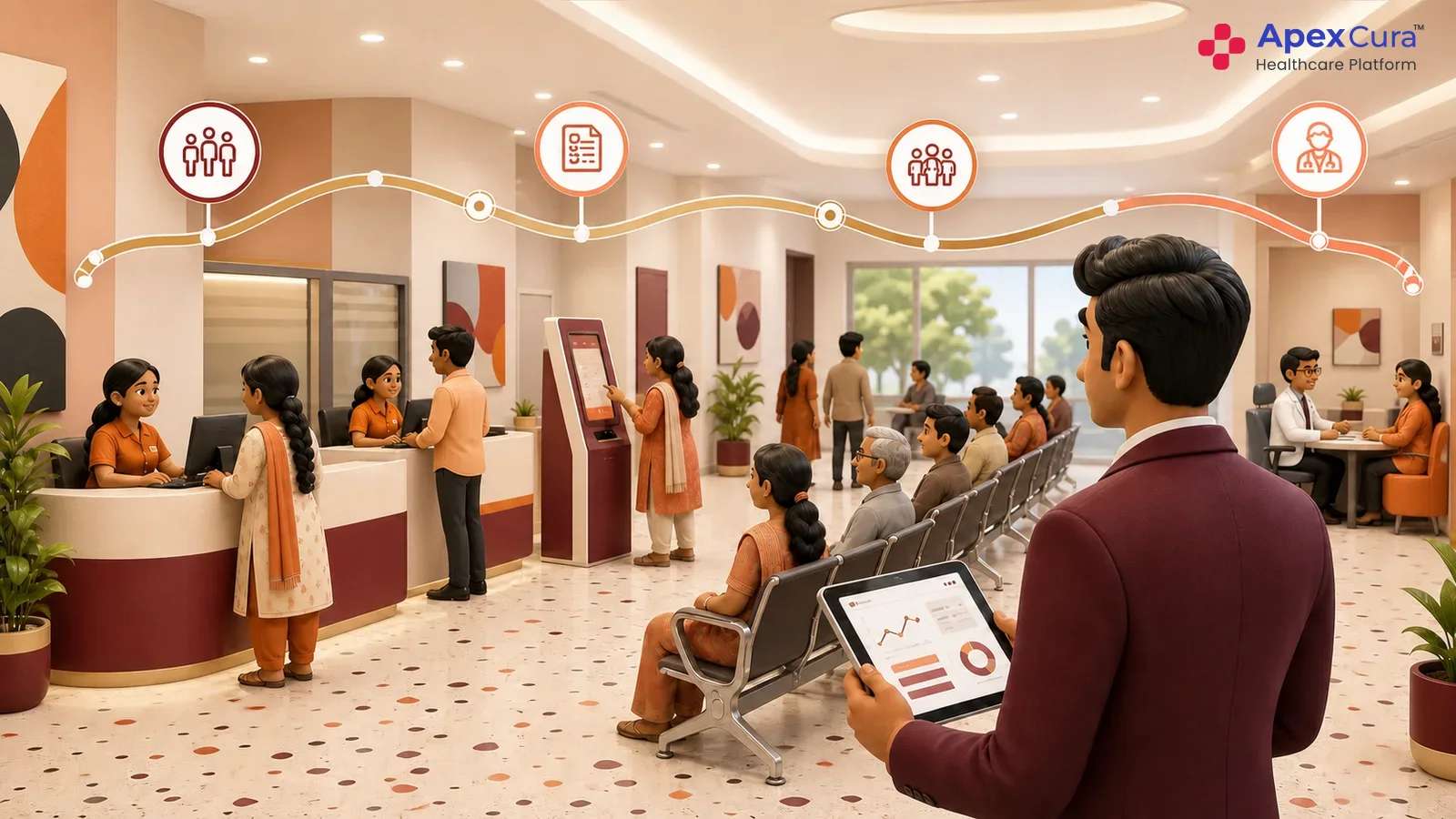
Apex QMS was connected with the relevant appointment, registration and billing events. Appointment patients and walk-ins then entered the same doctor-wise digital queue. Lotus Hospitals could define how much priority an appointment should receive, the acceptable arrival window and the grace period for a late patient. If a patient arrived too late, the original appointment priority did not continue indefinitely. Walk-ins were also protected from being pushed back continuously. The queue order was therefore based on hospital-approved rules instead of a staff member making a fresh judgement each time a file reached the consultation area for each live OPD session.
Training, Hand-Holding and Visible Queue Displays Increased QMS Adoption From 6.8% to 85.3%
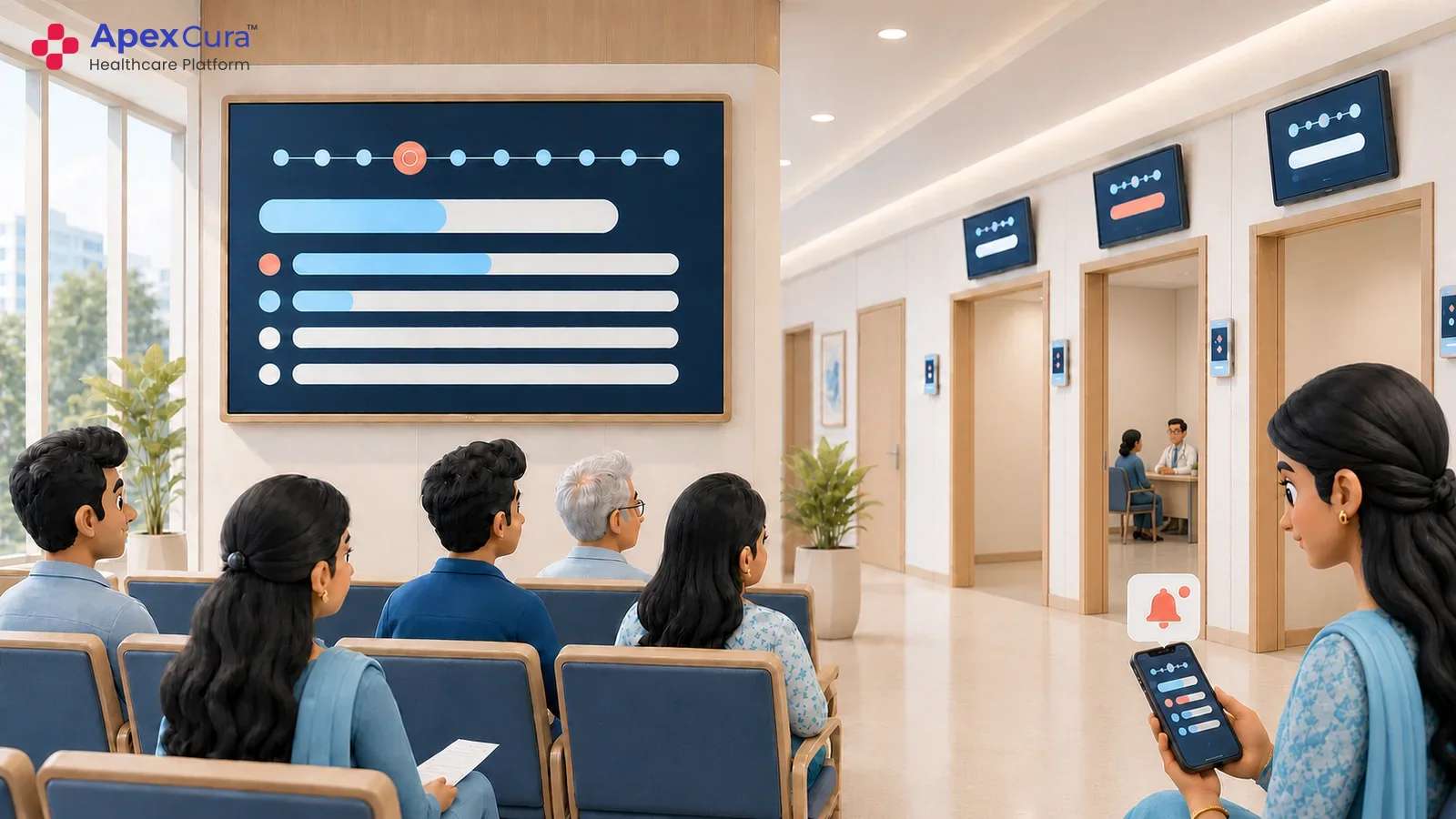
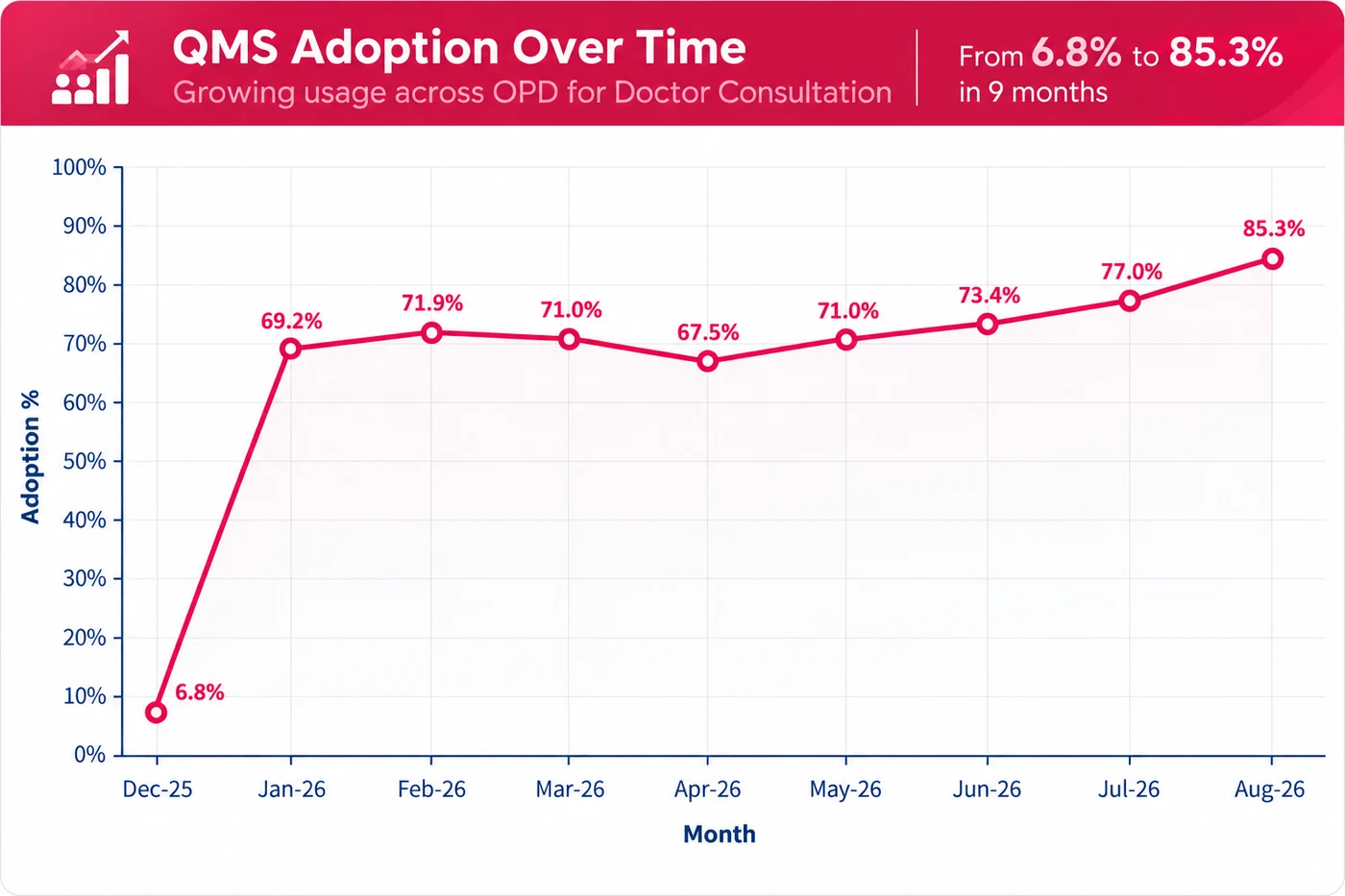
Introducing the software alone was not enough. Apex Cura worked with the OPD teams, trained the users and followed up whenever the digital queue was not being used consistently. The queue was also shown on display screens in the OPD waiting area. Patients could see the token movement, and staff knew that the same order was visible to everyone. This created practical accountability on the floor. QMS adoption increased from 6.8% in December 2025 to 85.3% in August 2026. The improvement happened over nine months through regular hand-holding, usage review and correction of gaps in the daily process across OPDs.
Create measurable OPD queues and give operations teams the visibility required to review waiting-time performance.
Explore Apex QMSAfter QMS, the Patient Flow Became More Transparent and Measurable
Patients Could See Their Queue Position, Staff Followed One Order and Positive Feedback Improved
The display screen in the waiting area gave patients a simple answer to an important question: when is my turn? They could see the live queue instead of repeatedly checking with the nurse or front-desk staff. Appointment patients and walk-ins were both managed through the same visible order. Staff could follow the configured queue and explain the reason behind the sequence. Management could also review waiting-time data instead of depending only on complaints from the floor. Lotus Hospitals observed an improvement in positive patient feedback as the process became clearer. The basic OPD flow remained the same, but transparency and accountability improved over time.
The Percentage of Patients Seen Within 30 Minutes Doubled, With Further Improvement Underway
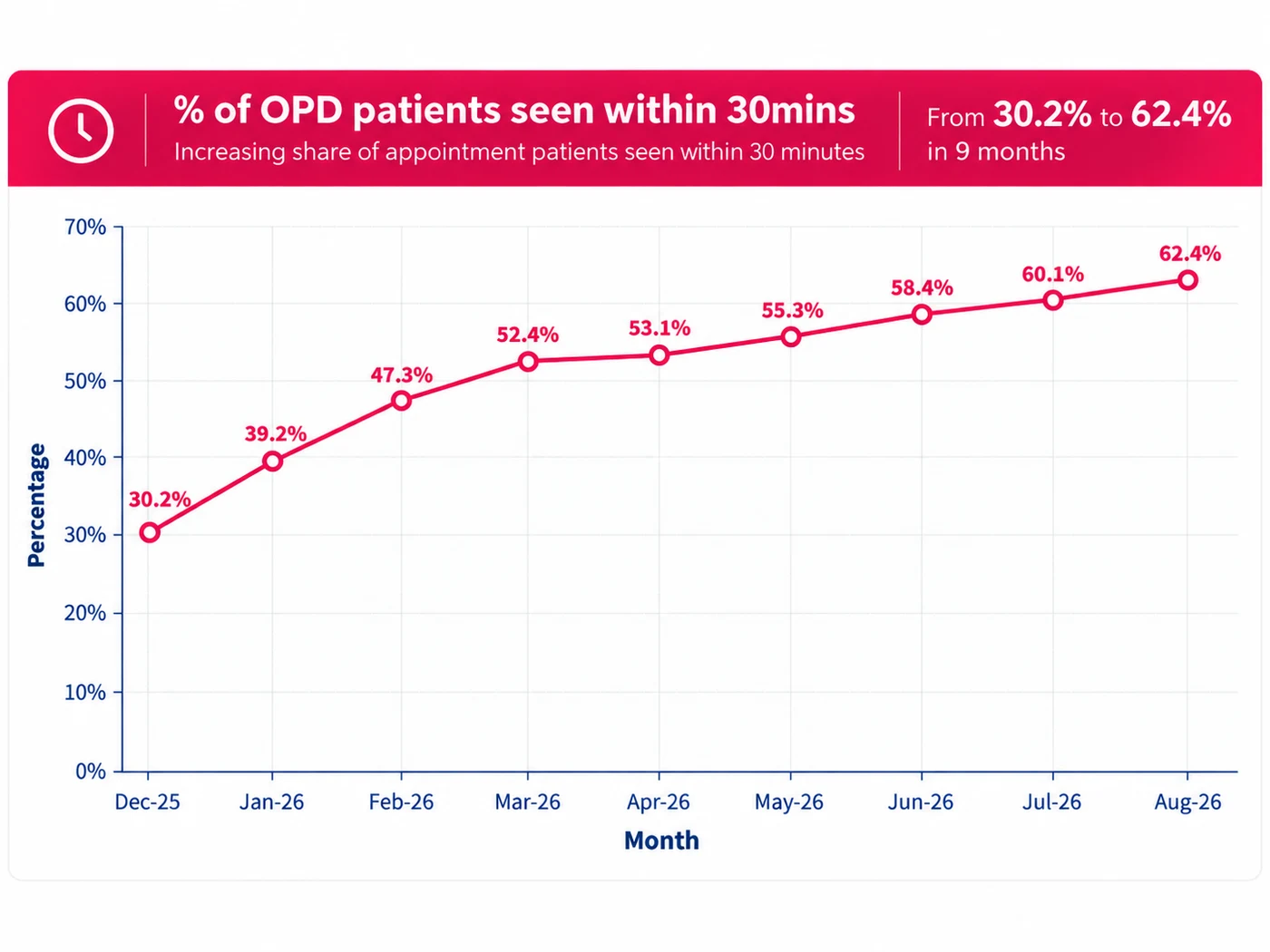
At the start of the measured period, 30.2% of appointment patients were seen within 30 minutes of arrival. This increased month by month and reached 62.4% in August 2026. The percentage had more than doubled during the nine-month period shown in the graph. The hospital is continuing to work towards improving this to 80-90% of patients seen within 30 minutes. QMS has not changed the clinical consultation. It has helped the team organise the waiting queue, follow one order and identify where further improvement is required across its OPDs. The same measure gives the OPD team a consistent improvement benchmark.
Conclusion
Lotus Hospitals had a common OPD problem. Appointment patients wanted their time to be honoured, while walk-ins also expected a fair turn. Managing files manually could not give both groups enough clarity. Apex QMS created one digital queue using the hospital’s own priority and grace-period rules. Display screens made the order visible, and regular hand-holding helped staff follow it consistently. Adoption increased to 85.3%, the percentage of appointment patients seen within 30 minutes more than doubled during the measured period, and positive feedback improved. The hospital continues to improve the same process further through a structured waiting-time improvement process.