Previously, it was an Established CRM but Limited Adoption
A CRM was present, but it was not driving daily execution
The client had already invested in a recognised CRM. Yet ownership of patient enquiries, follow-ups and outcomes did not consistently move through the system. Teams continued to depend on partial manual processes and individual excel sheets and WhatsApp groups. Managers could see that activity was happening, but could not reliably determine whether every enquiry had been acted upon, whether the right follow-up had occurred or which actions were contributing to revenue.
Limited adoption created little value
A CRM produces value only when it becomes the place where work is assigned, completed and measured. When adoption is partial, the organisation maintains software without gaining operational control. Information gets distributed across people and systems; the same enquiry can carry different statuses for different teams; and management reviews become exercises in reconciling reports. The client’s problem was therefore not the absence of technology. It was the absence of one dependable operating process.
The replacement began with the operating reality
Apex Cura did not treat the engagement as a software migration. The first step was to understand how enquiries entered the organisation, how employees acted on them, where handovers occurred and how appointments and revenue outcomes were recorded. This exposed the difference between the documented process and actual execution. The deployment was then designed around the work teams needed to perform, the information they required and the accountability management expected.
Key insight: An established CRM can still fail when employees do not use it as the single system for executing and measuring patient acquisition.
The Apex CRM Deployment
Integrations created operational value
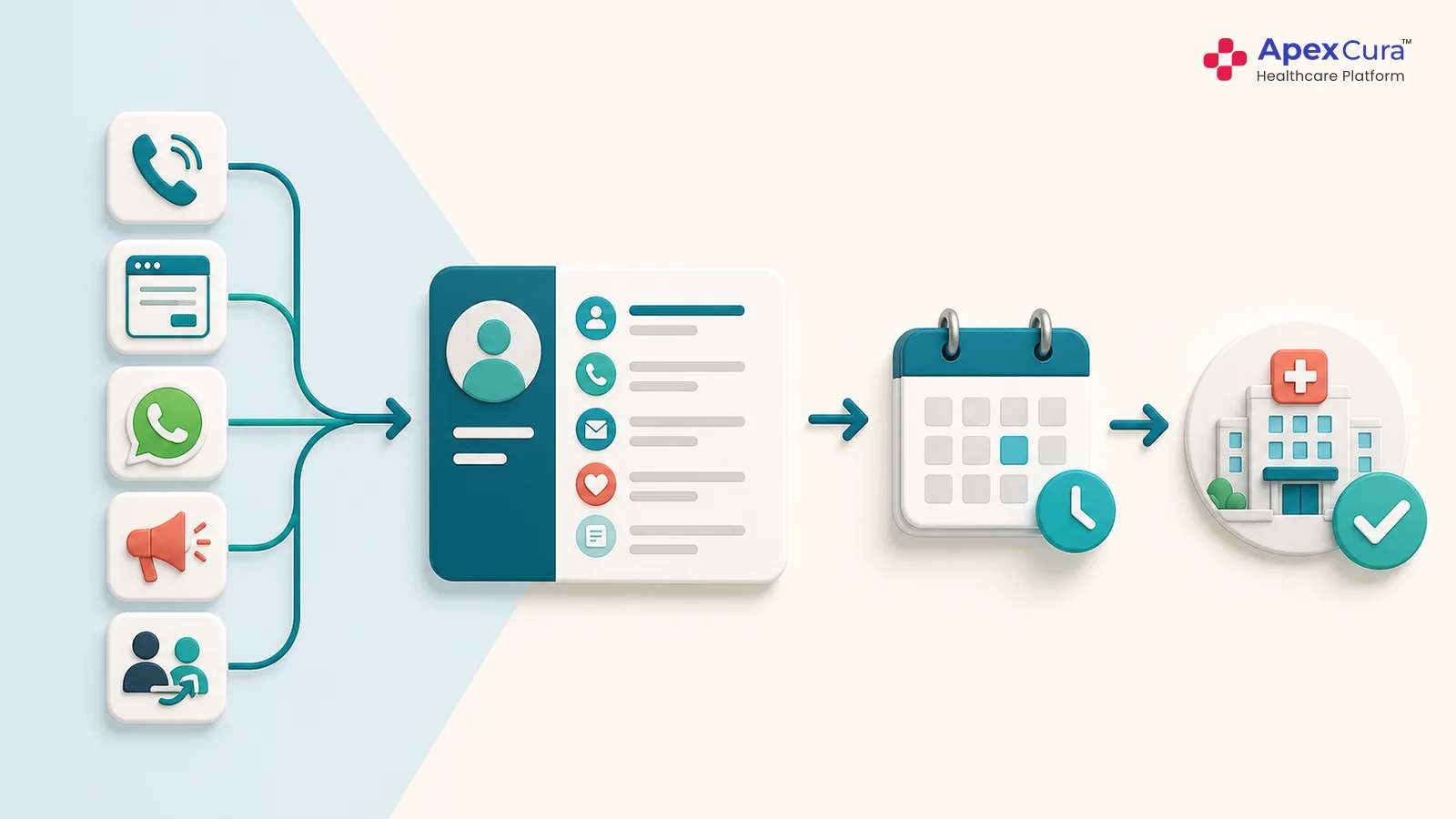
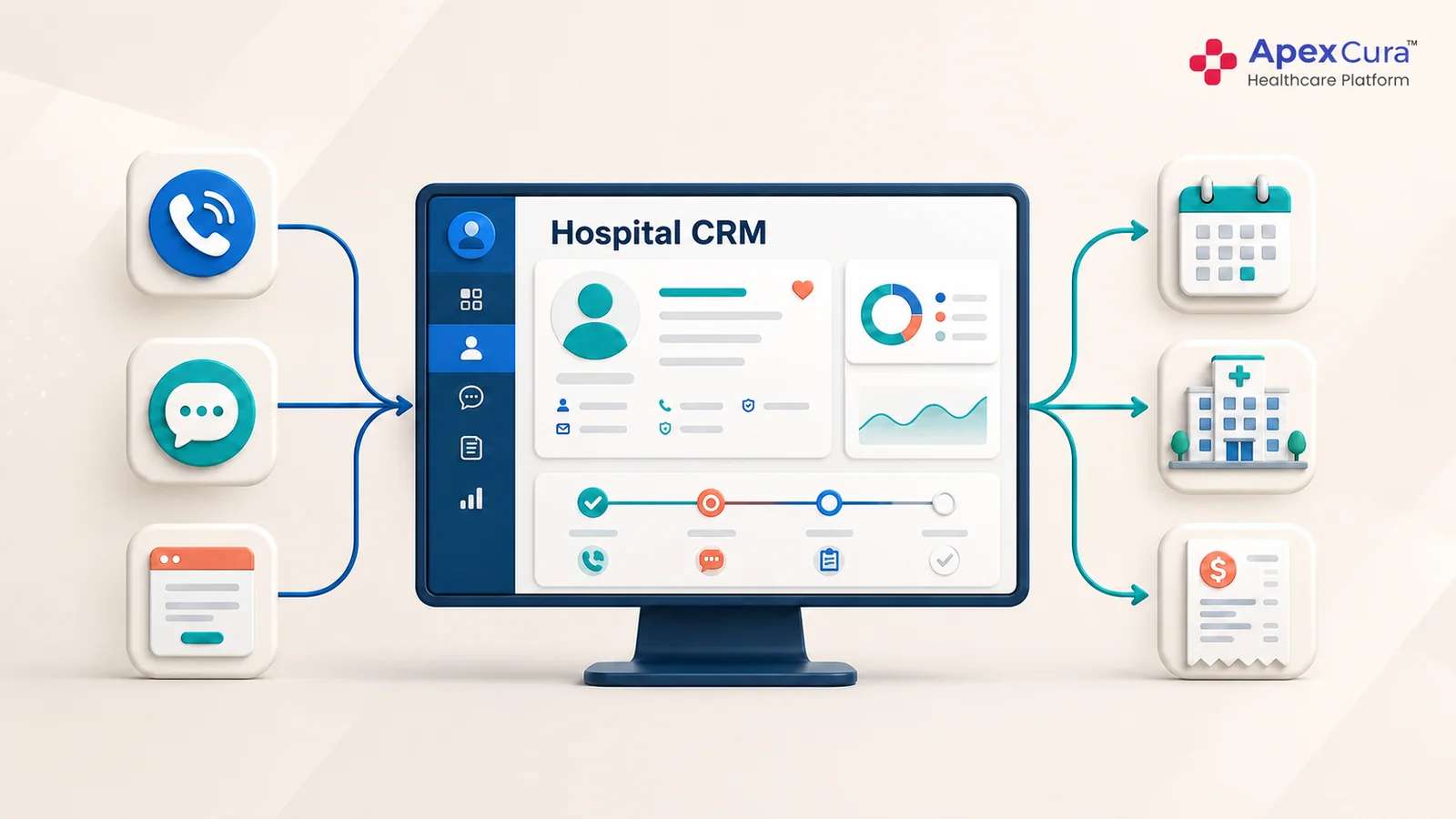
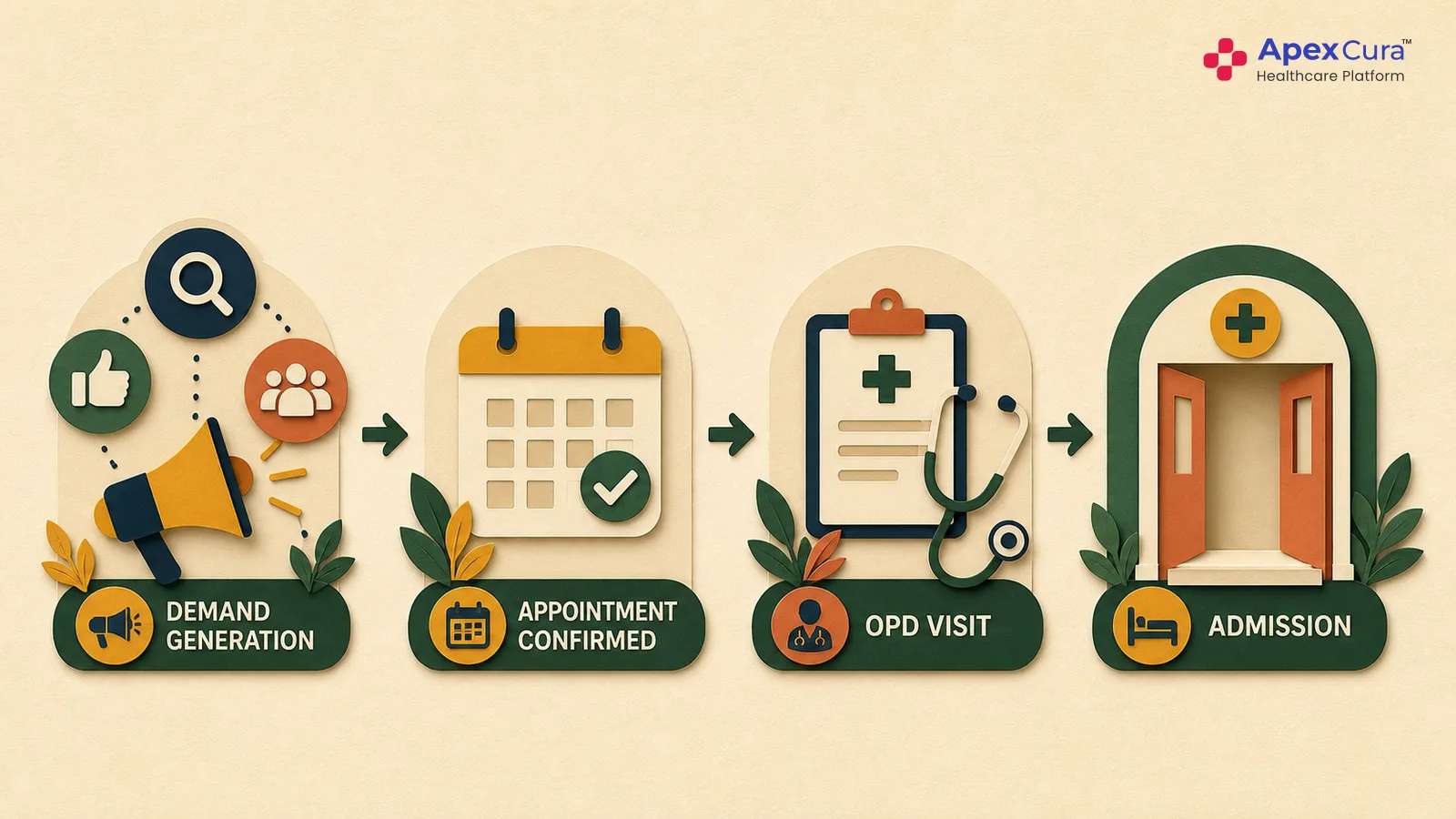
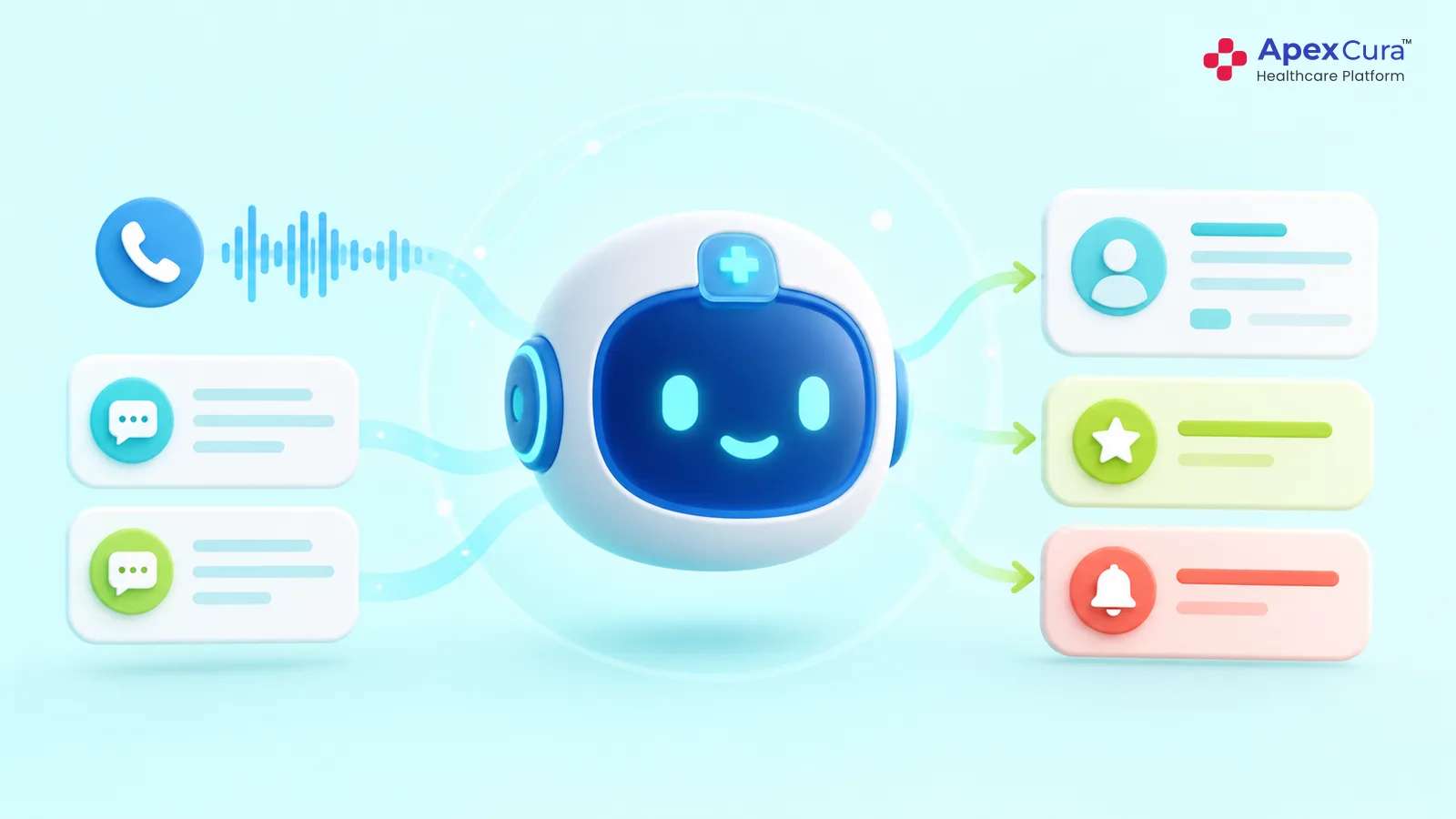
Apex CRM was integrated with the hospital information system, appointment-booking platform, AI-powered patient-engagement system and automated revenue-reconciliation workflow. Agents could check doctor availability, book appointments, communicate the status of patient requests and assign callbacks or information requests to coworkers from one connected workflow. Automated source attribution linked every enquiry to its original digital channel and subsequent revenue, reducing manual coordination and making the entire conversion journey measurable.
AI measured interactions quality
AI analysis gave the hospital visibility into how agents were handling patient conversations—not merely how many calls they completed. It helped evaluate whether agents understood the patient’s intent, provided accurate information, responded with empathy and guided the patient towards the appropriate next step. Agent-level feedback identified specific improvement areas and training needs. This replaced subjective performance reviews with consistent evidence about interaction quality, missed opportunities and the factors limiting each agent’s throughput.
Leadership intervention has moved the needle
Leadership used the new visibility to actively manage performance instead of treating KPIs as passive reports. When the data exposed gaps, low throughput, inefficiencies, leaders intervened and did the needful to resolve the blockers. Performance feedback was looped back to agents so that they can improve themselves day by day. This continuous cycle of measurement, intervention and accountability produced gradual KPI improvement over five months.
Want to turn your CRM into a measurable revenue operating system?
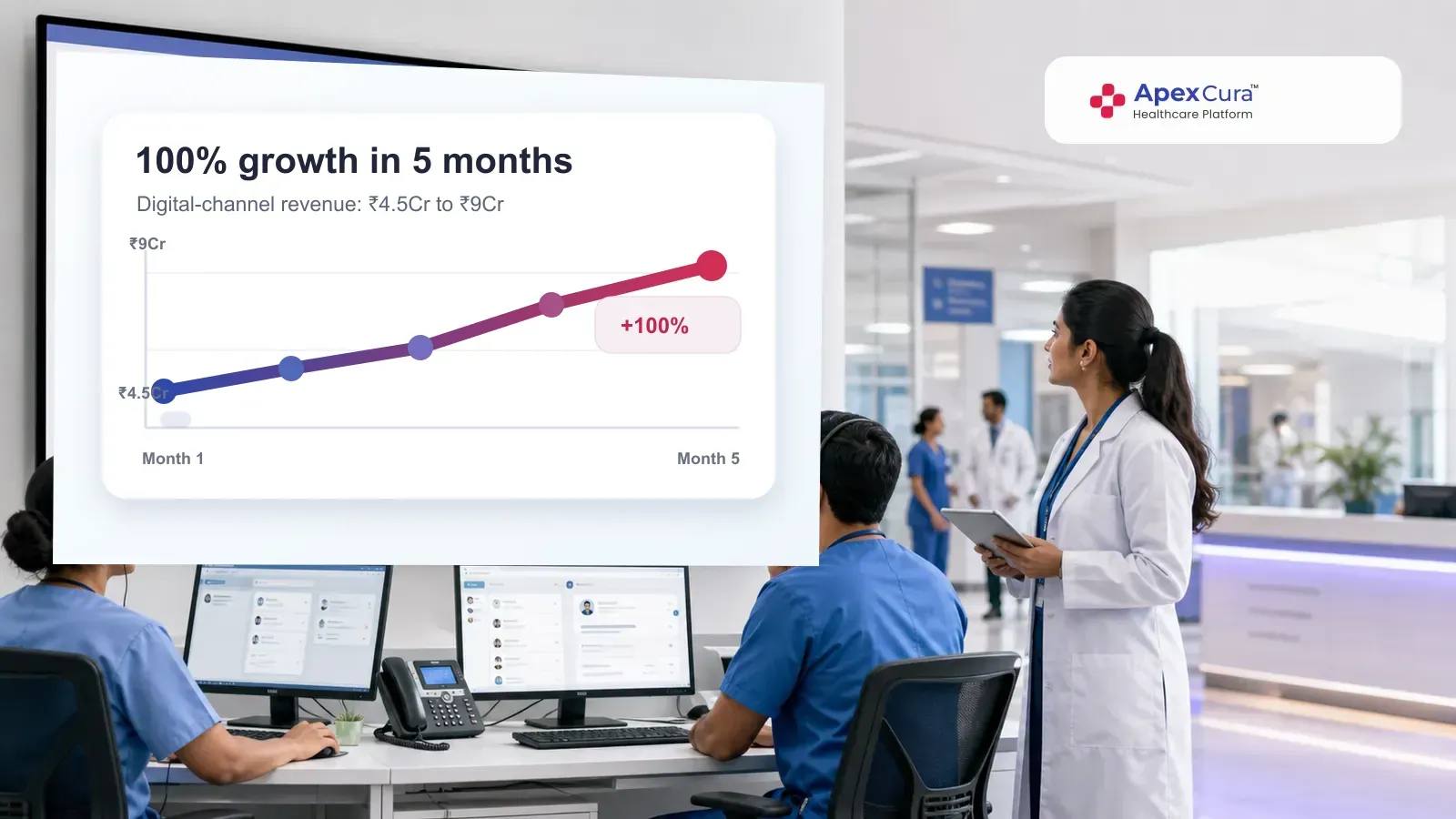
Lets Talk To ExploreThe Outcome: 100% Growth in Monthly Revenue in 5 Months
The improvement was built through five months of execution
The result did not come from switching the CRM and waiting for revenue to rise. The implementation evolved with operating feedback, ensuring that the platform supported how teams actually worked while steadily raising the standard of execution expected from them. Apex Cura provided the platform required to align with existing processes, eliminate gaps and help leadership deliver exceptional results.
Revenue growth was the output of operational control
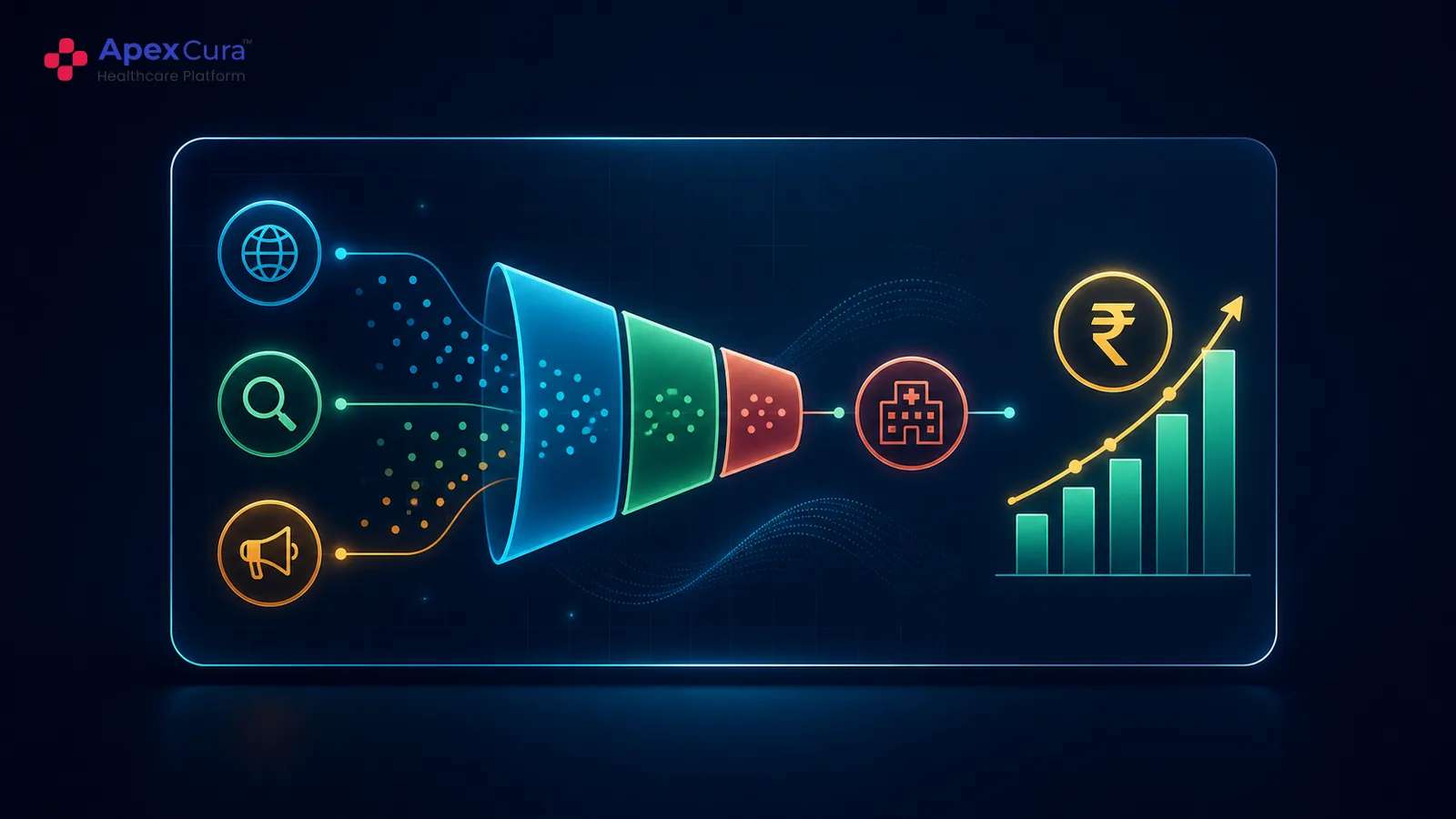
The 100% increase in monthly revenue from digital channels was the commercial outcome of several connected changes: more work became visible, ownership became clearer, follow-ups became measurable and managers could intervene using current information. Apex CRM gave the organisation a shared operating layer across technology, teams and outcomes. That is the difference between installing CRM software and deploying a Healthcare CRM for Hospitals as a revenue transformation system.
Conclusion
Healthcare requires specialised CRMs designed for call-intensive patient engagement. Every hospital operates with its own systems, processes and workflows, so the CRM must integrate into the existing environment without disrupting operations. AI must understand patient needs, interaction context and operational dependencies in depth to deliver measurable outcomes across the entire journey—for patients, frontline staff and management.