What a Rule-Based Chatbot Does and Where It Stops
A Rule-Based Chatbot Follows Fixed Menus and FAQs
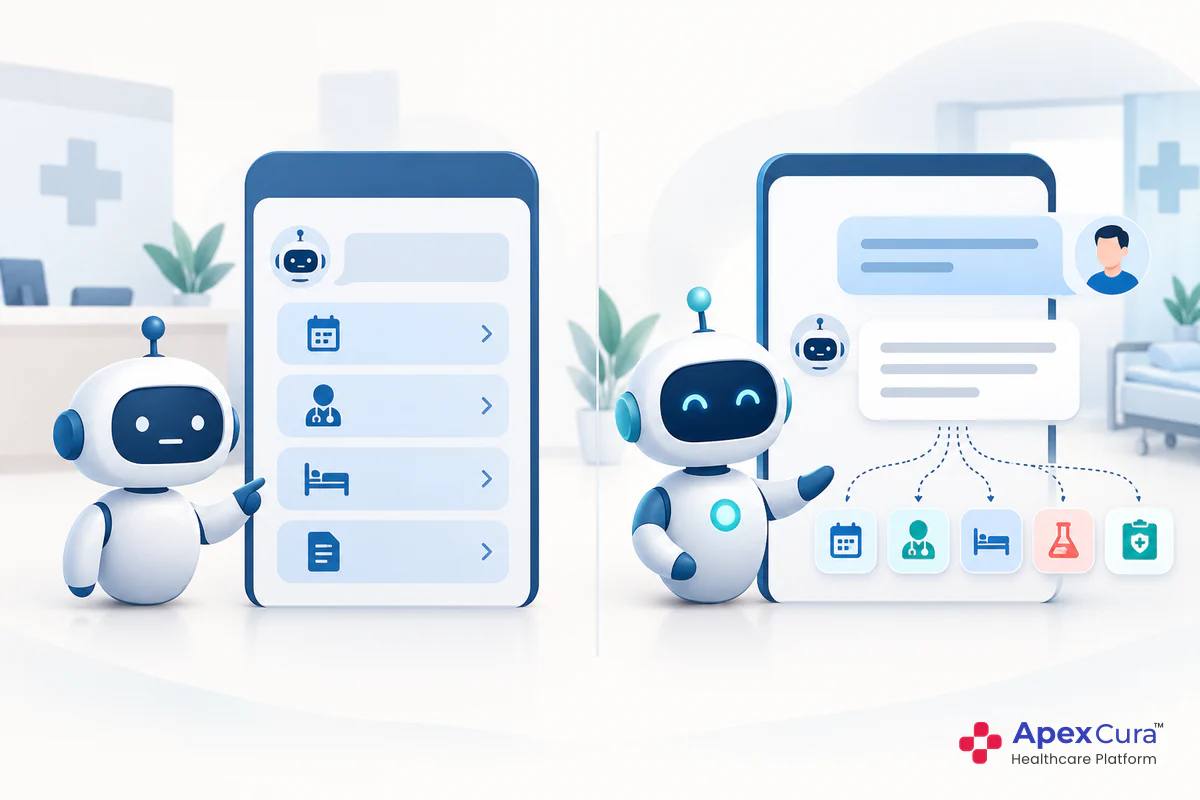
A rule-based chatbot is built as a decision tree. The hospital writes a set of questions and answers, arranges them into menus and buttons, and the chatbot guides the patient through those fixed paths. If the patient picks “Departments”, then “Orthopaedics”, the chatbot shows the orthopaedics page or phone number.
This works when the patient’s question matches a menu option exactly. It is predictable, inexpensive to set up and easy to control. For a small set of fixed questions, it can be enough. The limitation appears as soon as a patient types a question in their own words, asks two things at once or needs something the menu designer did not anticipate.
Why Hospital Conversations Break Fixed Menus
Hospital conversations are rarely tidy. Patients write short, informal messages with spelling mistakes and local terms. They ask for a “heart doctor” rather than cardiology, or combine a doctor, a day and a branch in one line. They switch topics midway, from timings to price to booking.
A menu cannot follow this. The patient must translate their need into the hospital’s menu structure, and some do not bother. They leave, call the hospital or message another one. The chat ends without an answer, and the hospital may have no record that a genuine enquiry was lost. This gap between how patients write and how menus work is the core difference between the two kinds of chatbot.
AI Chatbot vs Rule-Based Chatbot: The Core Differences
Understanding the Patient’s Words vs Matching Menu Options
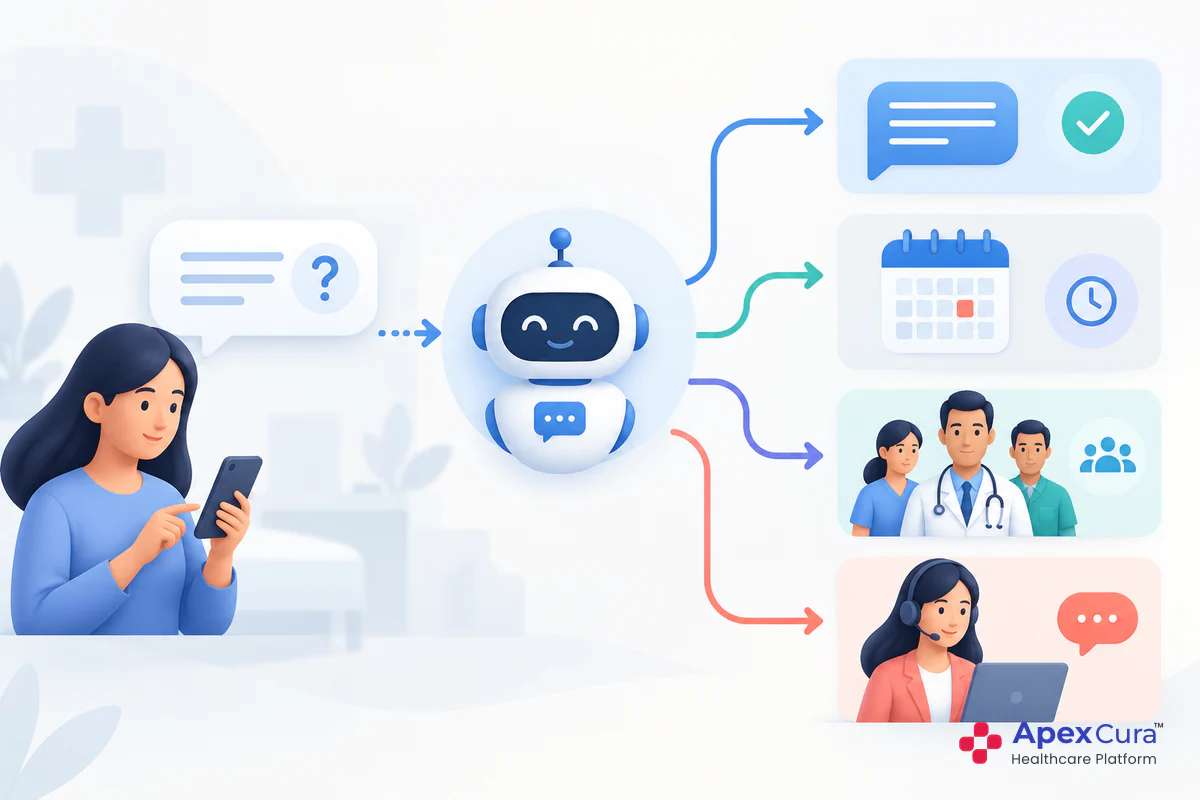
A rule-based chatbot matches buttons or exact keywords. An AI chatbot uses natural-language processing to identify what the patient is asking for, even when the words do not match the hospital’s own terms. “Heart doctor”, “cardio specialist” and “doctor for BP and heart” can all lead to the same cardiology response.
This changes the patient’s experience. Instead of navigating menus, the patient types the question once and gets a relevant reply. It also changes what the hospital learns. An AI chatbot can recognise the service the patient is interested in, which helps the hospital spot missed patient enquiries in hospital chatbots, such as an appointment or procedure enquiry hidden inside a routine question.
Answering From Approved Information vs Fixed Scripts
A rule-based chatbot repeats the fixed answers someone wrote into it. Each new question needs a new menu path, and when those answers age, the error may go unnoticed until a patient complains.
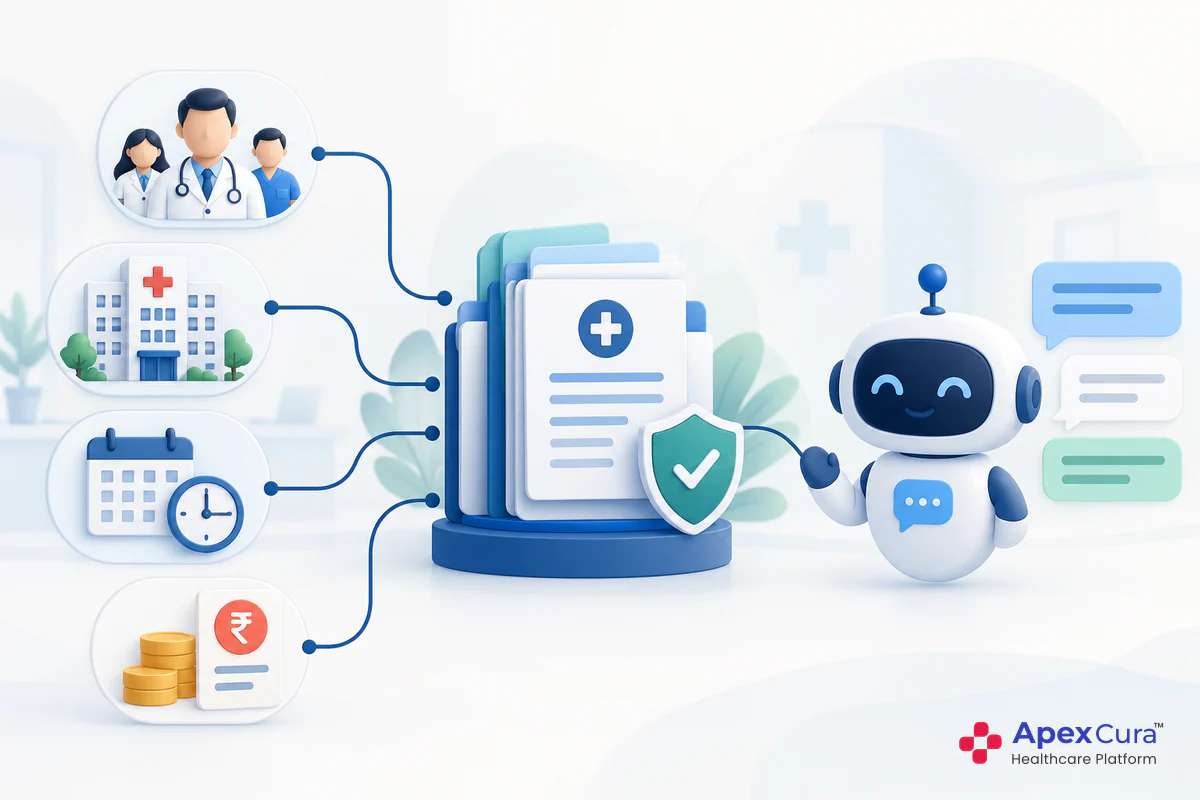
An AI chatbot can be trained on hospital-specific information such as services, specialities, doctors, branches, timings and approved prices. It can then answer a wide range of questions from that approved information, in the patient’s own phrasing, without a separate path for each one. The hospital still controls what the chatbot may say. Updating the approved information updates every answer that depends on it. The guide to how hospital chatbots work explains this wider process.
When the Chatbot Does Not Have the Answer
Every chatbot meets questions it cannot answer. A rule-based chatbot has only one response to anything outside its scripts: it shows the menu again or replies that it did not understand. The patient may try again, see the same menu and leave without knowing whether the hospital can help.
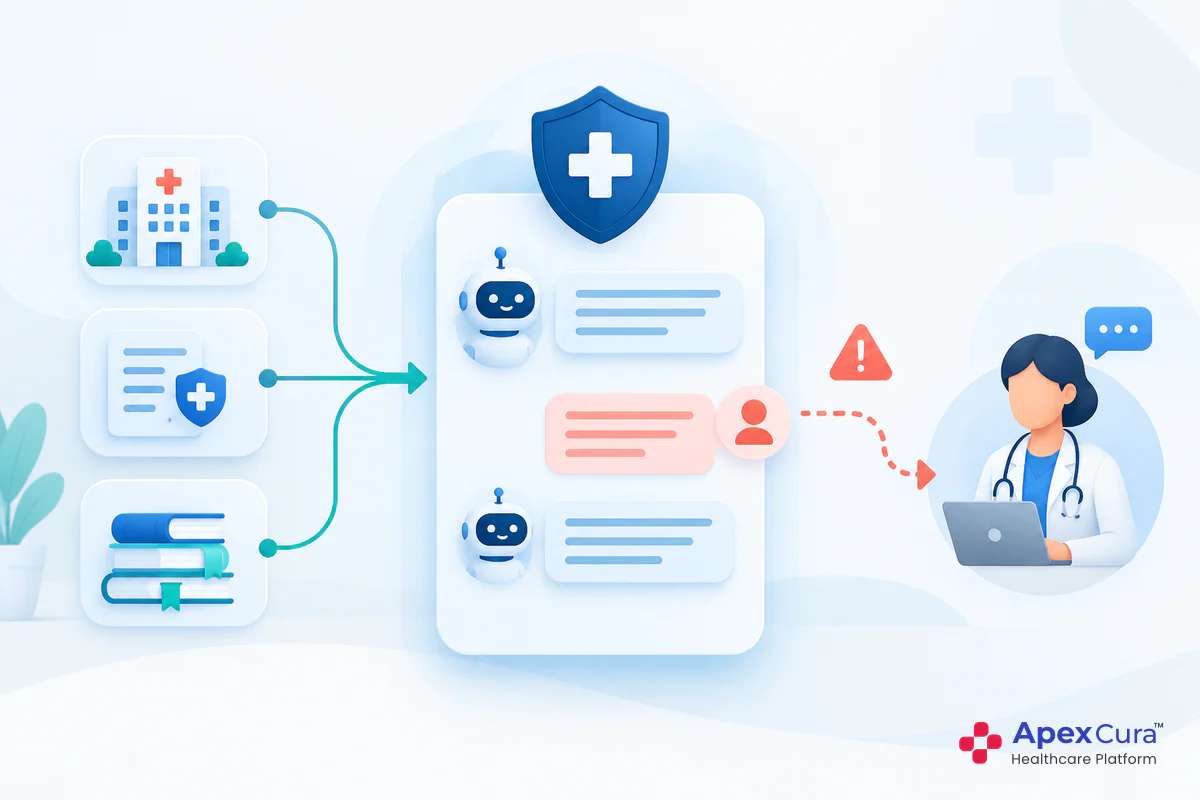
An AI chatbot handles this differently. Because it understands the question, it can tell when the hospital’s approved information does not cover it. It then says so plainly, instead of guessing or repeating a menu, and offers to connect the patient with a person. The patient knows where they stand, and the question reaches someone who can answer it. Unanswered questions also show the hospital which information to add next.
Flexibility vs Predictability
The two approaches make different trade-offs. A rule-based chatbot is fully predictable: it can only say what is written in its scripts. That makes it easy to check, but it cannot handle questions its designers did not anticipate.
An AI chatbot is more flexible, so it needs clear controls. Hospitals should define the approved information it answers from, the topics it must never answer and when a conversation must go to a person, and then review conversations regularly. Is an AI chatbot safe for hospitals? explains these controls. With them in place, flexibility helps patients without giving up the hospital’s control over what is said.
See how the GenAI Chatbot understands patient messages and answers from approved hospital information, beyond what a menu-based chatbot can do.
Explore Apex GenAI ChatbotChoosing Between a Rule-Based and an AI Chatbot
When a Rule-Based Chatbot May Be Enough
A rule-based chatbot is not always the wrong choice. A small clinic with a handful of fixed questions, a single location and little variation in what patients ask may find a simple menu sufficient. It is predictable, inexpensive and easy to check.
The case changes as the hospital grows. More doctors, specialities and branches mean more questions than a menu can comfortably hold, and more ways for patients to phrase them. At that stage, hospitals should use their own conversation data to check whether the menu chatbot is still answering patients or mainly redirecting them elsewhere. Frequent repeats of the main menu are a useful warning sign.
Questions to Ask Before Choosing a Hospital Chatbot
These questions show how well a chatbot will handle real patient conversations:
- Can it understand questions written in the patient’s own words, including spelling mistakes and local terms?
- Does it answer only from the hospital’s approved information, and who controls that information?
- What does it do when the approved information does not cover a question?
- How much effort does it take to keep answers current as doctors, timings and prices change?
Test each one with real messages from the hospital’s own chat history rather than with prepared demonstration questions. A chatbot that handles a hospital’s real messages well is likely to serve its patients well. One that keeps returning patients to a menu will show that quickly.
Conclusion
A rule-based chatbot follows fixed menus and answers fixed FAQs. It is predictable, but it struggles when patients write in their own words and has no good response to questions outside its scripts. An AI chatbot understands those words, answers from approved hospital information within limits the hospital sets and says so when it does not know. For a small clinic with a few fixed questions, a menu may be enough. For most hospitals, the better test is whether patients get a relevant answer in their own words.