The Worry Hospitals Have About AI Chatbots
General AI Tools Answer From Their Own Knowledge
Most people have now used a general AI assistant. It can explain a medical term, summarise a topic or draft a message. It does this by drawing on the general knowledge it learnt from large amounts of public text, not from any one organisation’s records.
That is useful for general questions, but it creates a problem in a hospital. A general AI tool does not know your doctors, timings, branches or prices. Asked about them, it may still produce a fluent, confident answer. This is often called hallucination: the AI fills a gap with something that sounds right but is not based on any real source. The patient has no way to tell the difference.
In a Hospital, a Made-Up Answer Is a Real Risk
Imagine a chatbot that invents a doctor’s Saturday timing, quotes a price the hospital never approved or offers general advice about stopping a medicine before surgery. Each answer arrives on the hospital’s own WhatsApp number or website, so the patient reads it as the hospital speaking.
The consequences range from a wasted journey and a missed consultation to a dispute at the billing counter. Clinical advice is the most serious risk, because it can affect a patient’s care. This is why hospital management is right to ask what an AI chatbot will say before launching one. The answer depends on how the chatbot is designed to produce its replies.
How a Safe Hospital Chatbot Is Designed
AI Understands the Question; It Does Not Supply the Answer
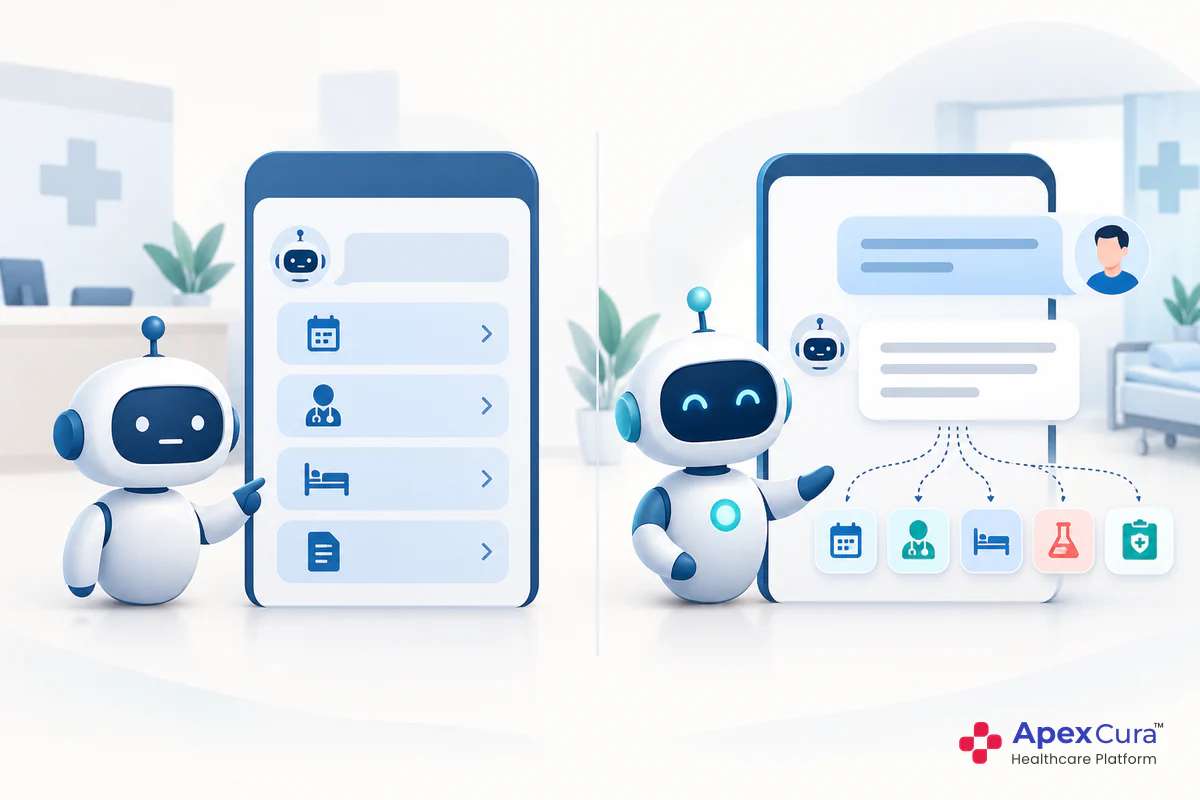
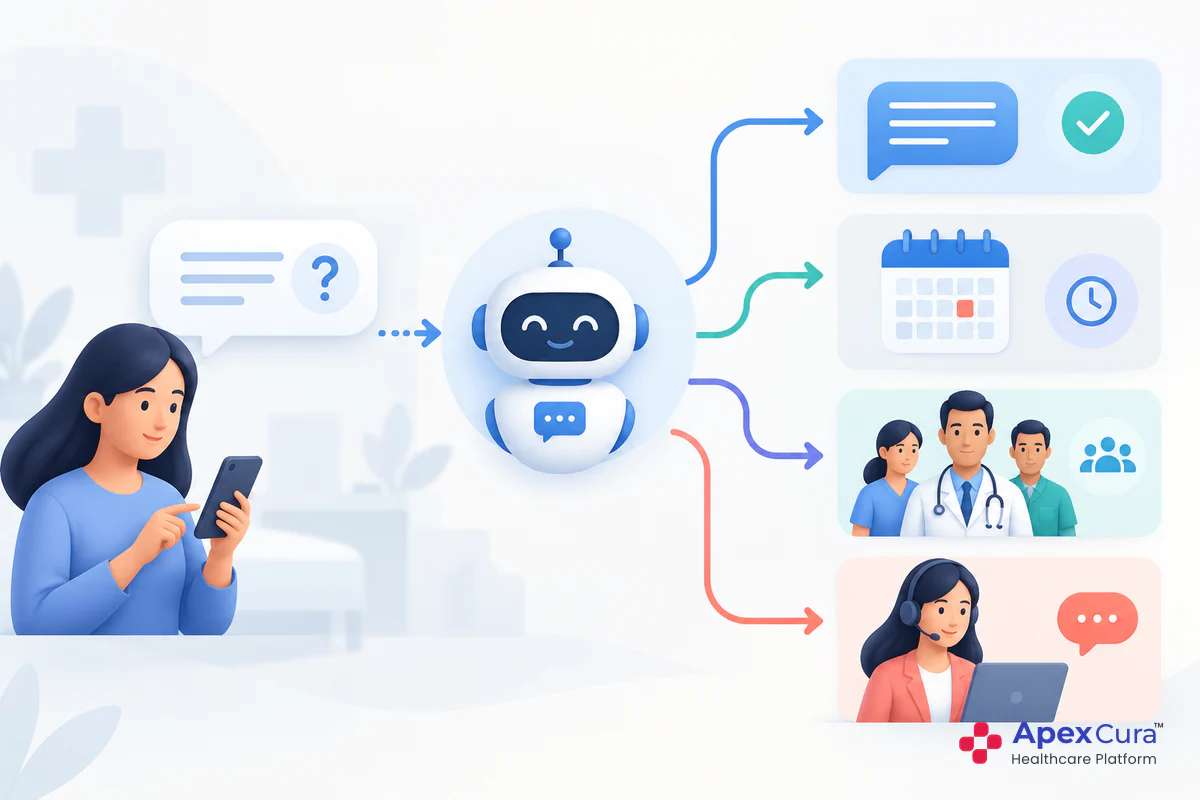
A safe hospital chatbot separates two jobs. The first is understanding the patient’s message. Patients write informally, misspell words and use their own terms, such as “heart doctor” instead of cardiology. This is where AI is valuable. It works out what the patient is really asking for.
The second job is producing the answer, and here the AI is not allowed to rely on its own knowledge. Its role is to understand the question and find the right approved information, not to compose facts. Keeping these two jobs separate is what lets a hospital use AI for its intelligence without letting it decide what is true about the hospital.
Answers Come Only From the Hospital’s Approved Information
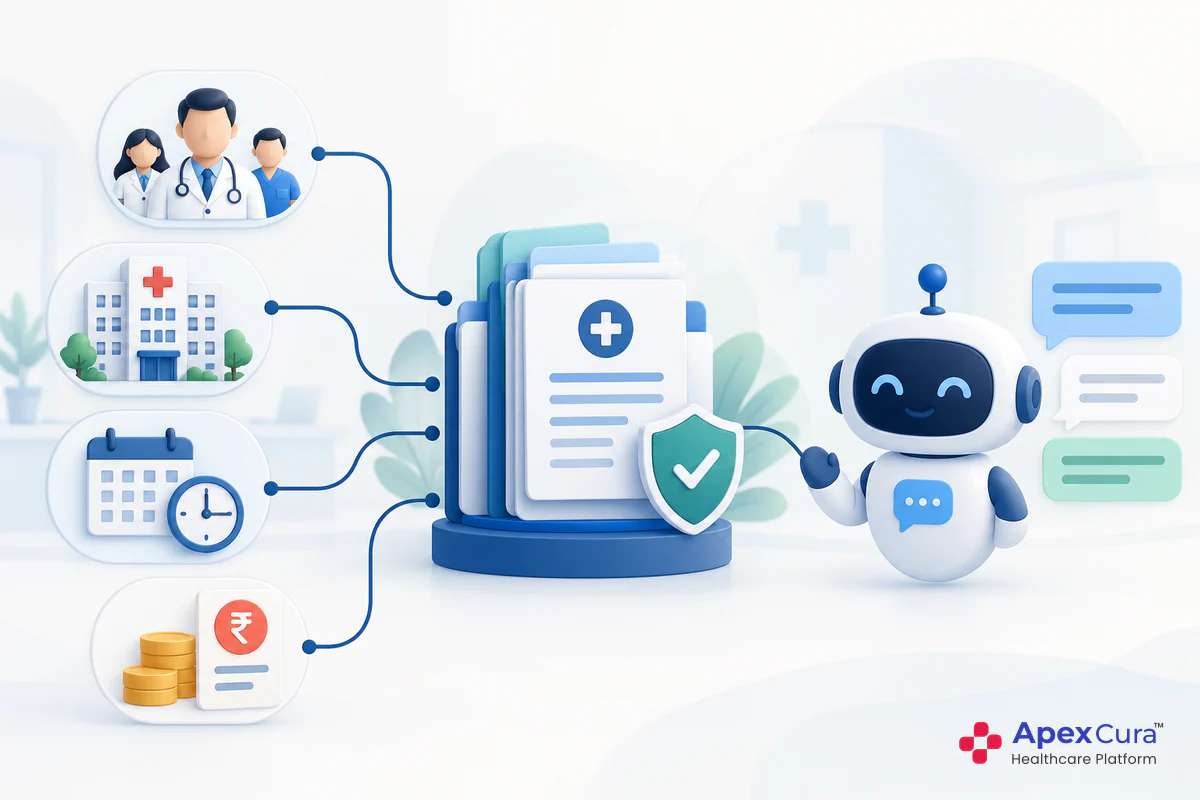
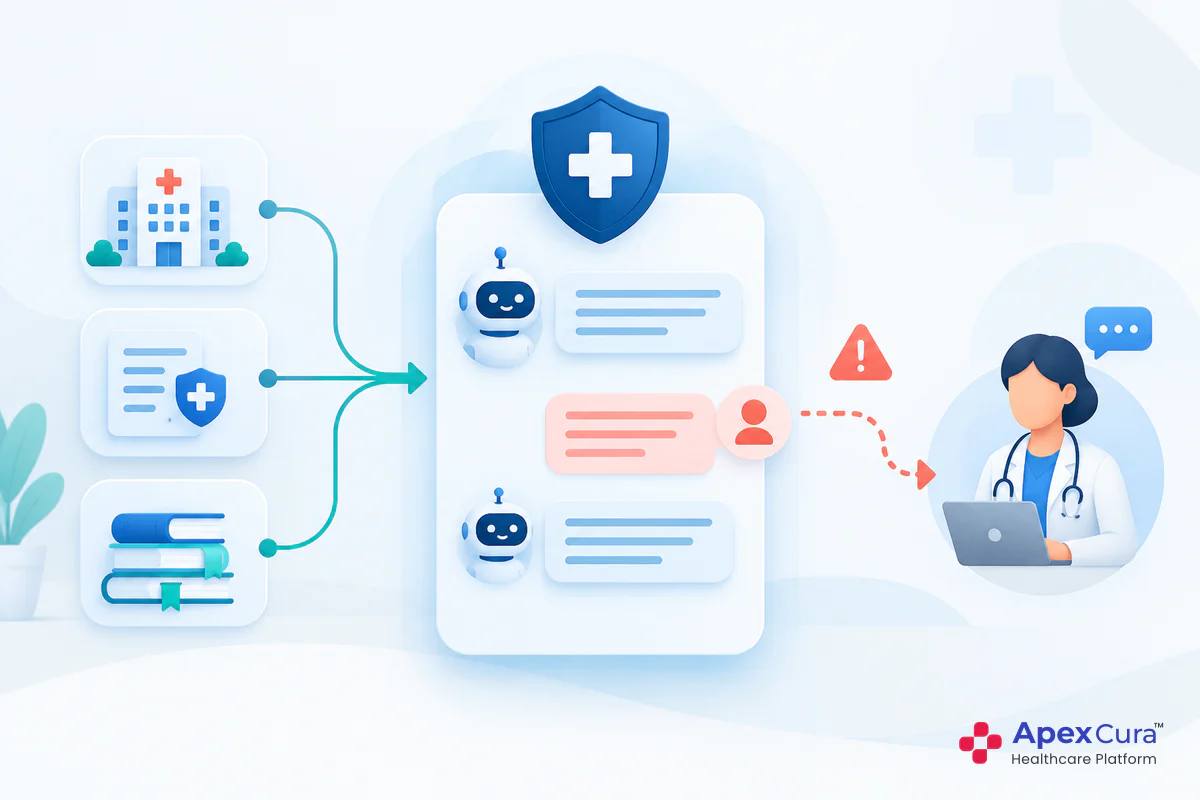
Once the question is understood, the chatbot looks it up in the information the hospital has approved: doctors, services, specialities, branches, timings, contact numbers and approved prices. It then replies in plain language, with the context the patient needs, such as the branch, the day or the department.
Because every answer is drawn from the same approved source, the chatbot gives the same answer on every channel. The hospital controls what that source contains. The hospital chatbot knowledge base explains how hospitals prepare and maintain this information. If it is accurate and current, the chatbot’s answers are accurate and current too.
No Medical or General Knowledge of Its Own
The chatbot does not add its own medical knowledge or general information to an answer. It does not explain symptoms, suggest treatments, interpret reports or advise on medicines. It does not fill gaps with facts from the internet.
This boundary matters most for clinical questions. A patient may ask whether their pain needs a specialist or whether they can eat before a test. Unless the hospital has approved a specific answer, such as standard preparation instructions, the chatbot does not attempt one. Clinical judgement stays with doctors and trained staff, where it belongs. The chatbot’s job is to connect the patient with them, not to replace them.
When the Answer Is Not Available, It Says So
No approved information covers every possible question. When a patient asks something the approved information does not cover, a safe chatbot does not guess. It tells the patient clearly that it does not have that information and offers a way forward.
That way forward is a person. When an agent is available, the patient can choose “Chat with Live Agent” and continue in the same chat with a member of the hospital team. Chat With a Live Agent explains how this fallback works. An honest “I don’t have that detail” followed by a human handover protects the patient far better than a confident guess.
See how the GenAI Chatbot understands patient questions with AI and answers only from your hospital’s approved information.
Explore Apex GenAI ChatbotWhat This Design Means for the Hospital
The Hospital Controls Every Answer
With this design, the hospital does not have to wonder what the AI might say. Every answer traces back to information the hospital approved. If an answer needs to change, the hospital changes the information, and the chatbot’s answer changes with it.
This also makes accountability clear. Each area of information, such as doctor schedules, branch details or prices, can have a named owner who approves it. When a patient reports an outdated answer, the hospital can trace it to the exact information behind it and correct it. The AI’s intelligence is in understanding patients. The hospital’s authority is in deciding what they are told.
Accuracy Depends on Current Information
This design is built to stop the AI from inventing answers, but it cannot make outdated information correct. If a doctor’s schedule changes and the approved information is not updated, the chatbot will faithfully repeat the old schedule.
The safest approach is to connect chatbot updates to the hospital’s existing change routines. When the medical administration team updates a schedule, or finance revises a price, the same update should reach the chatbot’s approved information. Holiday timings and temporary changes need the same care. Treat the chatbot as one more official place where the hospital publishes information, because that is exactly how patients will treat it.
Checking a Hospital Chatbot Before and After Go-Live
Test It With Real Patient Questions
Before launch, test the chatbot with questions patients actually ask, drawn from past WhatsApp and website messages. Include questions it should answer and questions it should not, such as medical advice, report interpretation or details missing from the approved information.
- Does every answer match the approved information exactly?
- Does it decline clinical questions and offer a person instead?
- Does it say clearly when it does not have an answer?
- Does it give the same answer on every channel?
After launch, review a sample of real conversations regularly. Look for outdated answers, unanswered questions and conversations that should have reached a person sooner, and fix each one at its source.
Conclusion
A hospital chatbot is safe to put in front of patients when its design keeps the AI in its place. The AI understands the patient’s question. The answer comes only from information the hospital has approved, without the AI’s own medical or general knowledge. When the answer is not available, the chatbot says so and offers a person. The hospital controls every answer by controlling the information behind it. A hospital chatbot built on approved information gives patients intelligent help without the worry of what it might say.