How a Hospital Chatbot Learns Hospital Information
A General AI Model Does Not Know Your Hospital
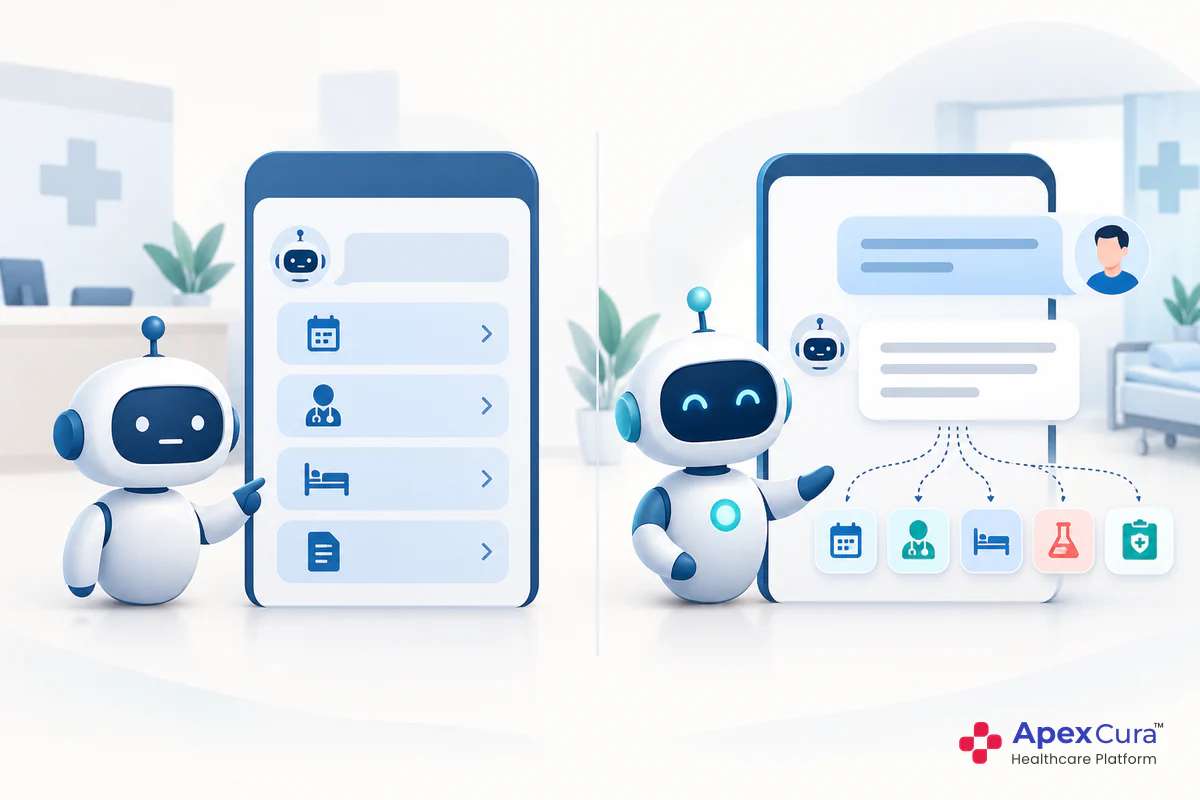
General AI models know a great deal about language and about medicine in general. They do not know which treatments a particular hospital offers, which insurance companies it works with or which doctors consult at which branch. Left to itself, a general model may fill these gaps with plausible but wrong answers.
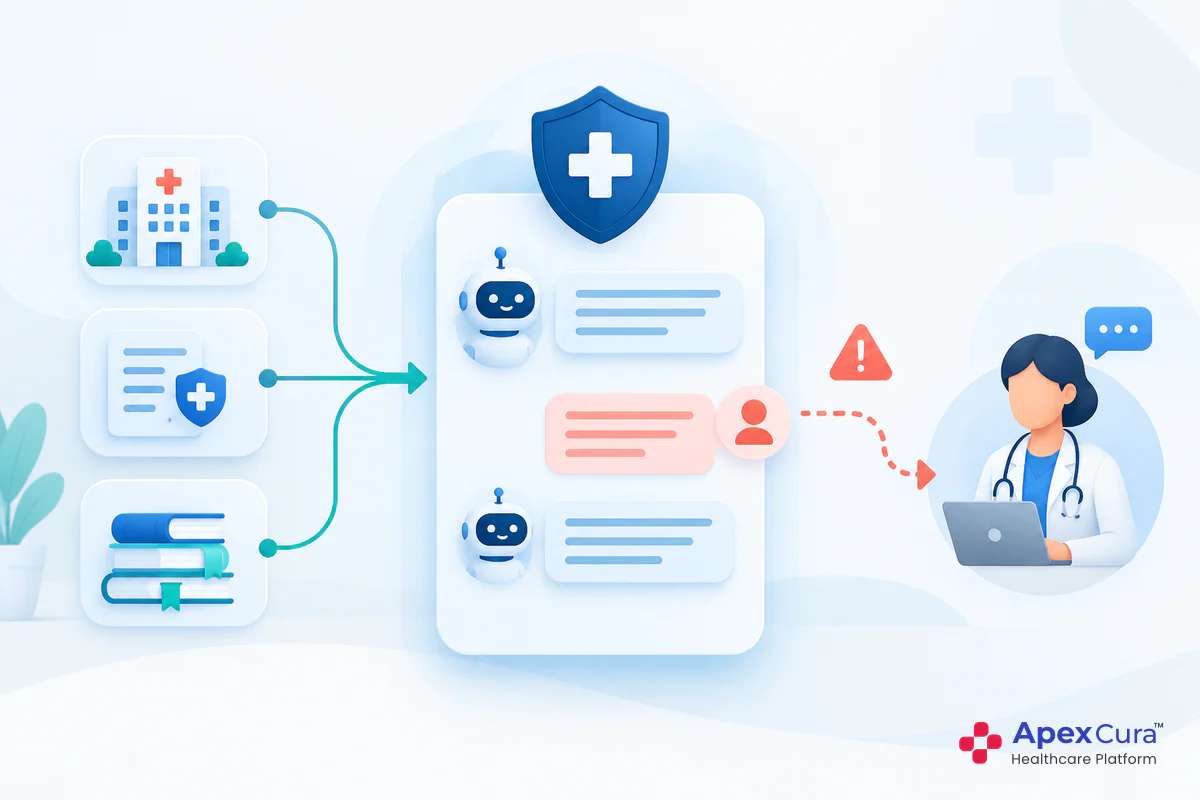
A hospital chatbot should therefore answer only from the hospital’s own approved information, without adding general or medical knowledge of its own. This is what keeps answers specific to the hospital and safe for patients. The guide to hospital chatbot safety explains these limits. The knowledge base is where that approved information lives, so its quality decides the quality of every answer.
What RAG Means for a Hospital Chatbot
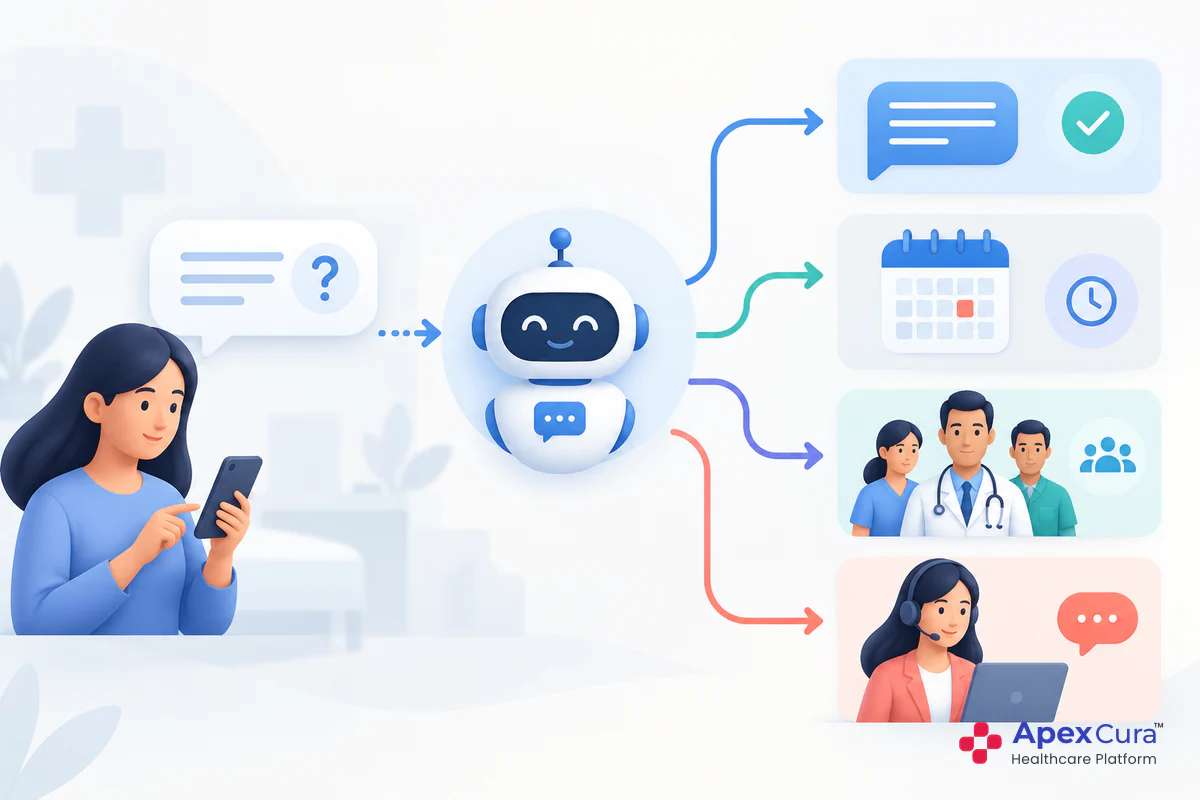
Modern AI chatbots commonly use an approach called retrieval-augmented generation, or RAG. When a patient asks a question, the chatbot first retrieves the relevant passages from the hospital’s approved knowledge base. AI then uses those passages to write a clear answer in the patient’s own terms.
Training, in this sense, does not mean building a new AI model. It means giving the chatbot the right approved documents and information to retrieve from. This has a practical advantage for hospitals. When information changes, the team updates the knowledge base, and the chatbot’s answers change with it. No separate retraining project is needed for routine changes.
Why Hospitals Need a Central Knowledge Base
One Source Instead of Scattered Documents
In many hospitals, patient-facing information is spread across brochures, website pages, PDFs, circulars and the memory of experienced staff. Different versions exist at the same time. A chatbot trained from these scattered sources can repeat the contradictions, giving one patient an old package price and another the new one.
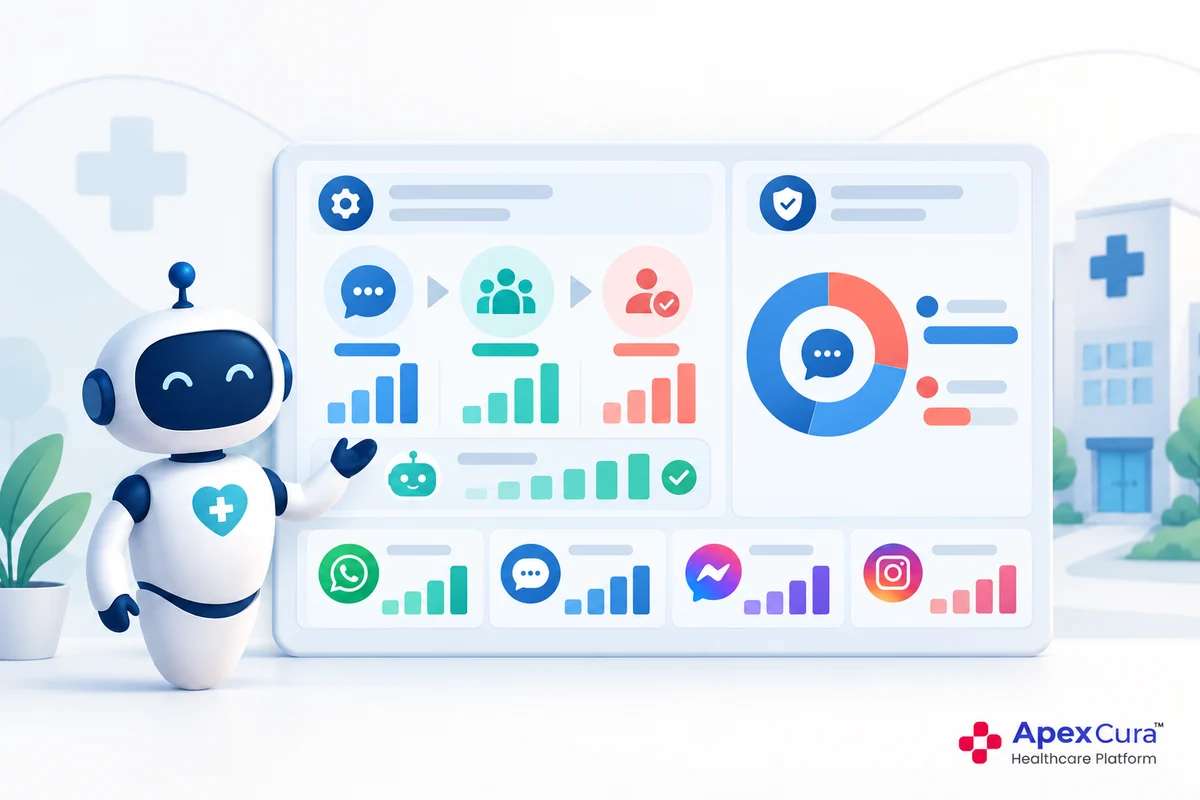
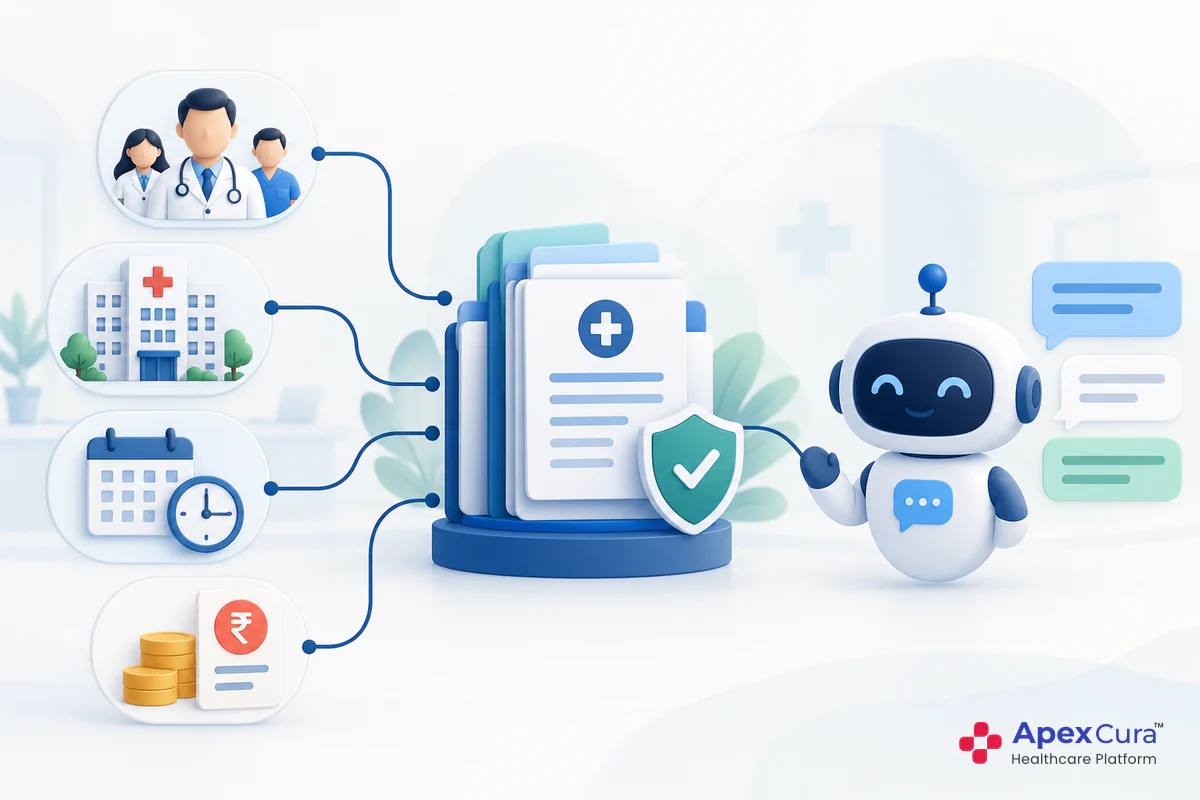
A central training module solves this. All chatbot information is uploaded, reviewed, approved and updated in one place. Every channel the chatbot runs on, whether website, WhatsApp, Facebook or Instagram, answers from the same source. When something changes, it changes once. The team can also see at a glance what the chatbot knows and what it does not, which makes review far simpler.
What to Train Into the Knowledge Base
The knowledge base suits information that is approved by the hospital and changes occasionally rather than every day. Typical examples include:
- Treatments, procedures and services offered, by speciality.
- Health check-up packages and what each one includes.
- Insurance companies and third-party administrators (TPAs) on the hospital’s panel.
- Hospital policies, such as visiting hours and documents to bring.
- Approved standard prices and frequently asked questions.
Anything else the hospital wants patients to know, and that does not change daily, can be added the same way. Each item should be written in plain language and approved by the team responsible for it. Questions about whether a specific policy covers a specific treatment should go to the hospital’s insurance desk.
See how the GenAI Chatbot is trained on your hospital’s approved information and connected to live hospital systems for current answers.
Explore Apex GenAI ChatbotWhy Some Information Must Come From Live Hospital Systems
Information That Changes Every Day
Some hospital information changes too often to be trained into a knowledge base. Doctor availability changes with every booking, leave and schedule change. New doctors join, others leave and new branches open. A copy of this information in the knowledge base can be out of date within hours.
The risk is real. A patient may be told that a doctor consults on Saturday when the doctor is on leave, or may never hear about a new specialist who joined last week. Updating such details by hand in the knowledge base relies on someone remembering every change. For this kind of information, the chatbot should not keep its own copy at all.
Connecting the Chatbot to the Right Real-Time Source
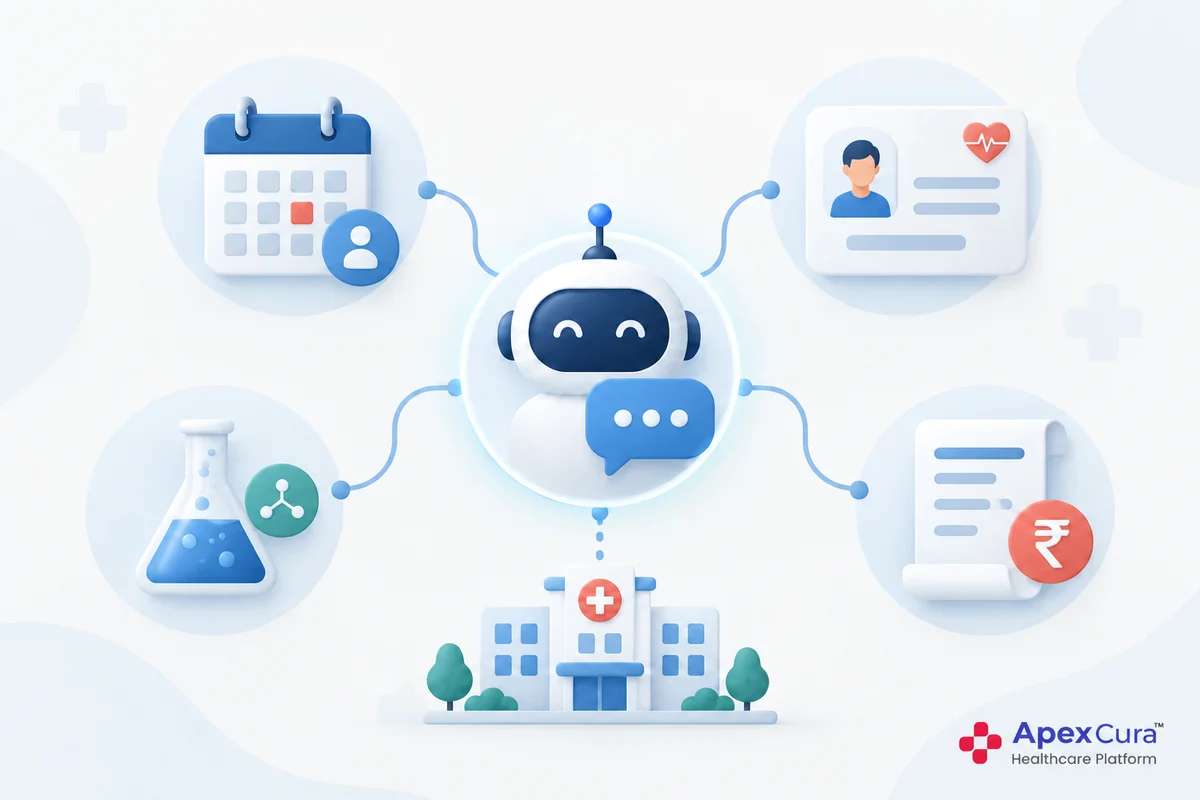
Instead, the chatbot should read this information from the hospital system where it is maintained, usually the HIS that runs appointments and registrations. Connected this way, the chatbot sees the same doctor schedules and changes that the front desk and operations teams see, at the same moment.
A simple rule helps. Each piece of information should have one source of truth: either the central knowledge base or a live hospital system, never both. Stable, approved content belongs in the knowledge base. Operational, changing information comes from the live system. The guide to hospital chatbot integration explains which systems a chatbot can connect to and what each connection makes possible.
Keeping the Hospital Chatbot Knowledge Base Accurate
Assign Owners and Review Regularly
A central knowledge base stays accurate only if someone is responsible for each part of it. Hospitals should assign an owner for each information area, such as the marketing team for services and packages, the insurance desk for panels and TPAs, and administration for policies.
Each owner updates their area when something changes and confirms it on a regular schedule, for example monthly. Changes made elsewhere, such as a new package on the website or a revised visiting policy, should trigger an update to the knowledge base as part of the same process. This keeps the chatbot aligned with the rest of the hospital rather than lagging behind it.
Finding the Questions the Chatbot Cannot Answer
How to Identify Unanswered Questions
Patients will always ask questions the knowledge base does not yet cover. When that happens, the chatbot should say it does not have the information and offer a person, rather than guess. Each of these moments points to a gap.
Hospitals should not rely only on these explicit replies. Other signals in conversations show where answers fell short:
- The chatbot replied that the approved information does not cover the question.
- The patient asked for a live agent straight after an answer.
- The patient rephrased the same question several times.
- The conversation ended immediately after an answer.
Reviewing conversations with these signals each week shows where patients are not getting relevant answers.
Sorting Gaps by Cause and Frequency
Not every gap needs the same fix. Grouping unanswered questions by topic and counting how often each appears shows where to start. Then look at the cause of each group.
Some questions reveal information that is simply missing, such as a new treatment or an insurance company not yet listed. Others show that the information exists but is worded differently from how patients ask, so it should be rewritten or expanded. Some point to a live system problem, such as doctor details not coming through. A few, such as questions about symptoms or test results, should never be answered by the chatbot, so the right fix is to confirm it hands them to a person.
Improving the Training and Checking the Result
Once a gap is understood, the owner of that information area writes or updates the approved content and adds it to the central knowledge base. It helps to include the questions in the words patients actually used, so the chatbot can match similar questions in future.
Then check the result. Ask the same questions again, as patients phrased them, and confirm the chatbot now gives a relevant answer. Over the following weeks, see whether the same signals fall for that topic. Keep a simple log of each gap, its cause and the fix. This log becomes a running record of what patients ask and where the knowledge base needed to grow.
Conclusion
A hospital chatbot is only as reliable as the information behind it. A central, RAG-based knowledge base gives the chatbot one approved source for stable information such as treatments, services, packages, insurance panels and policies. Information that changes every day, such as doctor availability, new doctors and new branches, should come live from hospital systems so the chatbot sees what the operations team sees. Clear owners, regular reviews and a steady process for finding unanswered questions keep both accurate. Hospital-specific AI training on approved information keeps every answer specific to the hospital.