What Is Patient Feedback Software for Hospitals?
What Patient Feedback Software Means in a Hospital Context
Patient feedback software is a hospital-specific system for collecting, organising and acting on feedback across relevant stages of care. It connects each response with useful context such as the patient event, department, doctor, service, branch or hospital. This gives administrators more than a collection of ratings. It gives them a structured view of where the experience occurred and who may need to review it.
A patient feedback management system should also support what happens after the patient responds. Significant or negative feedback may require acknowledgement, investigation, assigned ownership and closure. Recurring concerns should be visible to management so that teams can examine the underlying process rather than treating every response as an isolated comment.
Why Hospitals Need More Than Paper Forms and Standalone Surveys
Paper forms and standalone surveys can capture valuable responses, but they often depend on staff preparation and manual consolidation. Spreadsheets may then be used to connect comments with patient details, calculate scores and record follow-up. Every handover can delay review and make responsibility harder to see.
Timing: Manual preparation can cause the feedback request to arrive long after the relevant experience.
Context: A rating without the correct department, service or patient event is difficult to interpret responsibly.
Ownership: Negative comments can remain inside a report when nobody is assigned to review and respond.
Closure: Management may see that a complaint was forwarded but not whether the patient was contacted or the concern was resolved.
Where Patient Feedback Fits Across the Hospital Patient Journey
Patients form opinions at several points in a hospital journey. An OPD patient may comment on registration, communication, consultation or diagnostics. An inpatient may respond to nursing, room services, information provided to the family or discharge coordination. The relevant moments depend on the hospital’s services and the experiences it has chosen to measure.
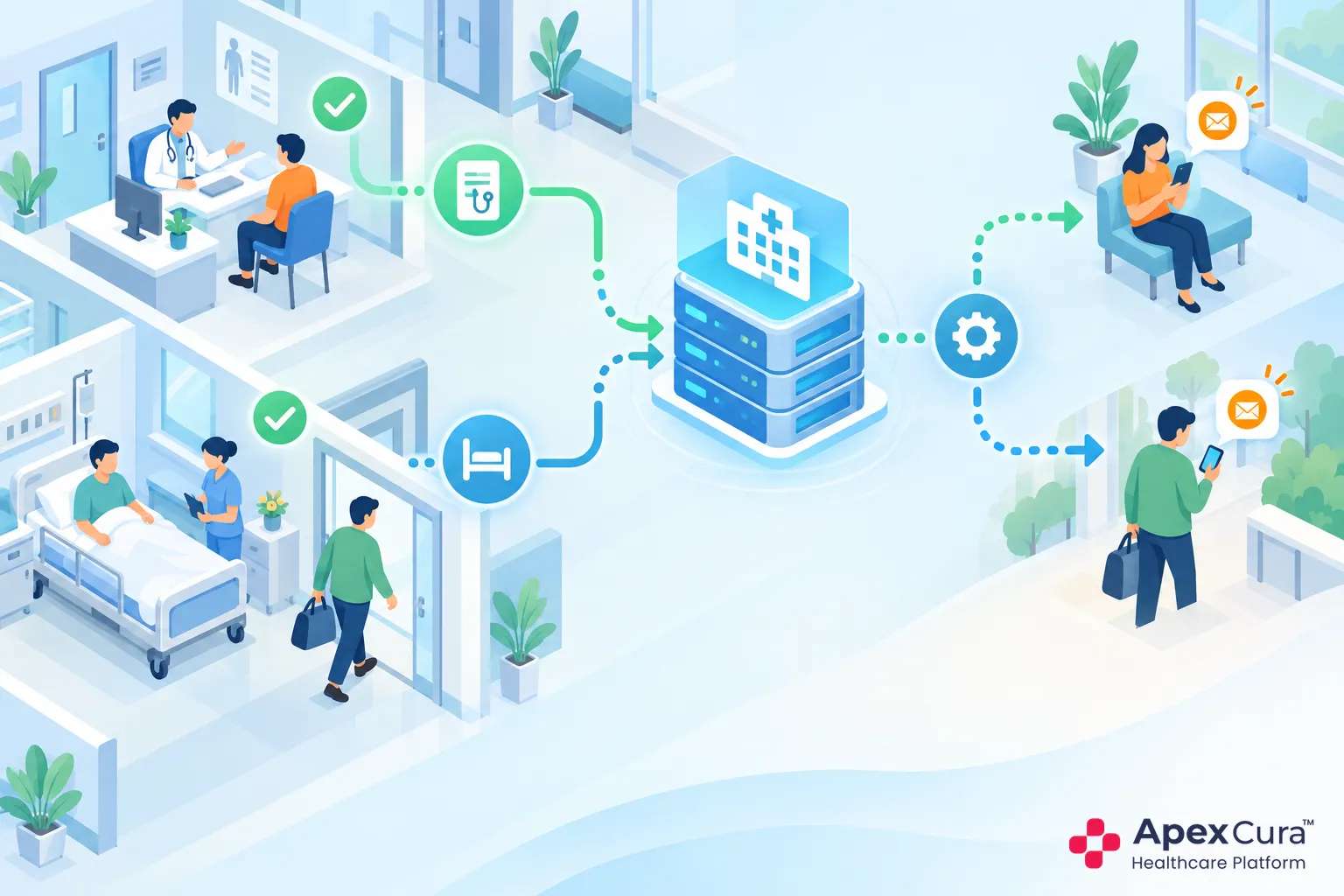
Hospitals should ask questions that measure the patient’s experience of a particular event. When supported HIMS or billing integrations confirm an eligible OP visit, inpatient discharge or configured hospital event, the system can initiate the appropriate feedback journey. This makes the response easier to connect with the correct service context while reducing manual list preparation.
How Patient Feedback Software Works in Hospitals
Collecting Feedback After Relevant Patient Events
A practical closed loop follows six connected stages: eligible patient event, feedback request, patient response, analysis, assigned action and verified closure. The workflow begins with a defined patient event. Depending on the hospital’s configuration and supported integrations, this could be a completed OP visit, an inpatient discharge or another eligible interaction. The event supplies the context needed to select the appropriate form, language, service and timing.
The feedback request can then be delivered through configured channels such as WhatsApp, SMS or a digital link. Local-language journeys can make the request easier for patients to understand where they are supported. Automation reduces dependence on staff preparing contact lists, but hospitals still need clear eligibility rules and appropriate communication practices.
Turning Ratings and Comments Into Useful Patient Feedback Data
Patient responses may include structured ratings, comments, CSAT and NPS. A rating provides a consistent signal, while a comment can explain what the patient noticed. CSAT helps hospitals examine satisfaction with a specific experience, while NPS gives a broader indication of willingness to recommend the organisation. These measures answer different questions and should not be treated as interchangeable scores.
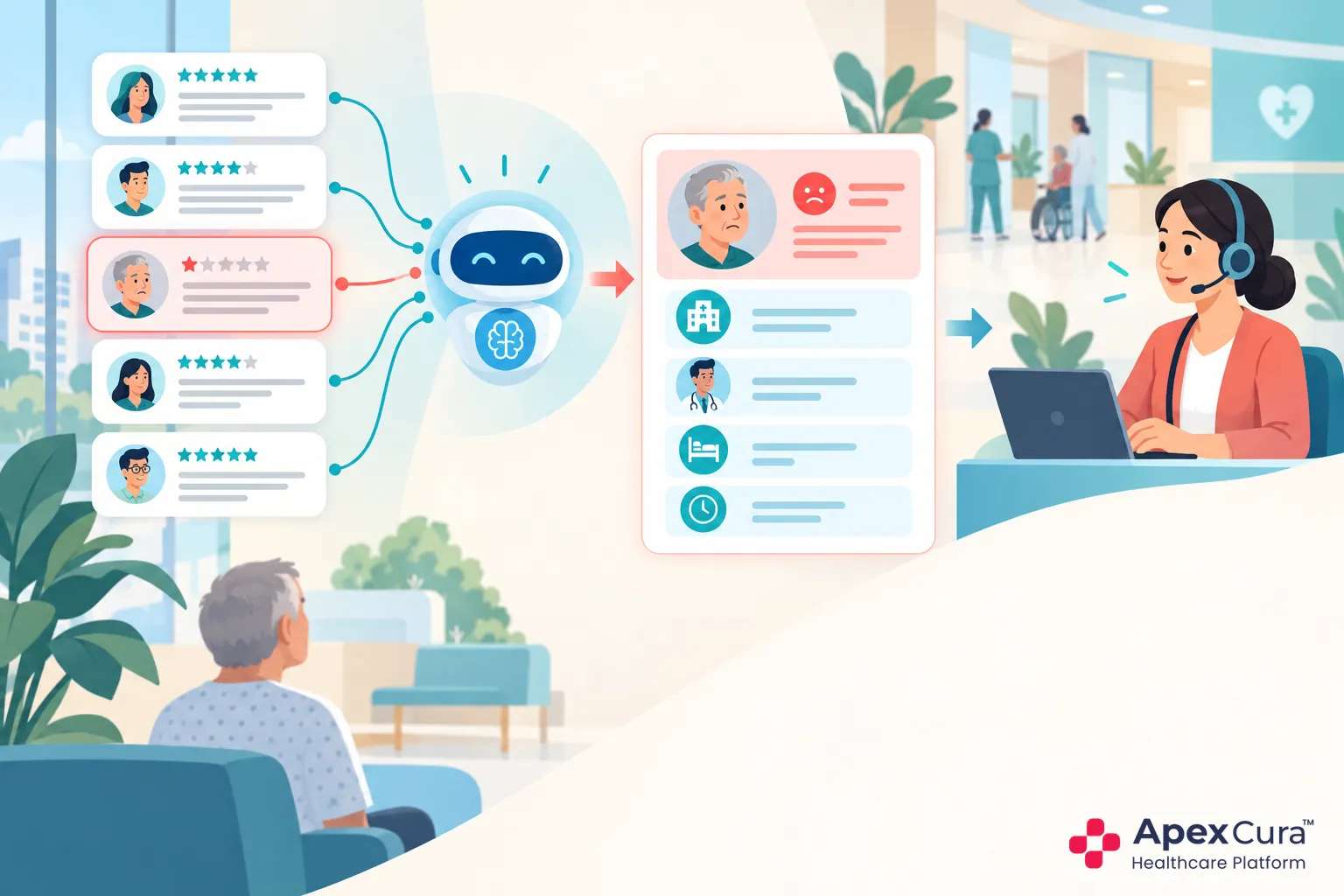
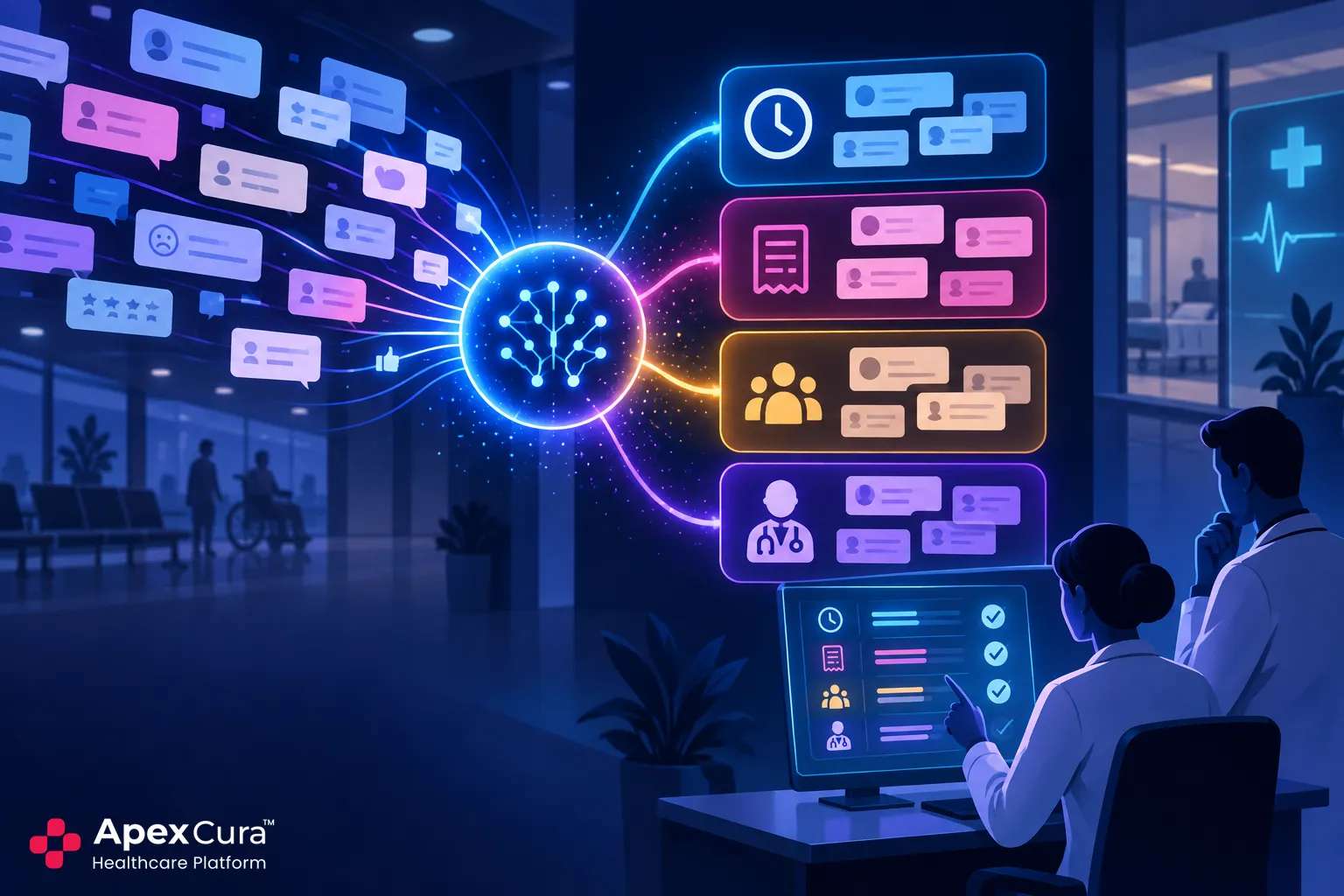
AI-assisted analysis can help identify negative sentiment and group recurring themes across a larger response set. It can draw attention to comments that may need timely review, but it does not establish the operational cause by itself. Hospital teams should examine the original feedback, the relevant patient journey and available operational evidence before deciding what happened and what action is appropriate.
Moving From Patient Feedback to Responsible Action
When a response crosses a hospital-defined threshold or contains a significant concern, it should enter an accountable service-recovery workflow. The case can be assigned to the relevant team with a priority, status and expected response time. Hospital leadership can then see whether the concern was acknowledged, investigated and progressed rather than merely forwarded.
Closure should record the action taken and whether the patient was contacted or the issue was resolved. It should not mean closing a ticket simply to improve a dashboard. Some concerns may need escalation, while others may reveal a misunderstanding that can be addressed through clearer communication. The system supports visibility and responsibility; hospital teams remain accountable for investigation and judgement.
See how hospitals can connect automated feedback collection with experience measurement and accountable service recovery.
Explore Patient Feedback SoftwareHow Patient Feedback Software Helps Hospitals Improve Patient Experience
Understanding Feedback Beyond Overall Satisfaction Scores
A hospital-wide average can hide meaningful variation. One branch may receive consistently positive comments while another sees repeated concerns. Two departments may have a similar overall score even though patients describe very different problems. Hospital patient satisfaction software becomes more useful when management can review feedback by relevant organisational and journey context.
- Compare doctors, departments, services, branches or hospitals using consistent definitions.
- Separate OPD, inpatient, discharge and other configured experience contexts.
- Review scores together with comments, sentiment and response volumes.
- Check whether a visible change reflects a real pattern or a small and uneven response set.
This context helps leaders ask better questions. Comparisons should still consider service type, case mix, response volume and collection method.
Identifying Recurring Patient Concerns and Service Patterns
An individual comment may require immediate attention, but repeated themes can reveal a wider management issue. Patients may repeatedly mention communication, cleanliness, billing explanations, discharge coordination or waiting. A patient feedback system can organise these signals by location, service and period so that management can see where a concern recurs.
Recurring feedback is the beginning of an investigation, not proof of the cause. For example, repeated comments about waiting do not reveal whether the underlying issue was appointment bunching, a delayed session, registration, billing or communication. The responsible team should compare feedback with the relevant operational information and speak with staff before selecting an intervention.
Measuring Whether Experience Improvements Are Sustained
A corrective action should not be considered successful only because its assigned case was closed. Hospitals should compare later feedback from the same service, location or journey stage to determine whether the concern declined, remained unchanged or appeared again. Trend reviews should use comparable questions, collection methods, response volumes and periods so that a visible movement is interpreted responsibly. Management can then distinguish an isolated recovery from a sustained experience improvement. Patient feedback software supports this review by preserving themes, ownership, actions and subsequent response patterns over time. This gives leadership evidence for retaining, revising or replacing an intervention without repeating the original collection-to-closure workflow.
Conclusion
Patient feedback software for hospitals should do more than collect survey responses. It should connect feedback with a relevant patient experience, help teams understand ratings and comments, identify concerns and make responsibility visible through action and closure. When hospitals review individual cases alongside recurring patterns, feedback can support both timely service recovery and longer-term experience improvement.
The strongest workflow is therefore not simply send, collect and report. It is collect, understand, assign, act, close and learn. Hospitals evaluating a system should examine how well it preserves patient-journey context and supports this complete feedback loop across departments and branches over time.