AI Identifies Dissatisfied Patients From Ratings, Comments and Sentiment
Low Ratings Provide Direct Signals of Dissatisfaction
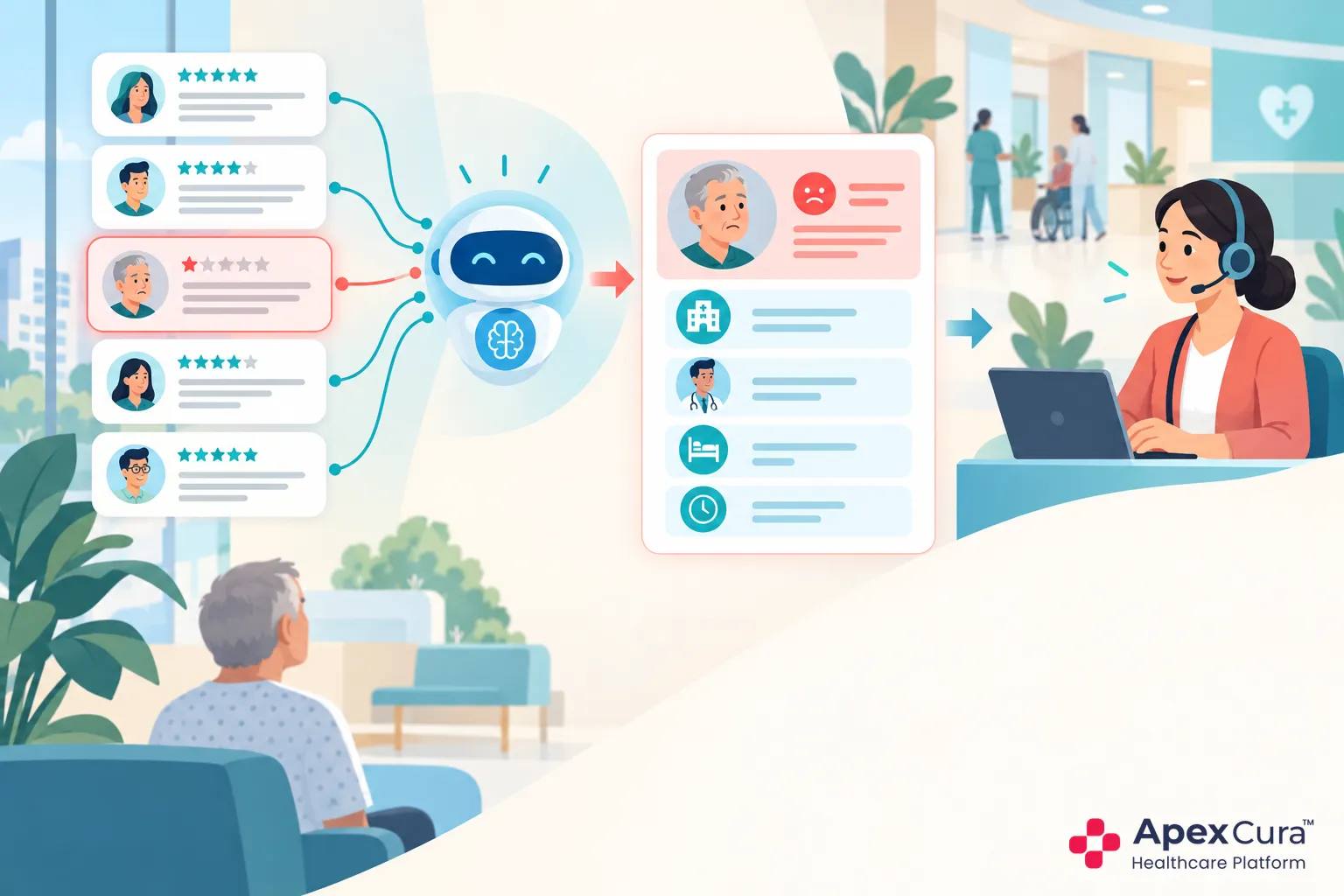
A low rating is a direct signal that the patient was dissatisfied with the measured experience. Hospitals can configure thresholds for review based on the question and scale rather than treating every rating in the same way. A low discharge score may need faster attention when the patient also reports missing medicine instructions. A low convenience score may follow a different response path. The rating starts the review but does not explain the concern or prove the cause. AI can flag the response promptly, while a hospital team checks the original question, patient comment and visit context before deciding the recovery priority.
Written Comments Reveal Concerns That Ratings May Hide
Patients do not always align their comments with the selected score. Someone may choose a neutral rating and then describe rude behaviour, unclear cost or anxiety during discharge. Another may choose a low score because of one specific delay while praising the consultation. Analysing the written comment helps the hospital avoid missing dissatisfaction hidden behind an average score and prevents one negative rating from erasing positive context. AI can identify concern phrases and relevant subjects, but the original wording should remain visible to the reviewer. Recovery decisions need the patient’s actual account, not only an automatically generated label.
Sentiment Analysis Flags Responses Requiring Human Review
Sentiment analysis can highlight language showing frustration, disappointment, confusion or urgency across a large response volume. It is useful for bringing potentially important comments to the front of a review queue. It should not become an automatic judgement about the patient or staff member. Short comments, sarcasm, mixed languages and clinical terms can change interpretation. Hospitals should use sentiment as one signal alongside the rating, comment, question and visit context. A human reviewer confirms whether service recovery is needed, sets the priority and decides which responsible team should receive the case. The reviewer should confirm the signal before any patient contact starts.
Patient-Specific Context Helps Teams Prioritise and Personalise Recovery at Scale
Service Time, Branch, Department and Doctor Details Connect Feedback to the Visit
A negative comment becomes more useful when it is connected with the correct visit. Service time shows when the experience occurred. Branch and department identify the operating context. Consulting-doctor details help place communication feedback within the relevant consultation without turning the review into a clinical assessment. This information reduces the need to ask the patient for facts the hospital already holds and helps the team examine the right records. Context should guide review, not create blame. The concern still needs confirmation, and the patient may describe an experience that operational data alone cannot fully represent. The encounter number helps staff avoid discussing the wrong visit.
Same-Day Services Show the Patient Journey Behind the Feedback
A patient may complete registration, billing, consultation and diagnostics on the same day before submitting one feedback response. Viewing the available same-day services helps the reviewer understand which stages may relate to the comment. A complaint about waiting could refer to the consultation even when the longest recorded delay occurred at diagnostics. A billing concern may arise after the doctor advised an additional service. The journey gives the team useful questions to ask; it does not select the cause automatically. Personalised recovery begins by understanding the patient’s complete reported experience rather than responding to one isolated keyword. This sequence helps the caller ask about the correct stage of care.
Complete Context Supports a Relevant Conversation With Every Patient
The recovery owner should know which service the patient used, where it occurred, which concern was detected and what the patient wrote before making contact. This allows the conversation to begin with the actual experience instead of a generic apology or a request to repeat the full journey. The team can ask focused questions, explain what will be reviewed and avoid promising an outcome before investigation. Personalisation at scale means preparing the right context for each case; it does not mean automating a scripted response to every patient. Human judgement remains essential for tone, empathy, clarification and the action that follows.
Discuss how your hospital can identify potential dissatisfaction and create patient-specific service-recovery cases.
Discuss AI-Assisted Service RecoveryPatient Feedback Software Automatically Creates Service-Recovery Tickets With Patient-Specific Context
Negative-Feedback Detection Creates Potential Recovery Cases
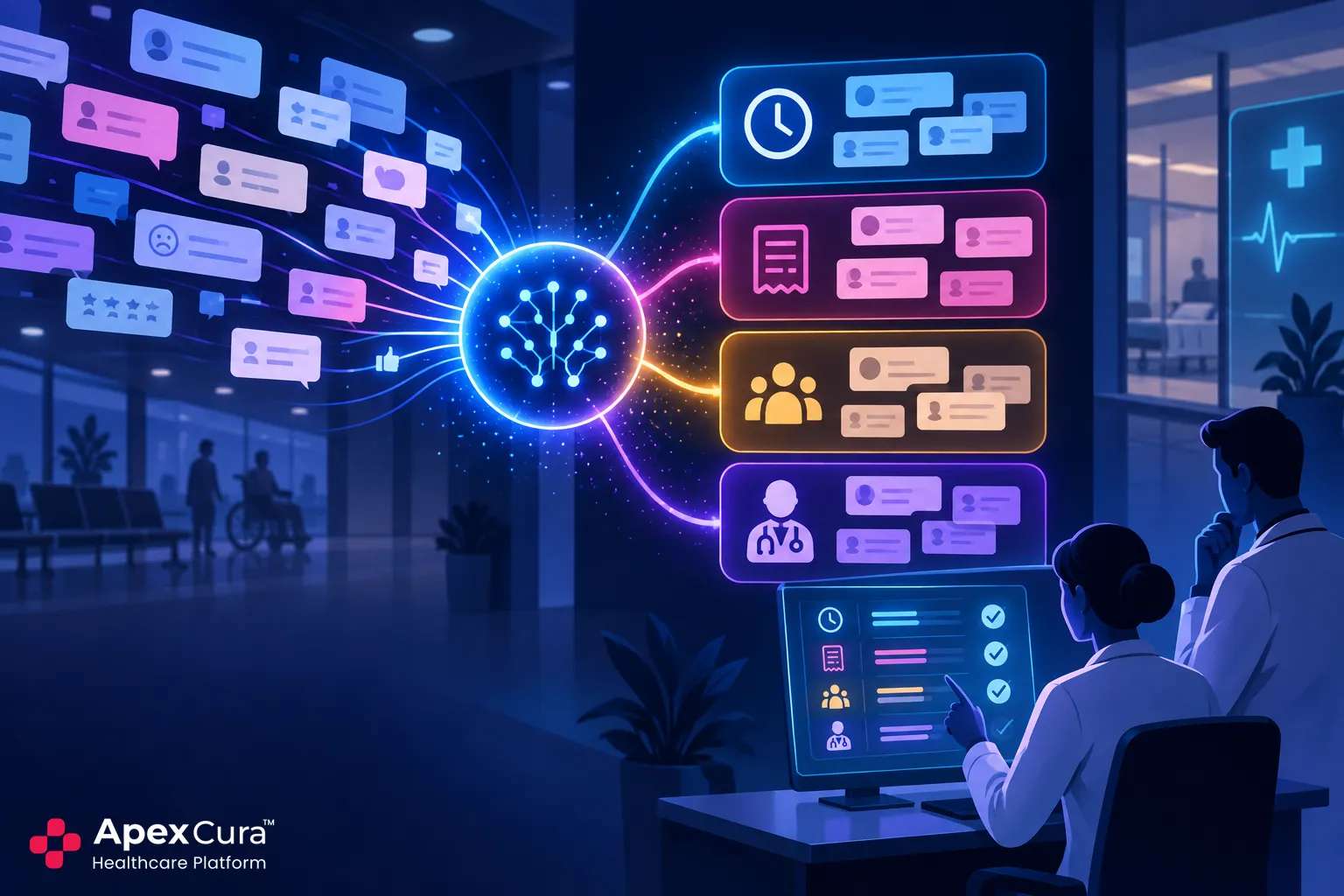
Patient Feedback Software can apply configured rating rules and AI-assisted comment analysis to identify responses that may require recovery. Instead of leaving the response inside a dashboard, the workflow creates a potential case with the original rating, comment and available visit context. Hospitals can define which signals create a ticket automatically and which enter a review queue. This distinction prevents every mild concern from becoming an urgent incident while keeping serious feedback visible. The system accelerates detection and case preparation; authorised hospital staff confirm priority, ownership and the appropriate response path. The system should retain the detection reason for human review.
Incident Tickets Route Cases to Responsible Hospital Teams
A contextual ticket can be routed using the branch, department, service and concern type attached to the response. A discharge-communication case may go to the inpatient team, while a billing-explanation case may go to the responsible billing team. Cross-department concerns should still have one coordinating owner and an escalation path. The ticket should retain the patient’s words and journey information rather than only a short AI summary. Correct routing reduces manual forwarding, but hospitals must maintain ownership rules as teams and services change. Automation should make responsibility clearer, not hide it behind a queue. Routing rules should include an escalation path when the first owner does not respond.
Hospital Staff Review, Communicate, Act and Close Each Case
The ticket begins service recovery; it does not complete it. Hospital staff review the concern, contact the patient where appropriate, investigate the relevant service and record the action. Closure should show what was done, whether the patient received an update and what outcome was reached. Cases that remain unresolved need escalation rather than an automatic closed status. This human-led workflow protects the patient from generic automated responses and keeps responsibility with the hospital. Patient Feedback Software supports detection, context, routing and tracking so teams can deliver more relevant recovery conversations across a large feedback volume. The final record should show the action, communication and patient response.
Conclusion
AI can identify potential dissatisfaction by examining ratings, written comments and sentiment together with the patient’s visit context. Details such as service time, branch, department, doctor and same-day services help recovery teams prepare a relevant conversation instead of relying on the feedback comment alone. Patient feedback software can create and route a recovery ticket with this context, but hospital staff must review the signal, speak with the patient, decide the action and document closure. This combination makes personalised service recovery manageable across a larger volume of feedback.