Why Patient Messages Get Scattered Across Channels
Patients Message Wherever They First Find the Hospital
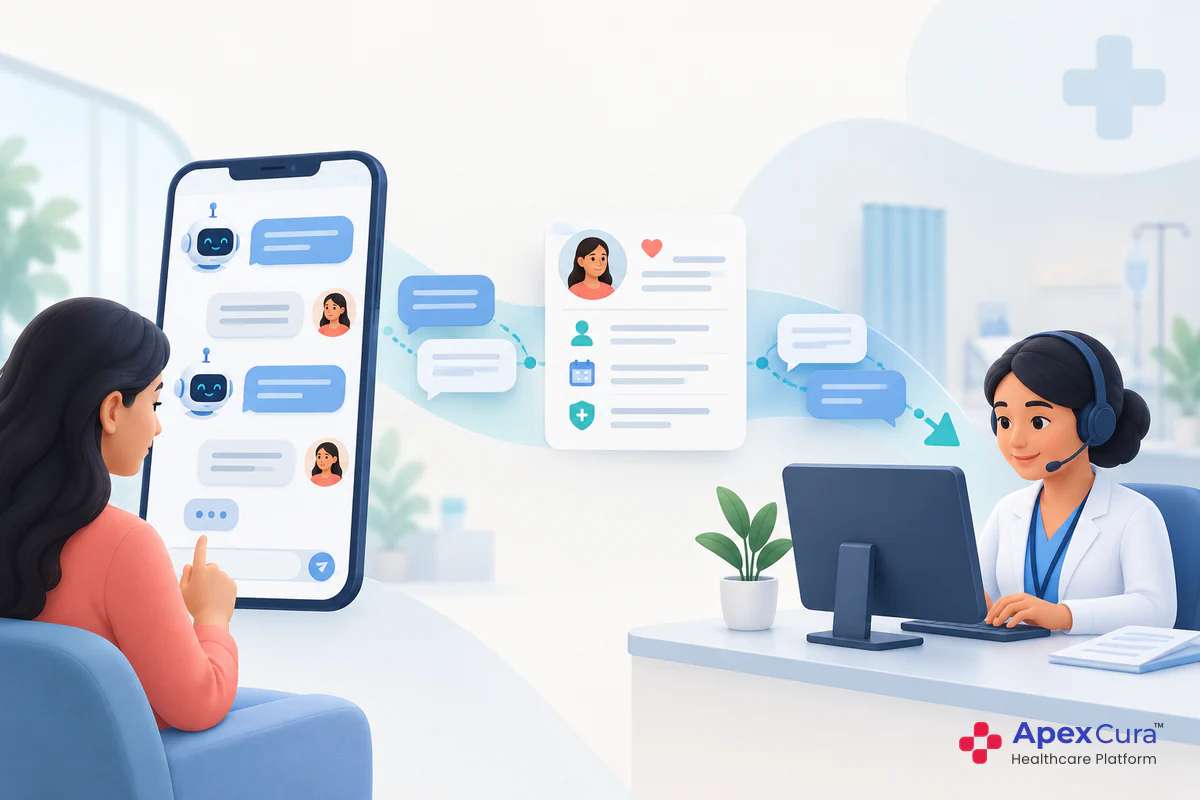
Patients contact a hospital through whichever channel is in front of them. One sees an Instagram post about a health check-up package and replies there. Another finds the hospital on Google, opens the website and uses the chat window. A third saves the WhatsApp number from a signboard or a doctor’s visiting card.
Hospitals cannot control where the first message arrives, and they should not try to. Each new campaign, branch or social page adds another place where patients can write. Over time, a hospital may have several WhatsApp numbers, multiple websites, branch-level Facebook pages and Instagram accounts, all receiving messages. The challenge is not having many channels. It is managing them as one.
Separate Logins Mean Missed and Delayed Replies
When each channel is managed separately, every one needs its own login, its own person and its own routine. In practice, coverage is uneven. The main WhatsApp number may be watched closely, while a branch Facebook page is checked once a day and an older Instagram account is forgotten.
The results are often similar. Some patients get a quick reply and others wait hours. Different staff give different answers to the same question. Managers cannot see total message volume or response times because the data sits in separate places. Messages that arrive on a neglected channel may never be answered at all, and the hospital has no record that those patients ever made contact.
How One Chat Inbox Works for a Multichannel Hospital Chatbot
Every Number, Page and Account in One Place
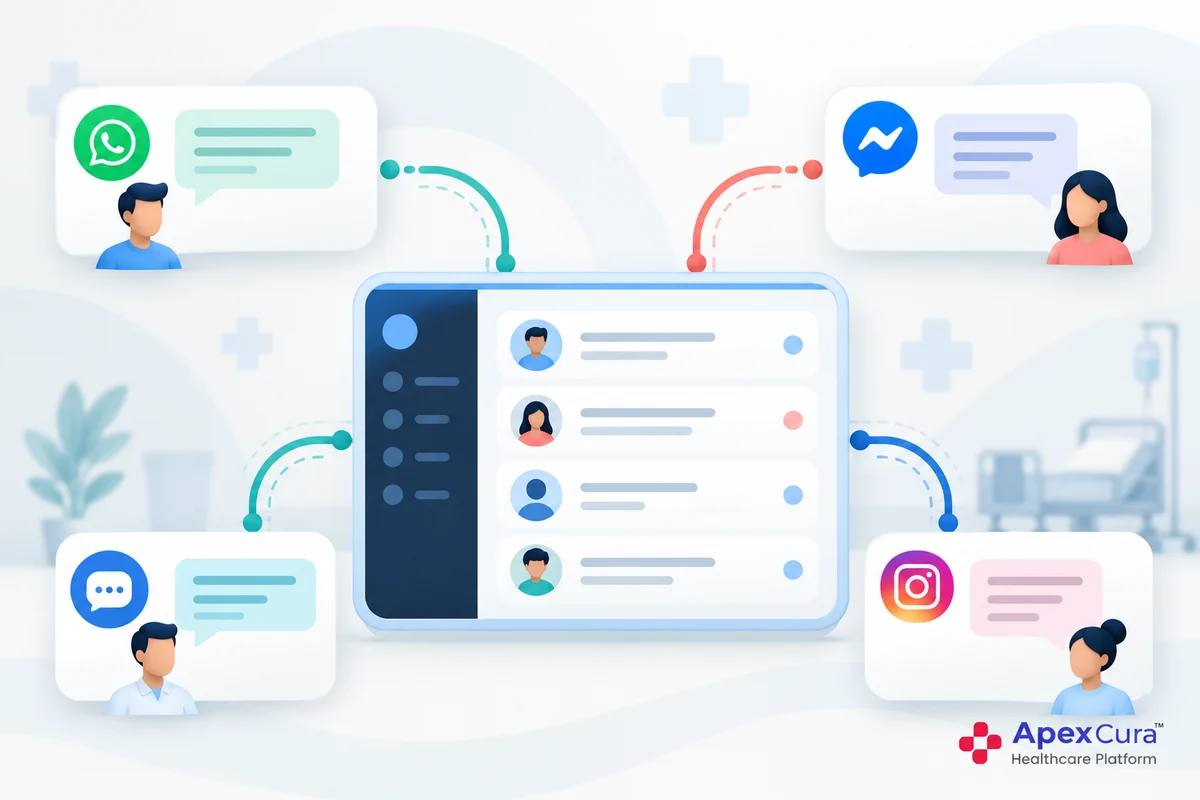
With one chat inbox, conversations from multiple WhatsApp numbers, websites, Facebook pages and Instagram accounts arrive in a single view in the application. Staff no longer switch between apps and logins to find new messages.
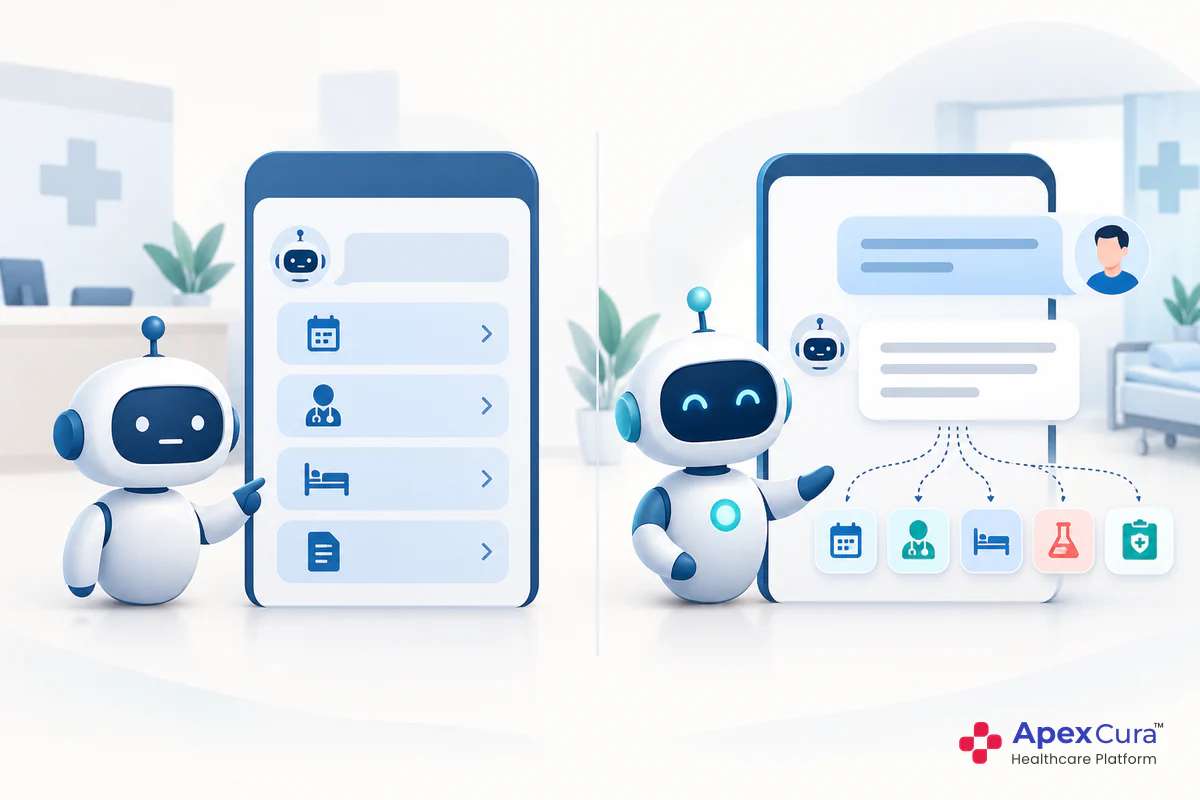
The chatbot replies first on every channel, handling routine questions from approved hospital information at any hour. Conversations that need a person appear in the same inbox, where the right team can pick them up. For a hospital group, this means one place to see every patient chat across branches, rather than a set of separate accounts that each depend on one person remembering to check them. This makes it less likely that a message waits unseen on a less-watched channel.
The Same Approved Answers on Every Channel
A patient who asks about OPD timings on Instagram should get the same answer as a patient who asks on the website. When each channel is managed separately, that rarely happens. Different people use different sources, and some answers go out of date.
A multichannel hospital chatbot answers every channel from the same approved hospital information. Updating a doctor’s schedule or an approved price updates the answer everywhere at once. Channels still differ in format. WhatsApp and Instagram messages look different from a website chat window, and quick replies or other interactive options are available where configured for that channel. The content of the answer stays consistent even when the presentation changes.
Source and History Stay With Each Conversation
Every conversation in the inbox shows which channel it came from, including the specific WhatsApp number, website, Facebook page or Instagram account. It also keeps its chat history, so a staff member who opens it can see everything the patient has already asked and been told.
This channel attribution matters for two reasons. Staff can reply with full context instead of asking the patient to repeat themselves. Management can see which channels bring which kinds of conversations. Each conversation is kept with its own source and history. Hospitals should not assume that two conversations on different channels belong to the same patient unless the patient’s details confirm it.
Escalation Works the Same Way From Every Channel
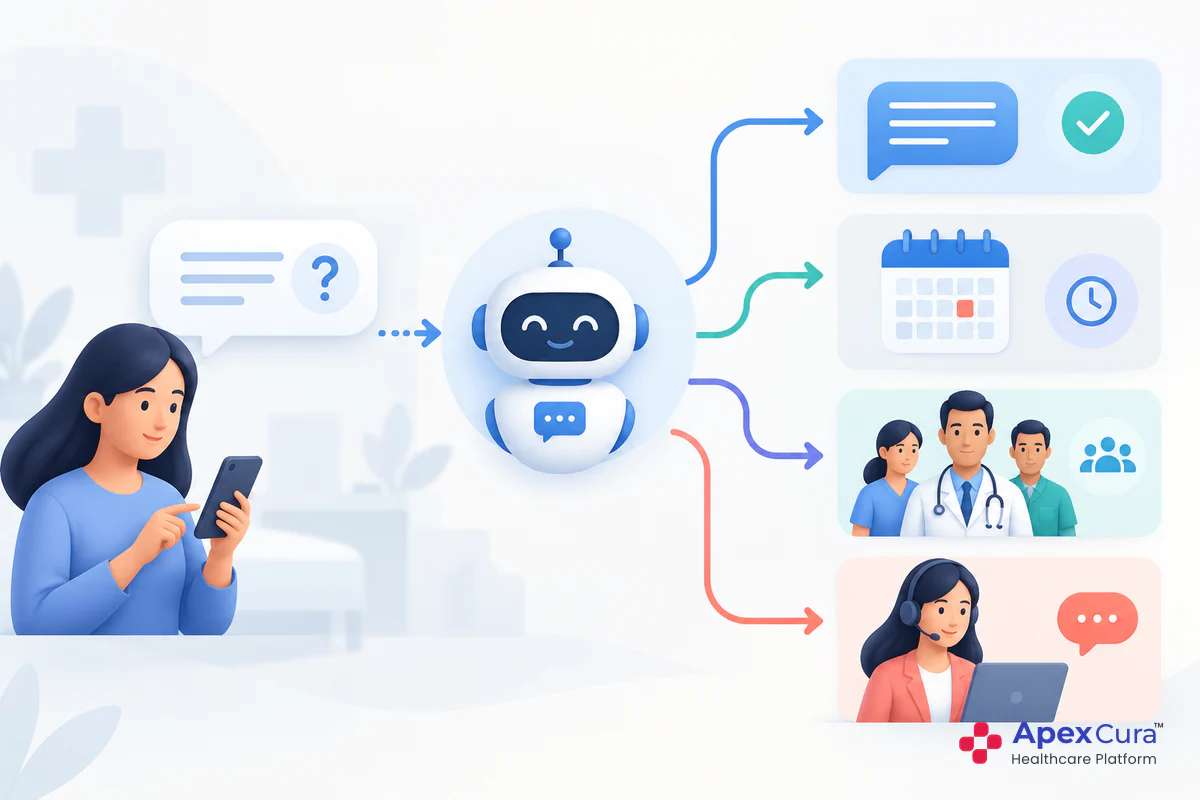
Whether a patient writes on WhatsApp, the website, Facebook Messenger or Instagram Messenger, the escalation rules are the same. Qualified enquiries go automatically to the hospital’s outbound team with the patient’s details, intent, source and chat history. When an agent is available, patients can choose “Chat with Live Agent” and continue on the same channel.
This consistency prevents a common gap, where enquiries from the main channel get followed up but those from smaller channels do not. The guide to chatbot to live agent handover explains how handovers work and what context the receiving team should see. One set of rules across channels is far easier to manage and review than a separate process for each.
See how the GenAI Chatbot brings WhatsApp, website, Facebook and Instagram patient chats into one inbox with consistent, approved answers.
Explore Apex GenAI ChatbotMeasuring Patient Conversations by Channel
What Channel-Wise Reports Should Show
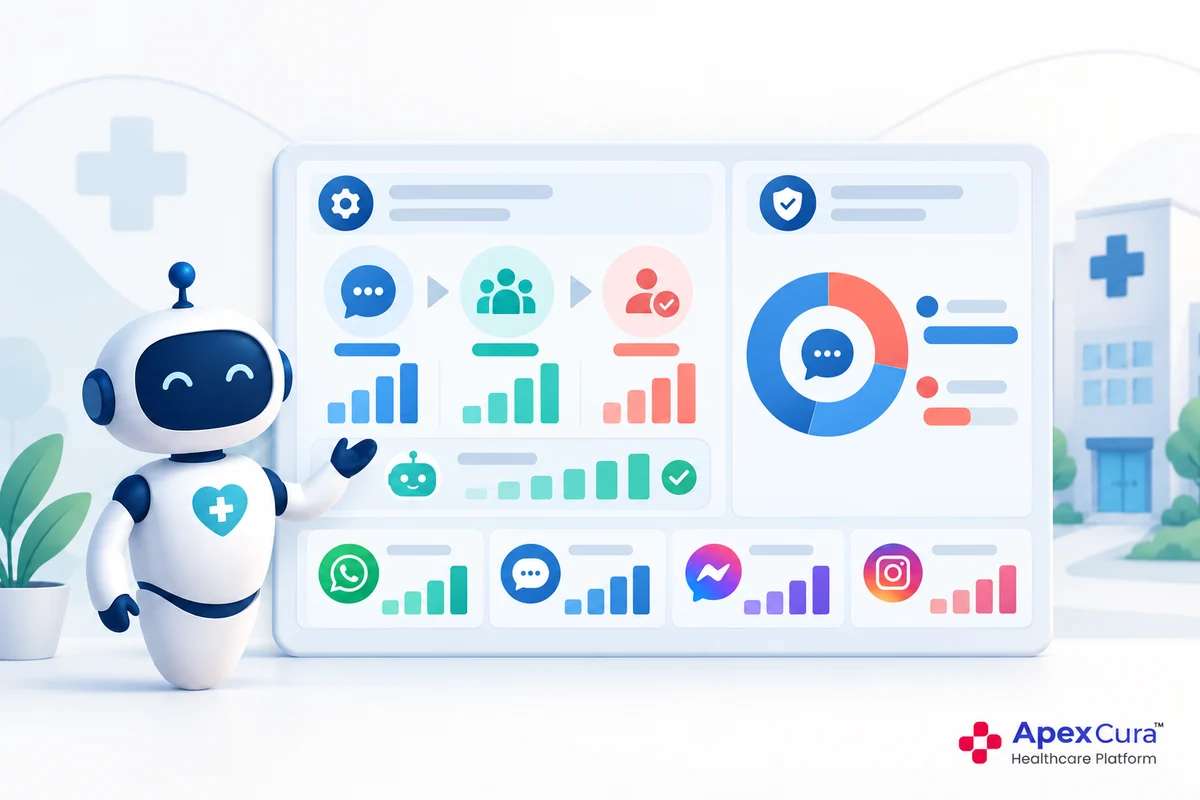
Once every channel feeds one inbox, hospitals can compare them on equal terms. The dashboard shows conversations by channel. Alongside it, hospitals can track:
- Conversation volume by channel, number, page and account.
- The most common patient intents on each channel.
- Questions answered by the chatbot and conversations escalated, by channel.
- Appointments booked in chat, by channel.
- Conversations waiting for a human response, by channel.
These measures show where patients actually start conversations and where follow-up is weakest. They replace assumptions about which channel matters with evidence from the hospital’s own conversations. Review them by branch as well, because one branch’s page can behave very differently from another’s.
Deciding Where to Focus
Channel data helps hospitals make practical decisions. A channel with high volume but few escalations may need better approved information for the questions it receives. A channel with many enquiries but slow human responses may need more staff attention during its busiest hours. A channel that receives almost nothing may not justify a separate campaign.
Hospitals should avoid copying assumptions from other industries about which channel patients prefer. The hospital’s own conversation data is a better guide. Reviewing channel reports every month, alongside campaign and branch changes, keeps the inbox aligned with where patients really write and helps the hospital decide which channels to promote.
Conclusion
Patients message hospitals wherever they first find them: on WhatsApp, the website, Facebook or Instagram. Managed separately, these channels produce missed messages, delayed replies and inconsistent answers. One chat inbox brings every number, page and account into one place, answers every channel from the same approved information, keeps each conversation’s source and history and applies the same escalation rules everywhere. Channel-wise reports then show where patients really start conversations. A hospital chatbot with one chat inbox gives teams one place to see and manage every patient chat.