More Leads and Less Conversions Is a Problem
You Measure Campaigns by the Number of Enquiries Generated
Most hospital campaign reports focus on calls, forms, WhatsApp messages, appointment requests and cost per enquiry. These numbers are easy to collect and useful for understanding how much response a campaign generates. However, a lower cost per enquiry does not always mean better performance. It does not show whether the people who responded were relevant, contactable or ready to visit the hospital. For example, one campaign may generate 500 enquiries but only 20 patient visits. Another may generate 200 enquiries and 60 visits. When campaigns are compared only by enquiry volume, the hospital may move more budget towards the campaign producing fewer patients.
Google and Meta Algorithms Improve the KPIs You Measure
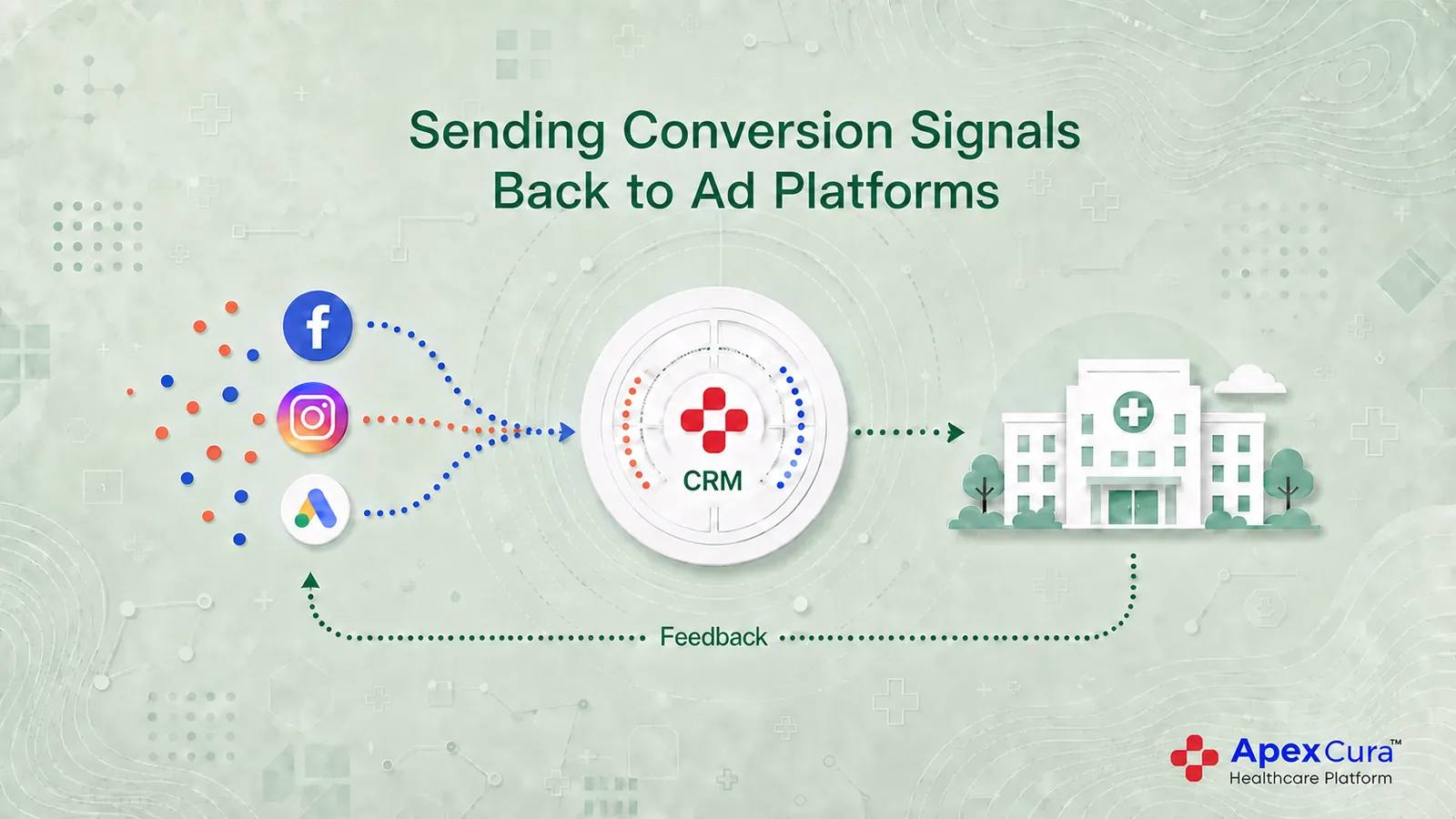
Google and Meta use the conversion signals they receive to decide which audiences, placements and advertisements are more likely to perform. If the hospital tracks only form submissions or calls, the platforms will try to generate more people who complete those actions. The platforms do not automatically know what happened after an enquiry entered the hospital workflow. They cannot see whether the person visited the hospital or completed a procedure unless the hospital sends an appropriate conversion signal back to advertising platforms. As a result, a campaign can become efficient at generating enquiries without becoming effective at generating ROI.
Hospitals Need Leads That Convert into Patient Visits
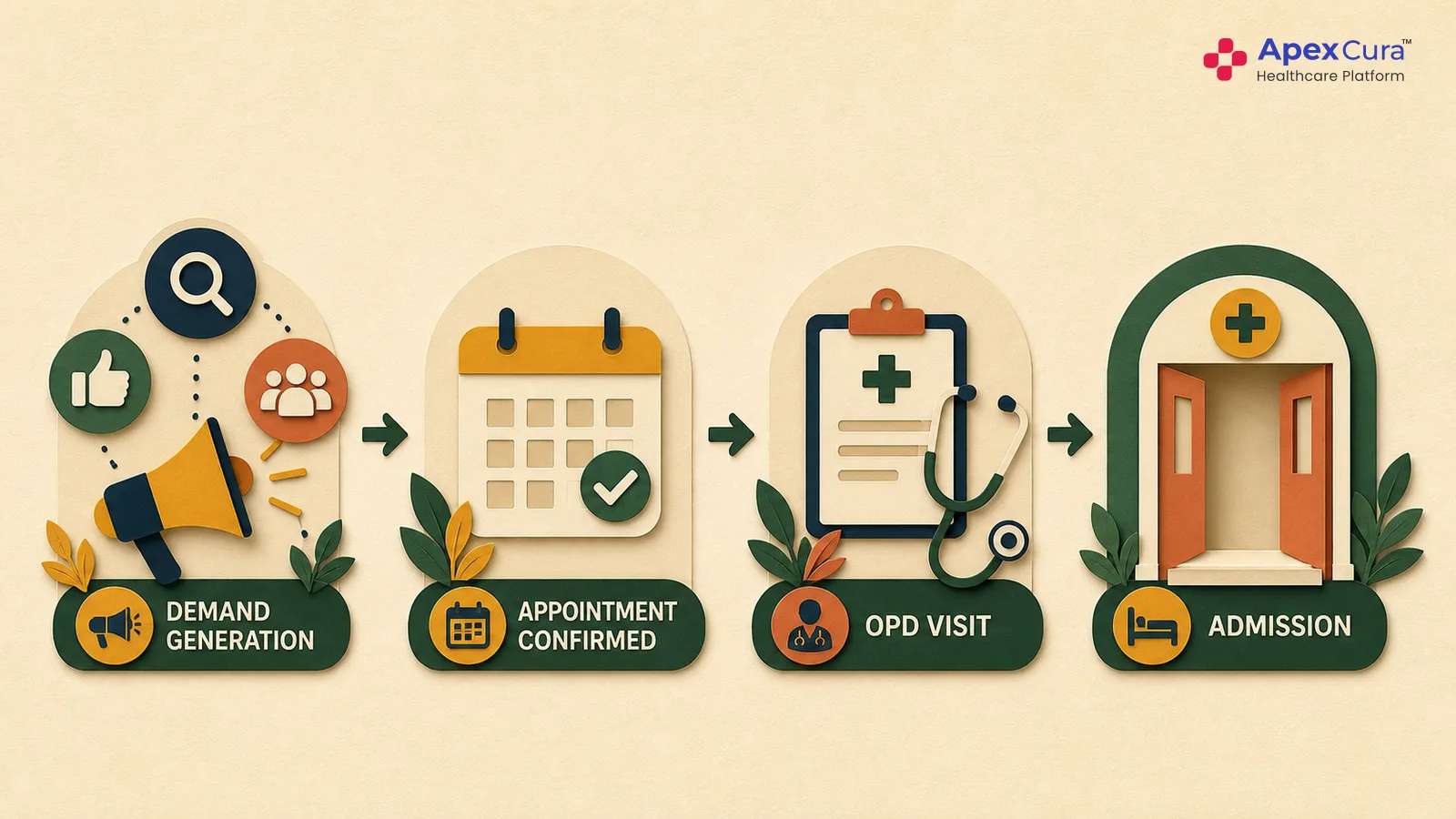
An enquiry is only the beginning of the patient journey. For the hospital, the meaningful outcomes are a qualified patient need, a confirmed appointment, a completed visit and, where relevant, a procedure or revenue outcome. These outcomes are usually recorded across the CRM, appointment-booking platform, hospital information system or billing system. The marketing platform sees the initial response, while hospital systems hold the information that reveals whether the enquiry created real value. Unless these systems are connected and communicate automatically, marketing teams cannot do this exercise manually.
Key insight: Without knowing what kind of leads are getting converted, Google and Meta cannot improve their lead quality.
With CAPI, You Can Optimise Campaigns for Patient Conversions
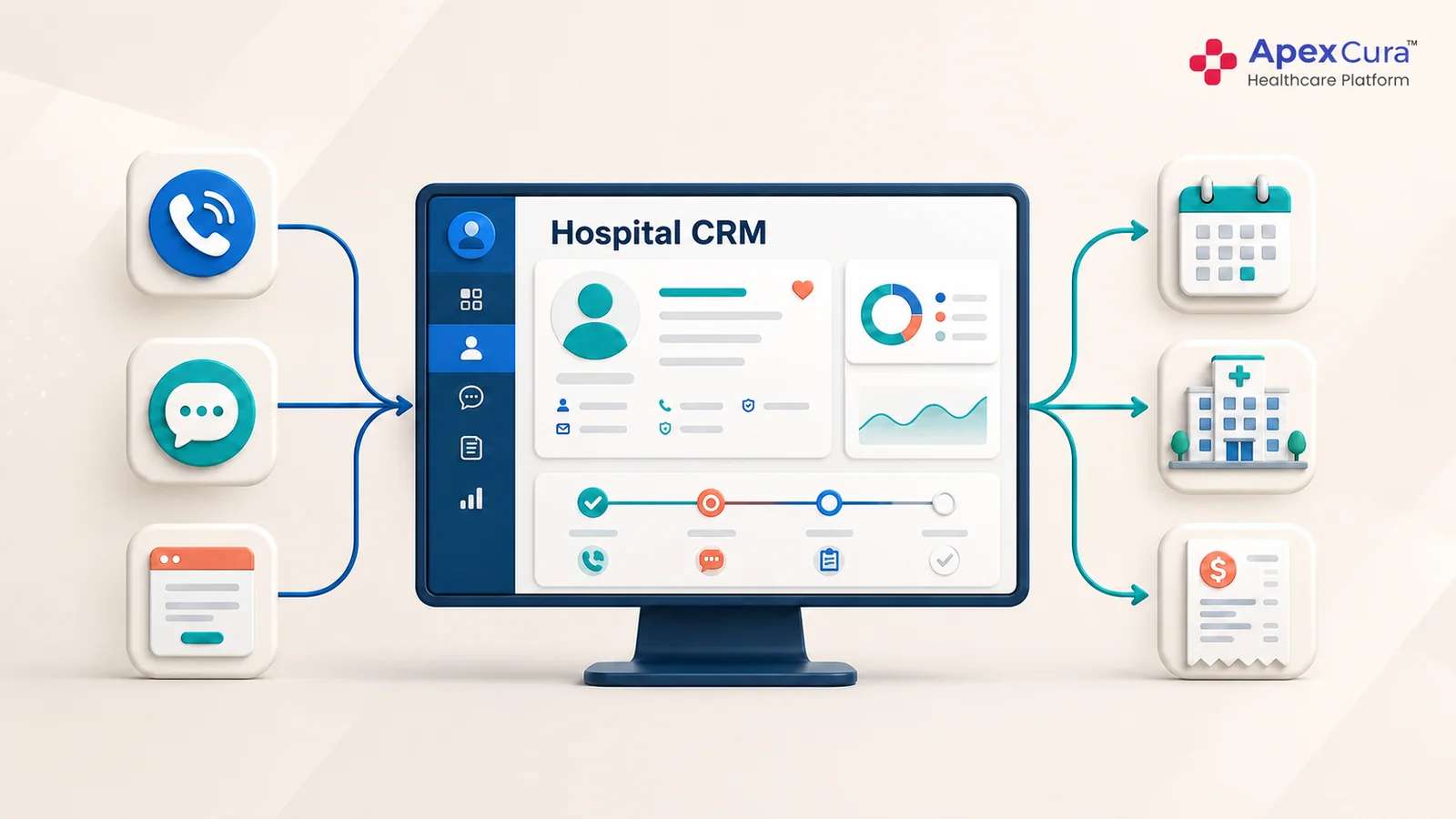
CAPI Connects CRM Outcomes with Marketing Campaigns
CAPI stands for Conversions API. It provides a controlled way to send approved conversion events from the CRM or another backend system to a marketing platform. Meta provides the Conversions API, while Google supports comparable feedback through enhanced conversions and offline conversion imports. The implementation methods differ, but the objective is the same: use hospital CRM conversion tracking to connect campaign activity with outcomes recorded after the enquiry. A hospital can choose meaningful events as per their process such as appointment booked, patient visited or procedure completed. Where a reliable match is possible, the platform can associate this feedback and improve the quality of subsequent leads.
Better Conversion Signals Help Improve Lead Quality
When there is no feedback, a low-intent form submission and a completed patient visit may appear equally valuable to the advertising platform. Sending actual patient-conversion events provides a stronger learning signal to the advertisement platforms. Over time, the platform can identify which campaigns, advertisements and audiences are more likely to produce enquiries that move further through the patient journey. This improvement is gradual. It depends on sufficient conversion volume, consistent event definitions and reliable CRM data. The important change is that campaign learning is now based on a business outcome that matters to the hospital.
Marketing Teams Can Measure ROI Based on Patient Conversions
The same connection gives marketing teams a more useful way to review performance. Instead of stopping at cost per enquiry, they can compare cost per qualified lead, appointment, patient visit or completed procedure. A campaign with a higher cost per enquiry may still deliver a better return if a larger share of those enquiries becomes patient visits. This allows budgets to be allocated using conversion quality and downstream value rather than lead volume alone. It also creates a common performance view for hospital leadership, internal marketing teams and external agencies.
Connect campaigns with actual patient outcomes. See how Apex CRM tracks enquiries, visits and revenue across the patient journey.
Lets Talk To ExploreWhat Is Required for CAPI to Work Effectively?
The CRM Must Track Source and Campaign Information Accurately
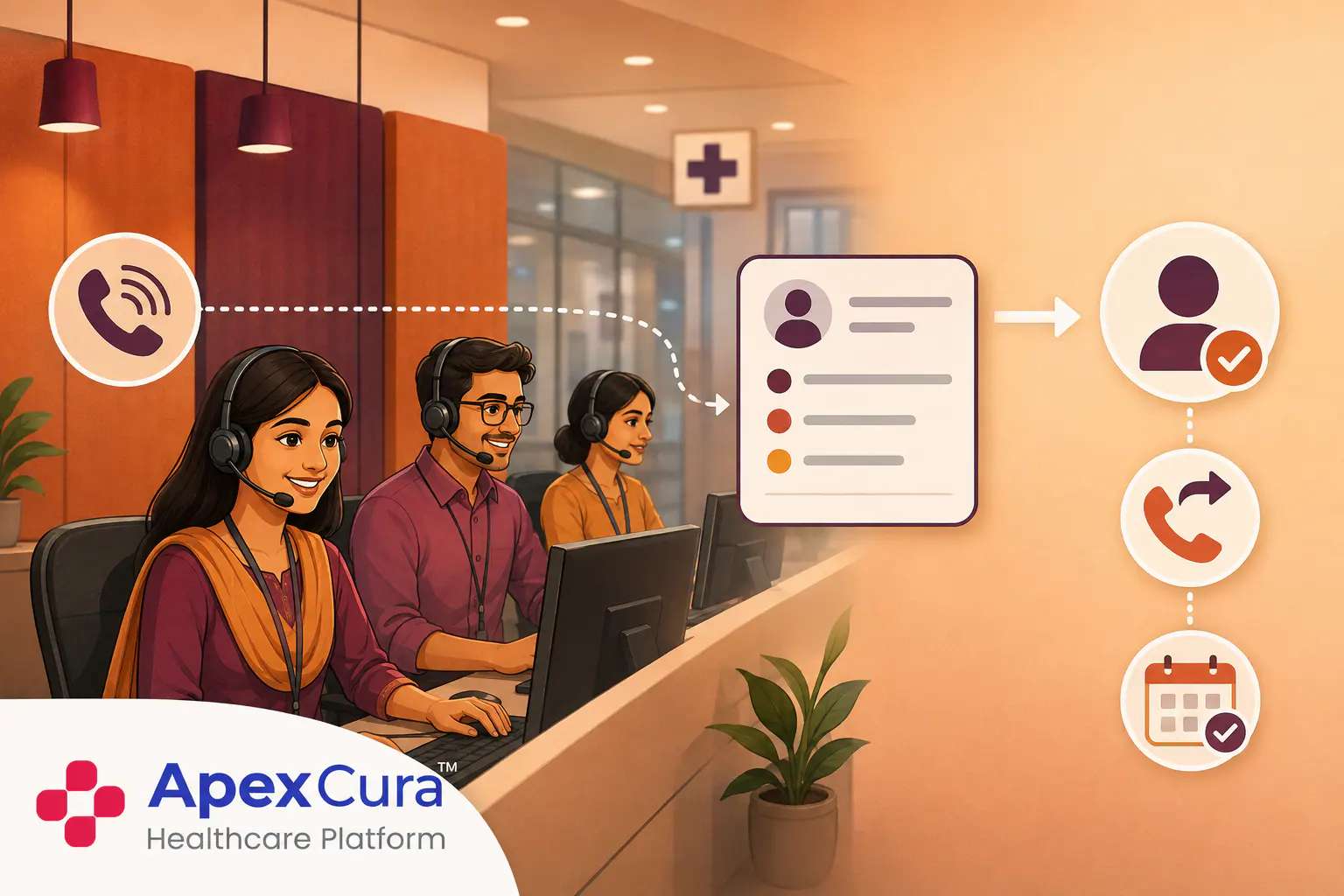
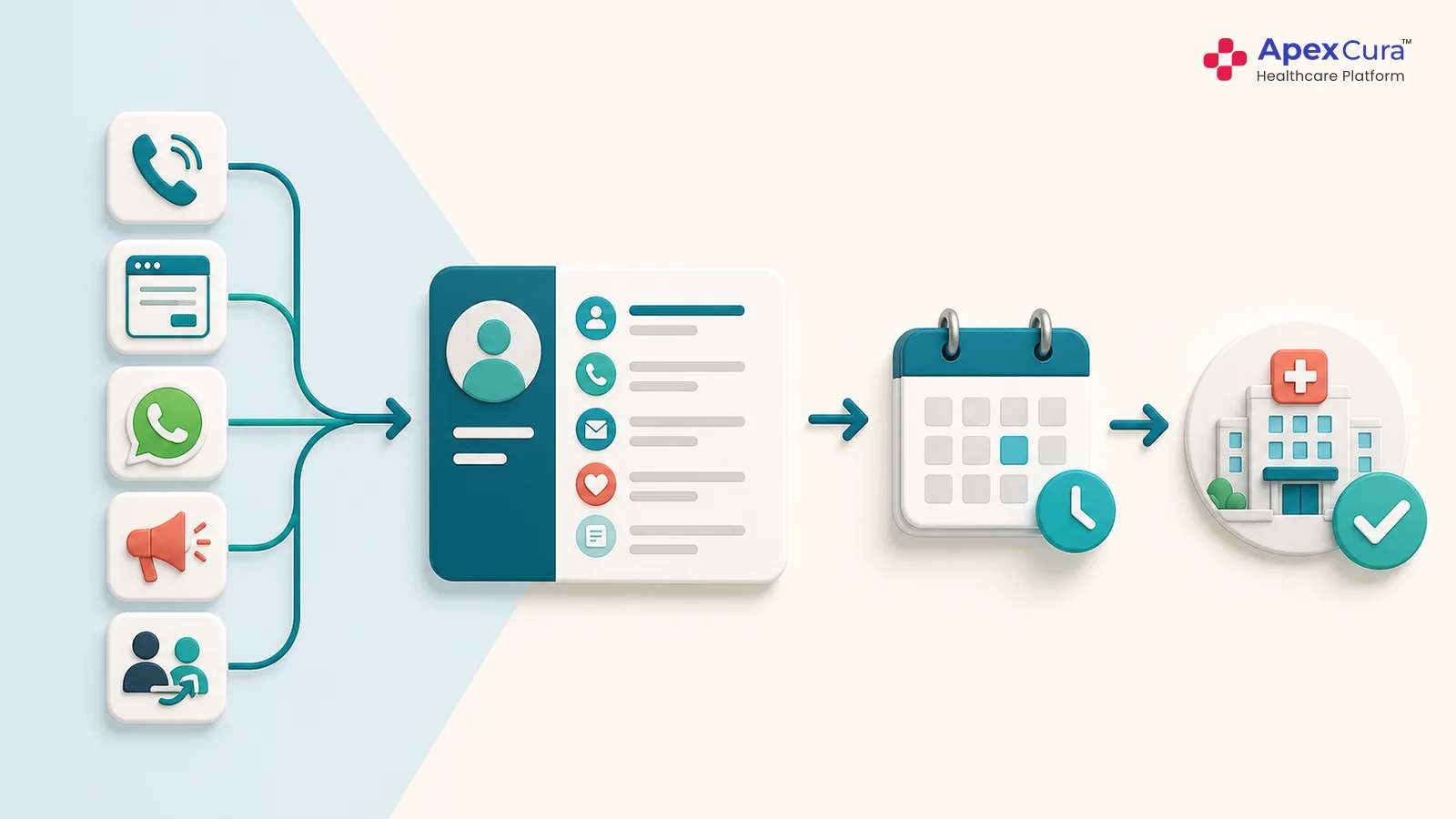
Apex Cura preserves the original enquiry source from the first interaction, including available details such as the platform, campaign, advertisement, UTM parameters and landing page. It then connects the same enquiry with subsequent follow-ups, appointments, visits and conversion outcomes. This traceability allows the hospital to identify which campaigns are producing converted leads instead of evaluating performance only by the number of enquiries generated.
Define and Track the Stages That Lead to Revenue
Apex Cura enables hospitals to define and track the stages that matter across the conversion journey, including new lead, qualified enquiry, appointment request, confirmed appointment, completed visit and procedure. Call-centre, marketing and branch teams can work with the same stage definitions, while the hospital selects the outcomes that should be used for campaign measurement. This creates consistent conversion data without treating every internal CRM update as a marketing event.
Share Conversion Signals Back with Marketing Platforms
Apex Cura can share selected converted-lead information with Google and Meta through the appropriate conversion integrations. These signals help the platforms understand which campaigns, advertisements and audiences are generating leads that become appointments or patient visits, allowing their algorithms to improve lead quality over time. Only the minimum information required for conversion matching is shared; clinical notes, diagnoses, prescriptions and unrelated medical information are excluded from marketing conversion events.
Conclusion
Hospital digital marketing should be measured by the quality and outcome of enquiries, not only by their volume or cost. Apex Cura connects campaign-source information with qualified leads, appointments and patient visits, then shares selected conversion outcomes with Google and Meta. This closes the feedback loop between hospital operations and advertising platforms, helping campaigns learn from converted leads, improve future lead quality and give marketing teams a clearer view of campaign ROI.