
Why Hospital WhatsApp Conversations Become Difficult to Manage
Patient Messages Arrive Throughout the Day
WhatsApp messages do not always follow hospital working patterns. Patients may write before counters open, during peak OPD hours or after the relevant department has closed. Their questions may involve doctor availability, appointment requests, hospital locations, reports or another service need. When messages remain inside individual phones or separate inboxes, teams may not know which conversations are waiting. A chatbot can provide an immediate first response for supported questions and capture the patient’s requirement for further action. Hospitals should still define who monitors unresolved conversations, when staff become responsible and what happens when the required information is unavailable.
Conversation Context Can Be Lost Between Teams
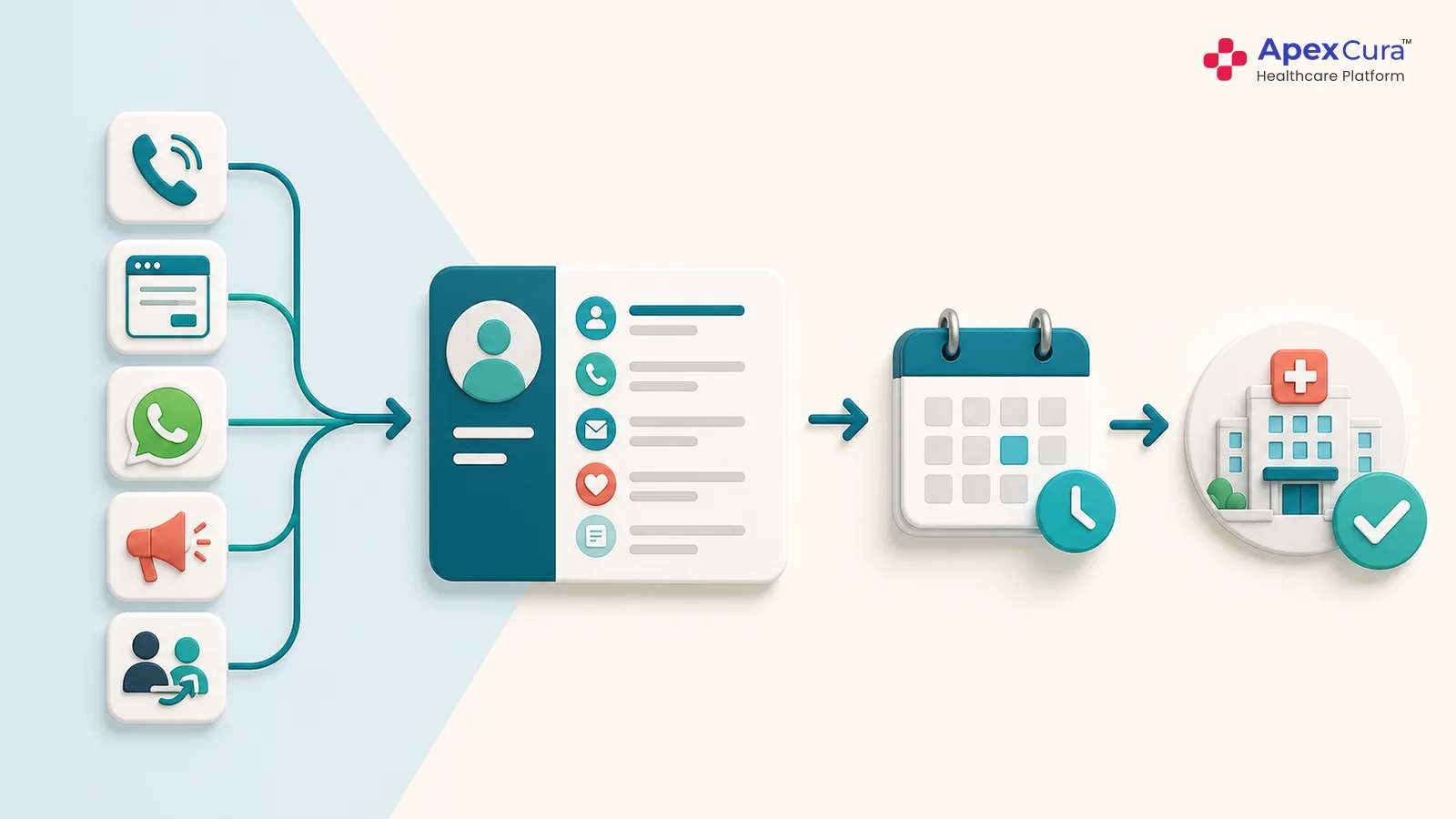
A WhatsApp conversation may move from a general hospital inbox to an appointment desk or service team. The receiving employee needs to understand what the patient asked and what information was already provided.
Without this context, staff may repeat questions or provide a different answer. The patient may also send another message because the first request appears unattended. A connected conversation history helps teams see the original channel, patient requirement, selected options and pending action. Clear ownership is equally important. The system should show which conversation remains with the chatbot and which one has moved to hospital staff.
Some Patient Questions Require Human Support
A chatbot should not attempt to resolve every message. Some conversations need personal judgement or access to information that is not available to the chatbot.
- Clinical questions that require an authorised hospital professional.
- Complaints or sensitive patient concerns.
- Unusual appointment or service requests.
- Questions involving unavailable or uncertain information.
- Requests where the patient directly asks for a person.
Hospitals should configure clear handover rules for these situations.
How a WhatsApp Chatbot Supports Patient Enquiries
Understand Patient Intent and Provide Approved Information
Patients describe the same need in different ways. One person may ask for a skin doctor, while another asks for dermatology. The chatbot can identify the likely intent in the written message and connect it with an approved response or workflow. Hospital-controlled information may include doctor details, departments, locations or supported appointment data. The chatbot should ask a clarifying question when the message is unclear. It should not assume unavailable details or provide an answer outside its approved scope. This gives patients a simple conversation while allowing the hospital to maintain control over the information communicated through WhatsApp.
Guide Patients Through Supported Hospital Workflows
A WhatsApp chatbot can guide a patient through a configured sequence based on the hospital’s process and available integrations.
Identify: Understand the doctor, speciality, service or support requirement.
Inform: Provide approved details relevant to that request.
Guide: Offer the next configured step or explain that staff assistance is needed.
Patients should be able to correct an answer, return to an earlier step or request a live agent. The chatbot supports communication; it does not replace the hospital system that completes the underlying service.
Transfer Conversations to Hospital Staff with Context
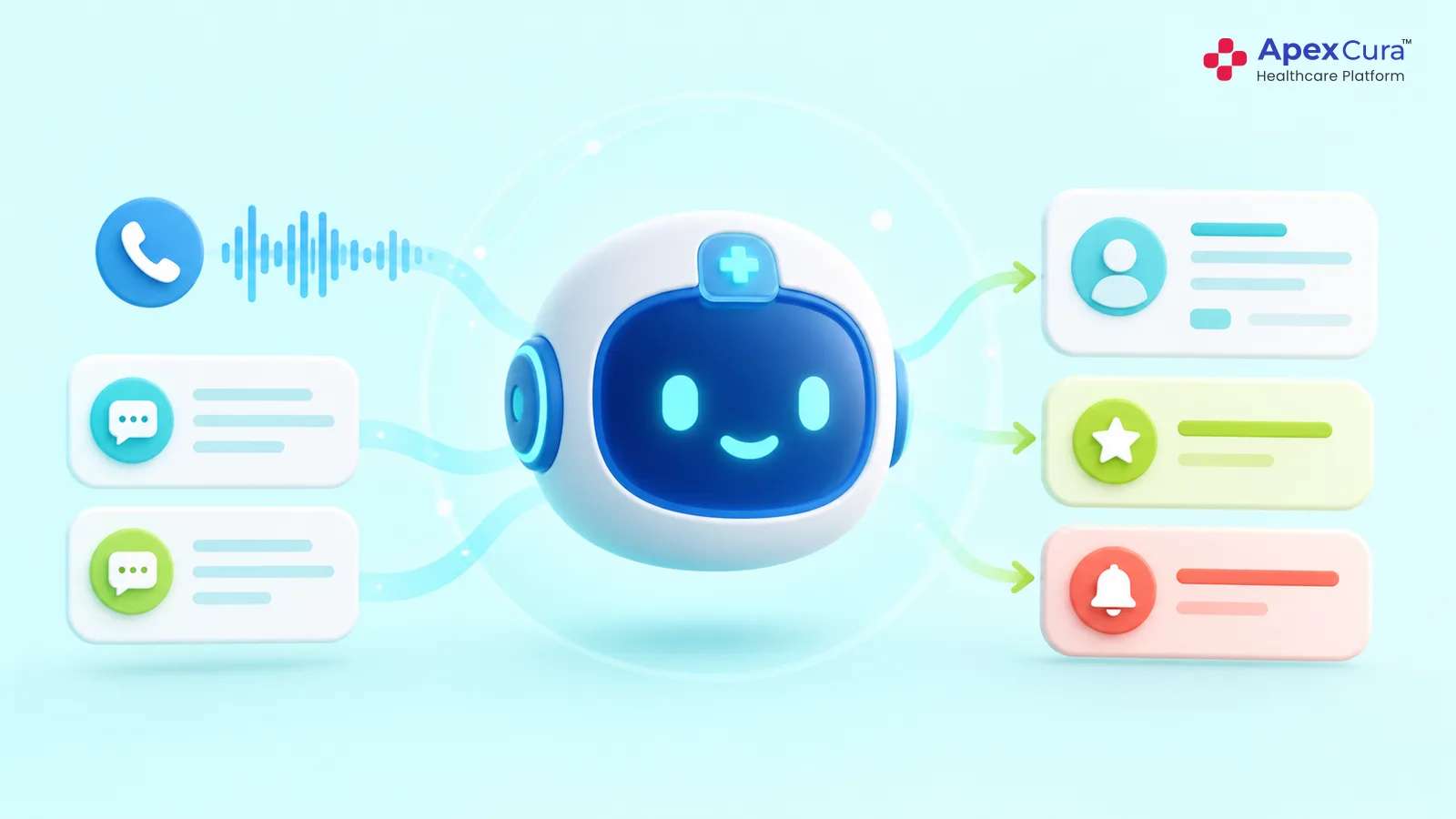
When the chatbot cannot complete a conversation, it should transfer the request through the configured live-agent process. The receiving employee should see the available messages, identified intent and remaining question. This reduces the need for the patient to start again. The handover should also show when responsibility moved from automation to staff. Hospitals can route different conversation types to appropriate teams, depending on their operating model. Pending handovers need a visible queue so they do not remain unattended. Staff should be able to respond through the supported interface and retain the conversation history for future reference where permitted.
Manage WhatsApp patient enquiries with approved information, guided workflows and live-agent support.
Explore Apex GenAI ChatbotWhat Hospitals Should Evaluate Before Implementation
Configure WhatsApp Conversation and Template Rules Correctly
WhatsApp communication operates under platform rules that hospitals should understand before implementation. Patient-initiated conversations and hospital-initiated messages may follow different requirements. Approved templates may be needed for certain outbound communication. Hospitals should also define how consent, opt-out requests and communication preferences are handled. The chatbot workflow must use the approved WhatsApp Business setup rather than personal employee accounts. Teams should review which messages can be automated, which require staff approval and how failed deliveries are handled. Clear rules help the hospital use WhatsApp consistently while respecting the communication controls that apply to the channel.
Connect WhatsApp with Relevant Hospital Systems
A WhatsApp chatbot may need information from appointment, LIS, billing, CRM or live-agent systems, depending on the approved workflow. These applications remain separate and continue performing their own responsibilities. The chatbot uses supported interfaces to retrieve or pass information needed for the conversation. Hospitals should evaluate patient identification, access permissions, response timing and fallback behaviour. They should also decide what happens when a connected system is unavailable. The chatbot should not display old or assumed information as current. It can explain that the information is unavailable or transfer the request to staff. Reliable integrations are essential for reliable patient communication.
Measure Conversation Outcomes and Human Handover
Hospitals should measure whether WhatsApp conversations reach a useful outcome rather than counting only incoming messages.
- Common patient intents and frequently repeated questions.
- Conversations completed through configured workflows.
- Requests transferred to hospital staff.
- Pending handovers and staff response time.
- Questions that need new or updated approved information.
These measures help teams improve conversation design and decide where human support should begin earlier.
Conclusion
A WhatsApp chatbot for hospitals can make patient enquiries easier to manage when it uses approved information, clear workflows and reliable human handover. Hospitals should define which questions the chatbot may answer, which systems provide the required information and when staff must take responsibility. They should also configure WhatsApp templates, consent and channel rules correctly. The broader guide to AI Patient Communication for Hospitals explains how WhatsApp fits alongside other supported messaging channels. A connected AI Chatbot for Hospitals helps patients obtain practical information while hospital teams remain available for conversations that need personal support.