Why Hospitals Need Structured Data from Patient Calls
Manual Call Notes May Be Incomplete or Inconsistent
An agent must listen to the patient, understand the requirement, provide information and record the next action during the same call. The written note may therefore contain only a few words. Different agents may also describe similar conversations differently. One note may record the speciality, while another records only that the patient requested a callback. Important details such as preferred branch, doctor, timing or unresolved concern can be missed. Manual documentation remains necessary in some workflows, but it should not be the only source of call context. A transcript and summary give hospital teams a more complete record for later review and follow-up.
Recorded Calls Are Difficult to Review at Scale
A hospital call centre may handle many conversations across agents, shifts, specialities and branches. Listening to every complete recording is not practical for supervisors. Reviews may therefore depend on a small sample or calls selected after a complaint.
This makes it difficult to find repeated questions, incomplete follow-ups or conversations where the patient showed clear intent but no next action was recorded. Searchable text changes the review process. Managers can find relevant conversations using selected terms, call attributes or AI-generated signals, then listen to the original recording when confirmation is required. The recording remains the primary evidence for important decisions.
Call Information Remains Disconnected from Follow-Ups
The recording may remain in the calling platform while the patient enquiry is managed in a spreadsheet or CRM. Appointment and visit information may be stored elsewhere. Without a reliable connection, teams cannot easily understand what happened after the call.
- Was the caller identified as a valid patient enquiry?
- Was an owner assigned after the conversation?
- Was the promised callback or information provided?
- Did the patient book and complete an appointment?
- Was the final outcome or closure reason recorded?
Connecting call context with the enquiry workflow helps hospitals answer these questions.
How Voice-to-Text AI Converts Calls into Usable Information
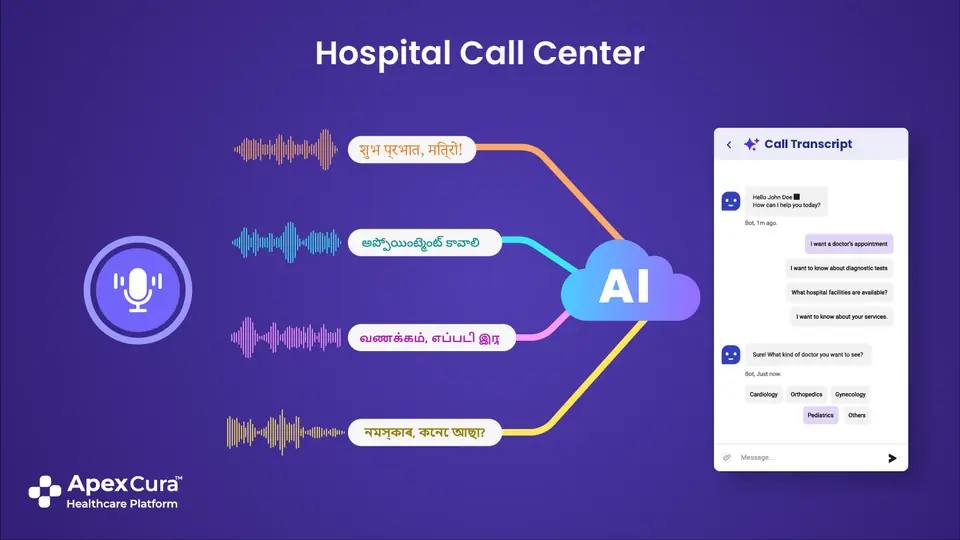
Transcribe Multilingual and Mixed-Language Conversations
Hospital calls may include more than one language. An agent and patient can move between English and a regional language during the same conversation. Voice-to-text processing should support the languages and mixed-language patterns used in the hospital’s actual calls. The system converts the supported recording into written text while retaining its connection with the original audio. Transcription quality can vary because of background noise, call quality, speaking style and medical or local terms. Hospitals should therefore test representative recordings before relying on the output. Important information should remain open to staff verification against the audio and hospital record.
Create Searchable Call Records and Concise Summaries
A complete transcript gives detailed conversation context, while a concise summary helps staff understand the main requirement quickly. Both serve different operational needs.
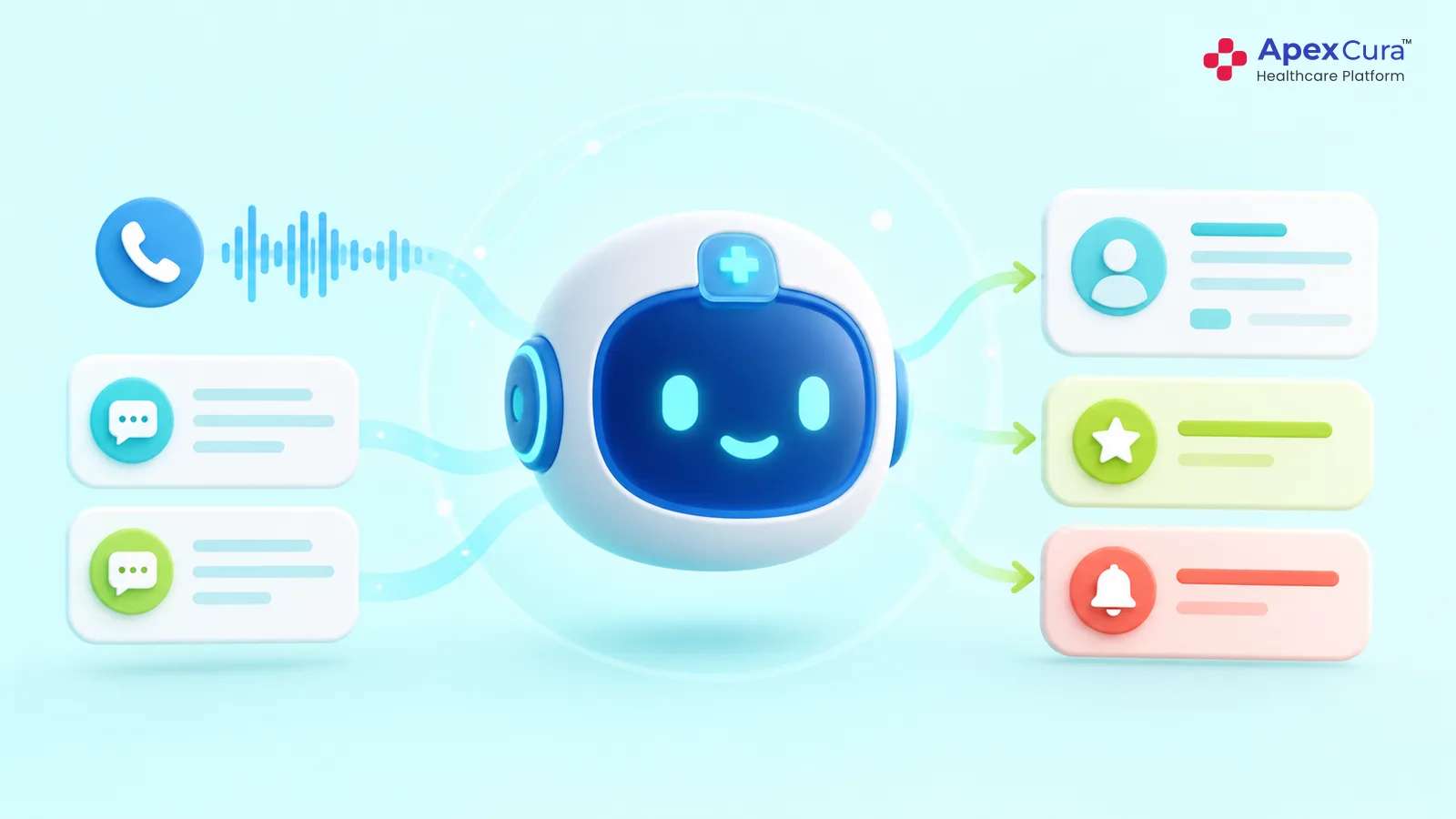
Transcript: Provides searchable text linked with the supported call recording.
Summary: Highlights the patient need, discussion and likely next action.
Search: Helps managers locate conversations that need closer review.
A summary should support the agent’s work rather than silently replace required hospital documentation. Staff should correct important errors when they identify them.
Identify Patient Intent, Call-Quality Gaps and Missed Opportunities
AI can analyse the transcript for operational signals defined by the hospital. It may identify whether the patient asked for an appointment, treatment information, a callback or support with an existing service. Call-quality analysis can highlight whether key information was captured and whether a useful next step was recorded. It can also surface conversations where patient intent was present but the enquiry did not enter the follow-up process. These signals help managers decide which calls need review. They should not be treated as final judgements about an employee or patient. Authorised hospital teams should review the original context before taking action.
Connect hospital call transcripts, summaries and conversation insights with patient enquiry workflows.
Explore Apex Healthcare CRMHow Hospitals Can Use Voice-to-Text Data in CRM Workflows
Attach Call Context to the Patient Enquiry
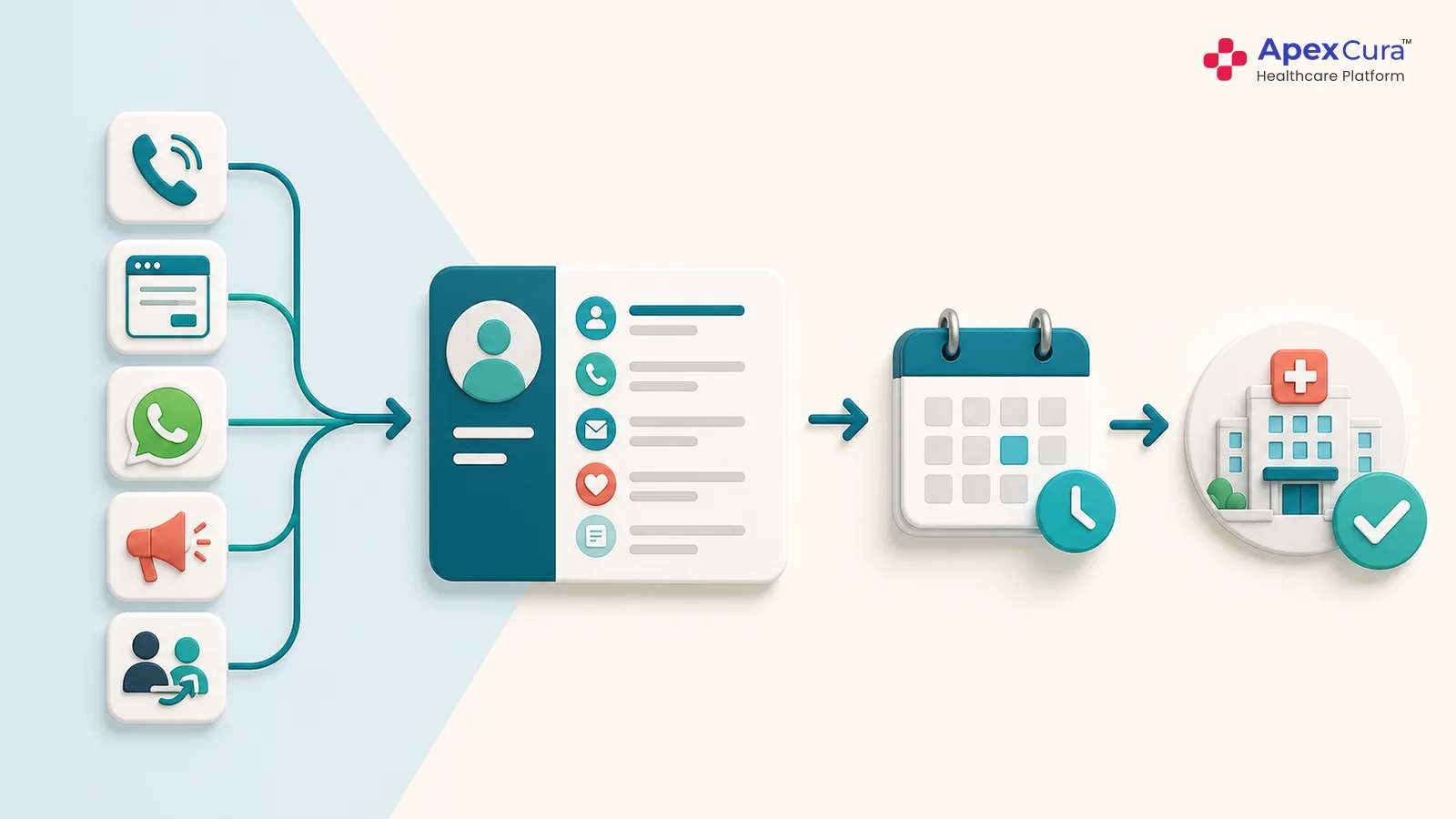
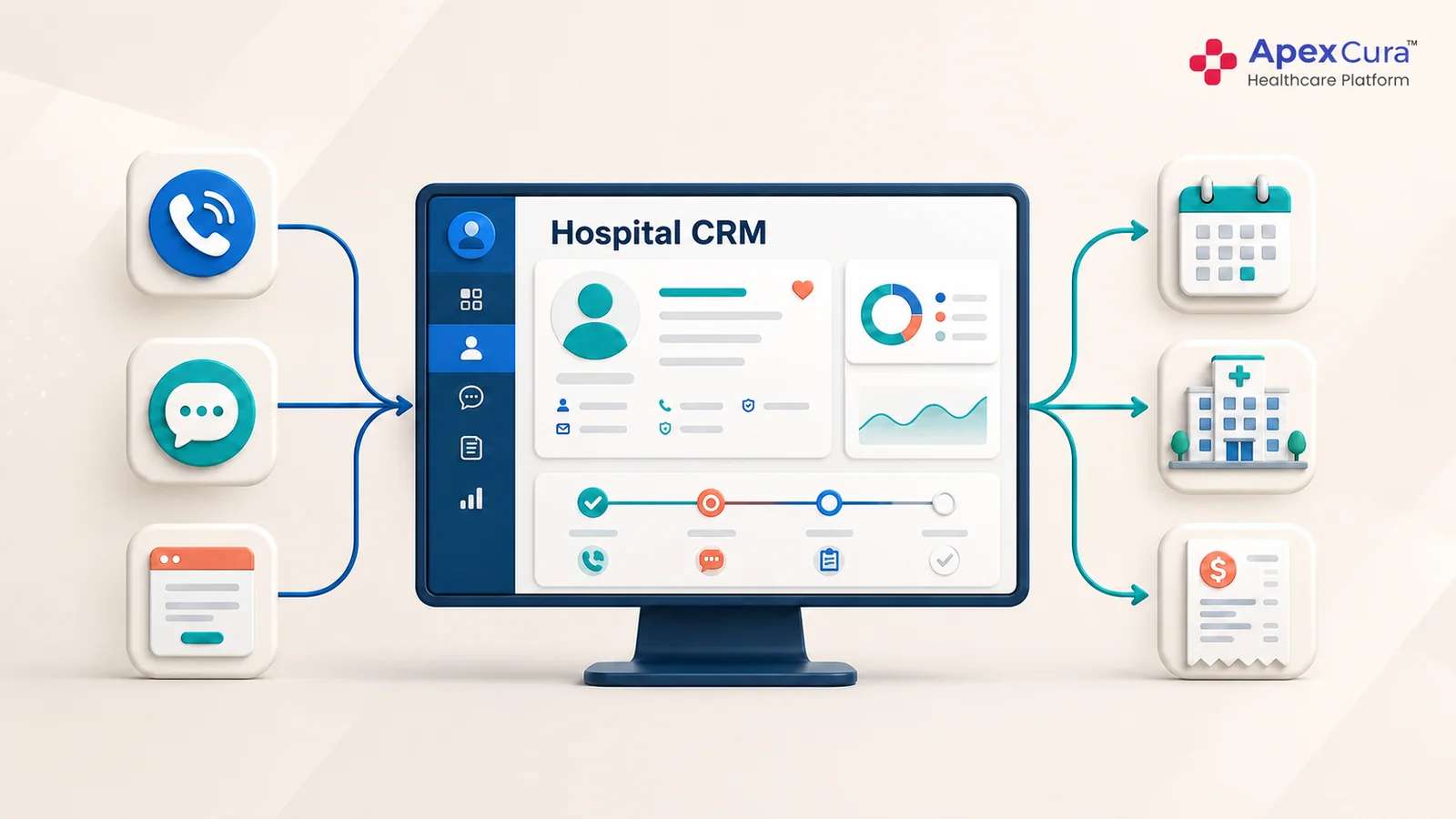
Supported calling-system integration can associate the recording, transcript and summary with the relevant CRM enquiry. The available record can show when the patient called, what need was identified and which action remains pending. Staff can then review the earlier conversation before contacting the patient again. Patient matching and access permissions should follow hospital-approved rules. A transcript should not be attached to the wrong patient merely because two records share a phone number or similar detail. A connected Hospital CRM Software workflow makes call context useful for ownership and follow-up without replacing the original calling or hospital systems.
Support Focused Agent Review and Coaching
Managers can use call signals to select conversations for focused review instead of relying only on random samples. A call may be reviewed because the patient intent was unclear, the next action was missing or a repeated information gap appeared. The manager should confirm the transcript against the recording and consider the operational context. The agent may have lacked an updated doctor schedule or waited for information from another team. Coaching can then address a specific knowledge, communication or process gap. The related guide to AI CRM for Hospital Call Centres explains how this review fits within wider enquiry and follow-up operations.
Analyse Repeated Questions, Follow-Up Gaps and Outcomes
Aggregated call information can reveal patterns across teams, periods, specialities and branches. Hospitals may find that patients repeatedly ask about unavailable schedules, agents often wait for the same internal information or certain enquiry types receive slower follow-up.
- Review common patient intents and unanswered questions.
- Compare enquiry capture and follow-up completion.
- Identify recurring information and handover gaps.
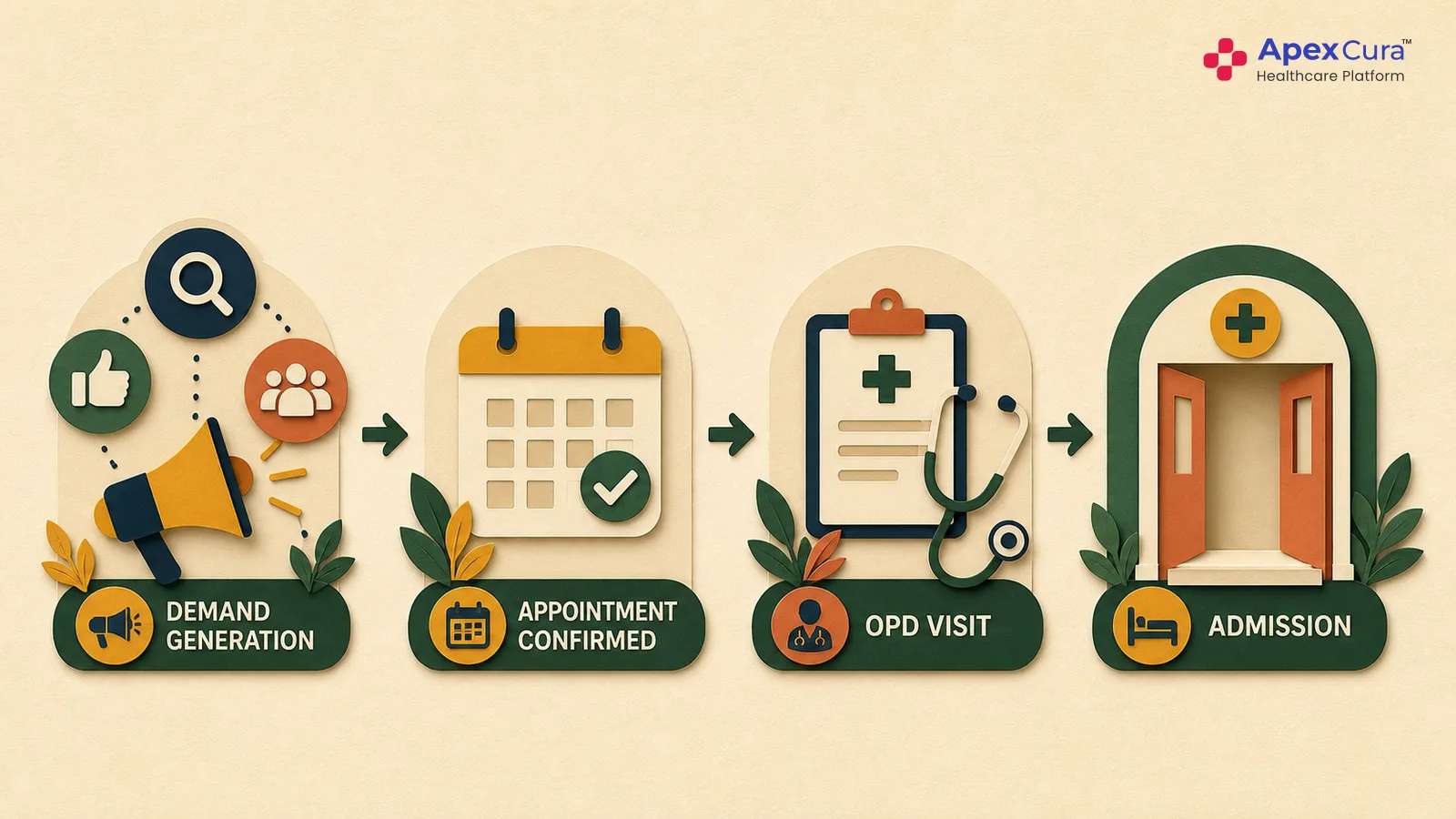
- Connect suitable enquiries with appointments and completed visits.
- Measure whether a process change improves the selected outcome.
The broader AI CRM for Hospitals article explains how AI insights can support calls, enquiries and follow-ups together.
Conclusion
Voice-to-text AI for hospital call centres turns supported recordings into transcripts, summaries and operational signals that teams can review. It helps hospitals retain more conversation context, identify patient intent and select calls that need closer attention. The information becomes more useful when it is connected with CRM ownership, follow-ups, appointments and visit outcomes. Hospitals should test transcription quality using representative multilingual calls and keep important decisions under authorised human review. Voice-to-text creates value by making recorded conversations easier to search and use, while the original audio and hospital systems remain the reliable sources for verification and action.