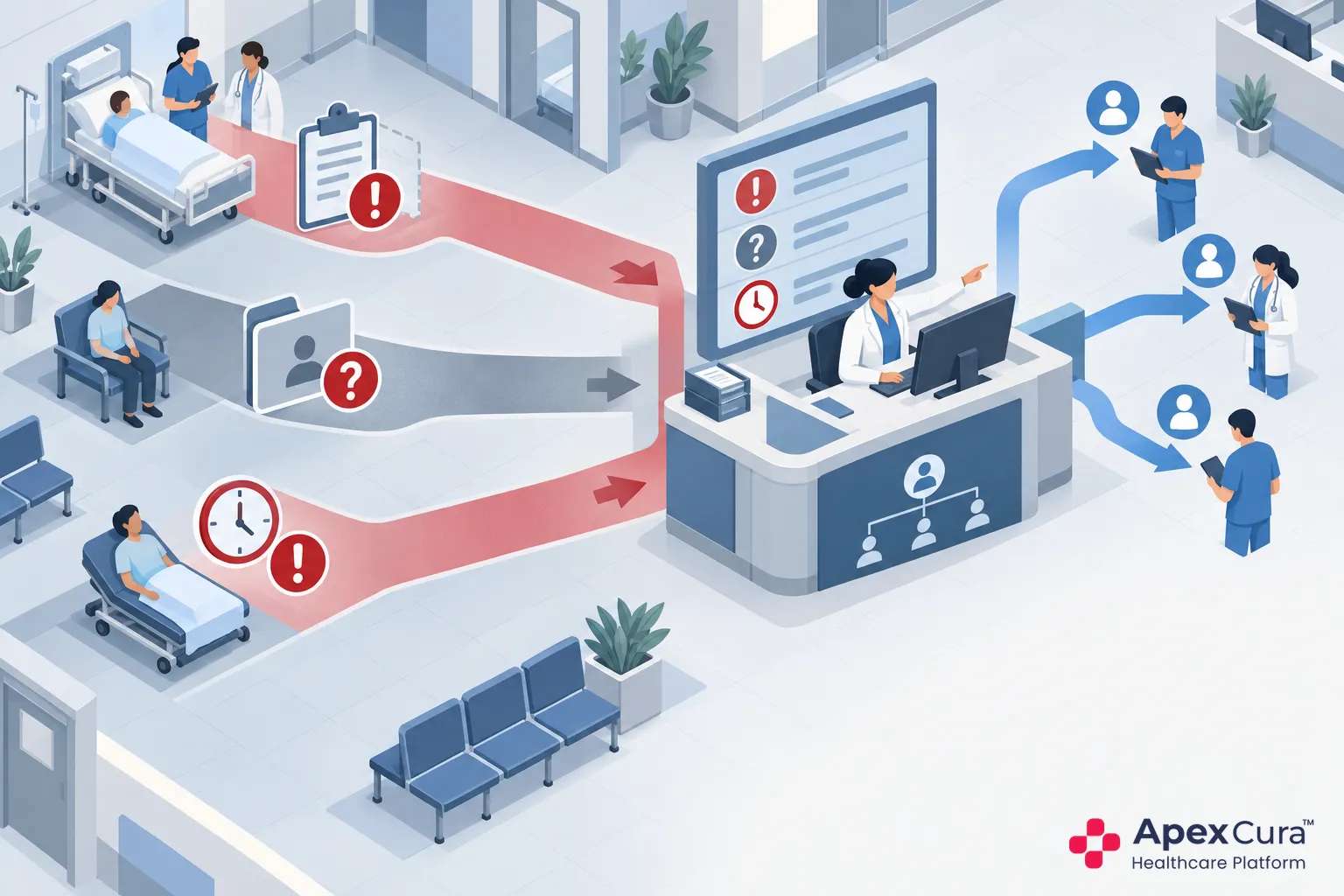
Pending OPD-to-IP Decisions Need a Structured Counselling Follow-Up Plan
Only Patients Awaiting a Decision Enter the Pending Follow-Up List
The follow-up list should contain patients who received initial counselling and have not yet reached a final decision. Cases awaiting their first counselling conversation belong to the admission handover queue, not this list. The pending status should include a verified reason such as doctor clarification, estimate question, family discussion, preferred date or personal timing. Separating these stages gives counsellors a workable list and prevents a hospital-side handover delay from being reported as patient indecision. The record should confirm the initial counselling date, current concern and agreed next action before the case enters this worklist during each supervisor’s daily worklist review.
Unresolved Concerns and Previous Responses Define the Next Action
Before contacting the patient, the counsellor should review the last concern and what the hospital promised. If the patient requested a revised estimate, the next action is to obtain it before calling. If a clinical question was routed to the doctor, the team should confirm that the clarification happened. If the patient requested time for a family discussion, the follow-up should respect the agreed date. The existing record should make each conversation relevant rather than asking the patient to repeat the full history. For example, a family discussion needs an agreed callback date, while an unanswered medical question needs action from the treating team first.
Every Follow-Up Needs an Owner, Date and Communication Channel
A useful plan states who will act, when the action is due and how the patient prefers or expects to be contacted. The channel may be a call, in-person discussion, WhatsApp or SMS where hospital policy and consent allow. Ownership should remain clear even when another department needs to respond. The counsellor coordinates the case and updates the record after the action. A date without an owner creates no accountability, while an owner without a date allows the case to remain pending indefinitely. The plan should also record the purpose of contact so another counsellor does not repeat a generic conversion call.
Counselling Follow-Up Tracking Keeps Patient Responses and Next Actions Visible
Completed and Missed Contact Attempts Should Be Recorded
The record should distinguish a completed conversation from an unanswered call, invalid number or message sent. These interactions do not have equal meaning. Hospitals can define a reasonable contact effort by service and then review whether it was completed. Repeated attempts should not become pressure or harassment. If the patient asks not to be contacted, the team should respect the request and record the appropriate closure. Accurate contact history helps another counsellor understand what happened without duplicating the same attempt. A daily view should separate successful conversations, unanswered calls, failed messages and patient-requested pauses so supervisors understand the actual follow-up effort.
Every Patient Response Should Update the Status and Next Step
A response should change something in the case. The patient may confirm admission, request another date, raise a new concern, decline or ask for more time. The counsellor should update the status, document the response and set the next action only when one is required. A note such as “spoke to patient” is incomplete because it does not show whether the decision progressed. Meaningful updates keep the pending list accurate and prevent cases that are already decided from receiving unnecessary follow-ups. Status choices should be consistent across counsellors, with the response date and responsible user retained clearly for later review.
Long-Pending Cases Need Review and Timely Escalation
A case can remain pending for a valid reason, especially for planned surgery or treatment that requires family and work arrangements. Review should therefore consider the recommendation type, patient request and unresolved hospital action. Cases that exceed the agreed date without progress should return to the counsellor or supervisor. Escalation may be needed when another department has not responded, not simply because the patient has not converted. The review should decide whether to continue, revise the plan or close the case with the correct outcome. Ageing reports should group cases by pending reason and show whether the next action belongs to the hospital or patient.
Discuss how Apex Cura can help your counselling team manage due, overdue and pending OPD-to-IP follow-ups.
Discuss Counselling Follow-UpsApex Cura Organises Pending, Due and Overdue Counselling Follow-Ups
Counsellor Worklists Help Teams Prioritise Follow-Up Cases
Apex Cura can organise cases by due date, current status, assigned counsellor and pending reason. Counsellors can begin with actions due today, while supervisors can review overdue cases or workload across the team. A worklist is most useful when statuses are updated consistently; otherwise completed cases continue to appear and genuine delays remain hidden. Hospitals should define the review routine and make the system part of daily counselling operations. Each row should show patient, recommendation, pending reason, due date, last response and next action, allowing the counsellor to prepare without opening the complete case history before every call.
Interaction History Preserves Concerns, Responses and Actions
The case history keeps the original concern, hospital response, patient reply and next action together. This helps another counsellor continue the conversation when the assigned employee is unavailable and reduces repeated questioning for the patient. Medical clarifications and financial information should be documented only from authorised sources. The history supports continuity and accountability; it should not be used to infer clinical need or affordability beyond what the patient and hospital teams recorded. A dated history should distinguish patient statements, authorised hospital answers, contact attempts and promised actions so later users understand what remains open during any handover between counselling team members.
Final Decisions and Loss Reasons Complete the Follow-Up Record
A case should leave the pending worklist when the patient proceeds, postpones, declines, requests no further contact or remains unreachable after the hospital’s defined effort. The final status and verified reason should remain linked to the counselling history. Apex Cura’s Patient Financial Counselling workflow can provide this traceability and support later analysis of pending cases and loss reasons. Hospital teams remain responsible for respectful contact, accurate notes and the final operational interpretation. Closure should record the decision date, verified reason, last patient response and any incomplete hospital action so analytics do not misclassify the outcome during later management review meetings.
Conclusion
Structured counselling follow-ups help hospitals manage patients who remain undecided after initial counselling. Each pending case needs a verified reason, responsible owner, due date, appropriate communication channel and record of previous responses. Follow-ups should complete agreed actions and help the patient progress towards a decision, rather than repeat the same generic call. Due and overdue worklists create operational visibility, while clear closure prevents decided cases from remaining open. The process should support informed patient choice and respectful communication throughout the pending period.