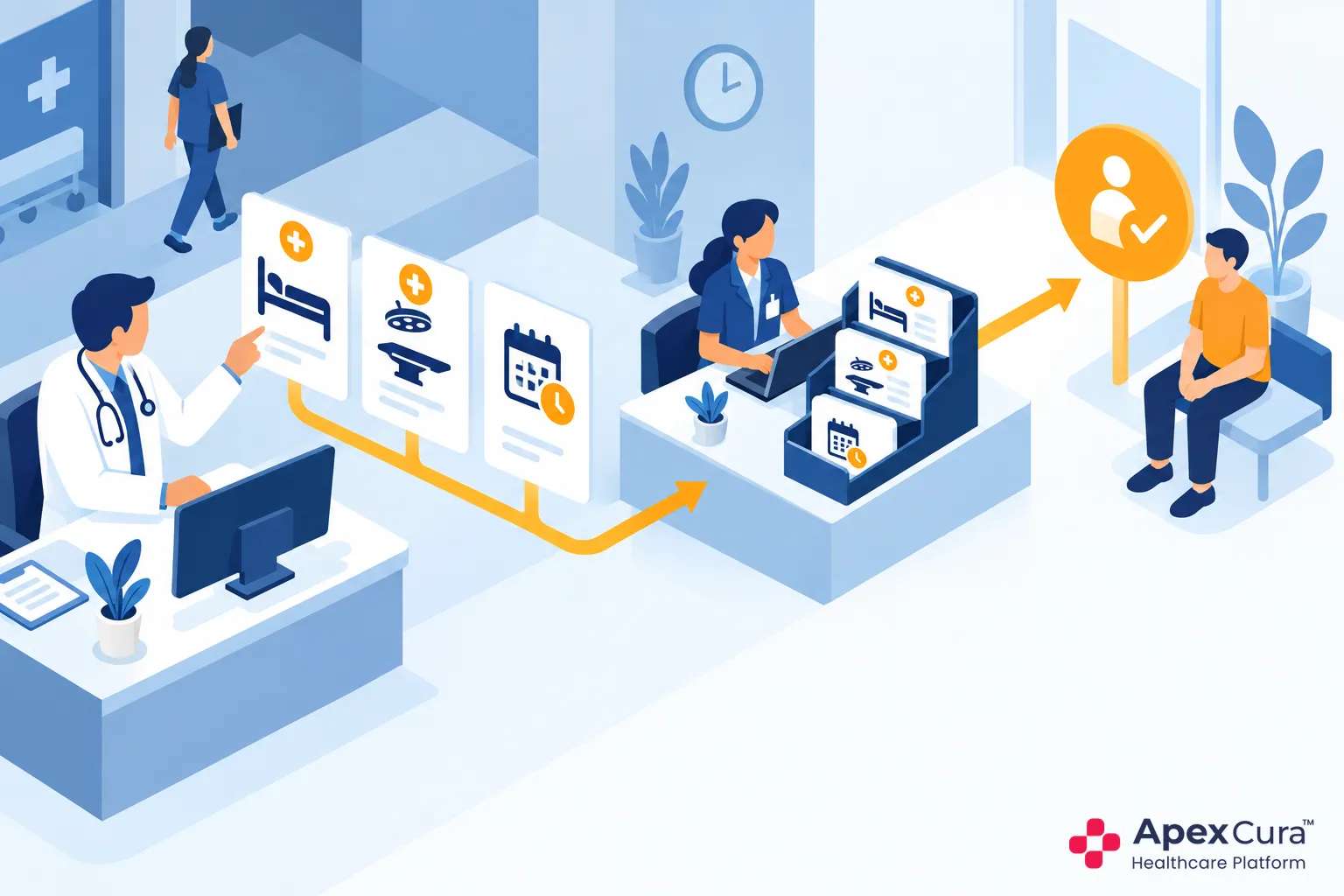
Hospital Counselling Analytics Begins With Consistent Workflow Data
Recommendation Coverage Shows Whether Eligible Patients Received Counselling
Recommendation coverage compares documented admission, surgery or revisit advice with the cases that received the required counselling. It helps hospitals find gaps between the OPD and counselling team. The denominator must be defined carefully: only valid recommendations for the selected service and period should be included. A low coverage rate may point to incomplete capture, delayed assignment or a handover problem. It does not automatically show poor counsellor performance. Management should first verify whether the recommendation data is complete and comparable across branches. The report should show valid recommendations, counselled cases, uncovered cases and the ageing of uncovered recommendations by branch and service.
Follow-Up Records Show the Effort Made on Pending Cases
For pending cases, analytics should show assigned owner, planned actions, completed contacts, missed actions and the time since the last meaningful update. Counting calls alone is weak because five unanswered calls do not equal five counselling conversations. A useful report separates contact attempts from patient responses and hospital actions. It should also show whether the patient was waiting for the hospital, family or personal timing. This helps supervisors direct attention to cases requiring action rather than rewarding high activity without progress. Due, completed, missed and overdue actions should be visible separately, together with the responsible counsellor and last meaningful patient response.
Standard Outcome and Loss-Reason Categories Make Data Comparable
Proceeding, postponed, declined and no response should have consistent definitions. Loss reasons should also use a structured set while preserving a short patient-specific note. For example, “affordability concern” and “estimate not explained” should not be merged automatically because one may reflect patient circumstances and the other a hospital process gap. Consistent categories allow comparison across months and branches. Teams should review an “other” category regularly; if it grows, the hospital may be missing a recurring reason that deserves its own classification. A short data dictionary should define every category so counsellors and branches record the same patient situation in the same way.
Counselling Conversion Analytics Reveals Delays and Loss Reasons
Pending-Case Trends Show Where Patient Decisions Are Getting Delayed
A pending report should show how many cases are waiting at each stage and for how long. Cases awaiting first counselling, doctor clarification, estimate, family decision or admission date require different action. Ageing bands can help, but hospitals should use service-appropriate periods because an immediate admission and an elective procedure do not follow the same timeline. The purpose is to find where the journey is slowing and whether the hospital has an unfinished responsibility, not to push every patient towards a faster decision. Reports should show case counts by pending reason, ageing band, owner and date of the last completed hospital action.
Repeated Concerns and Loss Reasons Reveal Conversion Barriers
When the same concern appears across comparable cases, management has a reason to investigate. Repeated estimate-clarity concerns may indicate inconsistent counselling. Repeated date or bed concerns may point to an operational constraint. Patterns can also differ by service, branch or patient group. Analytics should retain enough context to test the pattern and should not infer the cause only from a label. Teams need to review representative notes and the related process before deciding what should change. Management can separate patient-choice reasons from unfinished hospital actions, then review representative case notes before changing counselling or operational processes across similar hospital services.
Counsellor Effort Should Be Reviewed Separately From Patient Outcomes
A counsellor may complete the required education, coordinate answers and follow up on time while the patient still chooses not to proceed. Another counsellor may show a high conversion rate because the assigned service has more immediate admissions. Fair review therefore separates process measures—coverage, response time, completed actions and documentation—from patient outcomes. Conversion can be considered with context, but it should not be the only performance measure. This approach supports accountability without encouraging pressure-based counselling or selective case assignment. A balanced dashboard can fairly show counselling coverage, timely actions, documentation quality and escalation compliance beside conversion and final decision outcomes.
Discuss how your hospital can use counselling analytics to review pending cases, loss reasons and improvement actions.
Discuss Counselling AnalyticsFinancial Counselling Reports Guide Hospital Improvement Actions
Doctor, Speciality, Branch and Team Views Locate Repeated Gaps
Segmented reports help management locate where a pattern occurs. A recommendation-capture gap may concentrate in one speciality, while delayed estimates may affect one branch. These views should compare similar services and adequate case volumes. They should not be used as automatic doctor or counsellor rankings. The useful question is where the workflow needs investigation: capture, assignment, counselling, internal response, follow-up or outcome recording. Context turns a dashboard difference into a practical review question. Each view should display case volume, coverage and pending reasons so a small sample or different service mix does not create a misleading comparison during review meetings.
Management Reviews Convert Recurring Barriers Into Defined Actions
A monthly or weekly review should move beyond reading percentages. If cases repeatedly wait for estimates, management can assign an owner to examine preparation time and escalation. If medical questions remain open, the hospital can define a clearer route back to the treating team. Each action needs an owner, due date and evidence for later review. Counselling analytics should guide these decisions while operational leaders validate the cause and select the change. The review register should record the issue, evidence checked, responsible manager, corrective action, due date and measure that will be examined later before the next scheduled management review.
Outcome Trends Show Whether Corrective Actions Are Working
After a process change, the hospital should compare the same measure for a similar patient group and period. It may review whether counselling coverage improved, pending cases reduced or a specific loss reason became less frequent. A single better week is not enough to establish sustained improvement. Patient Financial Counselling reports can provide the structured evidence, but management should document what changed and whether the result supports retaining, revising or expanding the action. The comparison should retain the same case definition, service mix and reporting period, with response volumes shown beside any percentage movement before hospital management accepts the result.
Conclusion
Hospital counselling analytics is useful when it connects recommendation coverage, counselling effort, pending actions, patient concerns, loss reasons and final outcomes. Conversion alone cannot explain where a patient journey stalled or whether the hospital completed its responsibilities. Management should compare similar cases, separate counsellor effort from patient choice and investigate repeated barriers before assigning a cause. Regular reviews can then turn reliable data into defined process actions and check whether those actions improve counselling coverage, responsiveness and decision visibility over time.